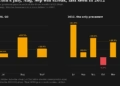
- Inflation is back on the agenda. S&P 500 executives are set to cite inflation or related terms like cost pressure more than 1,100 times while discussing third-quarter results, according to Bloomberg projections. That would be the biggest year-on-year change since mid-2022, when the consumer price index had surged to over 9%.
- The estimate is based on reports so far. Companies making up about 61% of the S&P 500’s market capitalization had reported through Oct. 30, and the projected 1,127 mentions extrapolate from the 691 recorded on calls so far.
- Margins are cracking. About 58% of S&P 500 companies have beaten net margin estimates for the third quarter, among the smallest proportions since the fourth quarter of 2022, according to Bloomberg Intelligence data. “A lot of companies are struggling to pass on higher costs to their end consumer,” said State Street Global Markets’ Marija Veitmane.
- Consumer names are most exposed. Hershey shares fell 2.1% Thursday after it warned consumer spending could be hurt by financial pressures, Ford said profit will level off next year as inflation threatens its truck business, and Caterpillar’s CFO flagged “potential headwinds presented by higher cost inflation.” Mondelez bucked the trend, rising nearly 4% after reporting positive volume and mix growth.
What Happened?
Bloomberg tallied inflation mentions on third-quarter earnings calls and found Corporate America is again preoccupied with rising costs. While price pressures are much lower than in 2022, the war in Iran has driven a consistent rise in fuel prices, and an underlying measure of the consumer price index excluding food and energy rose more than expected in October. The S&P 500 has retreated from a record set in early October but remains up about 11% this year.
Why It Matters?
The shift matters for stocks because it hits profit margins, which have been a pillar of the market. An erosion of pricing power means companies can no longer pass costs on easily, and Berenberg’s Chris Armstrong warned that a falling stock market combined with higher gasoline prices “could start to have an impact on confidence to a greater degree than we’ve seen already.” Higher rates also raise the cost of mortgages, credit cards and car loans, adding pressure on household budgets and consumer-facing companies.
What’s Next?
The Federal Reserve has signaled a willingness to raise rates further, and swaps traders are fully pricing a hike by the January meeting. Watch upcoming guidance from consumer and industrial companies for more margin warnings. EFG Asset Management’s Daniel Murray said the key stagflation risk would be oil prices staying sustainably above around $125 a barrel, which could force a round of mass layoffs.
Affected Tickers and Coins: HSY, F, CAT, MDLZ, SPY
Source: Bloomberg