
Powered by LumidaWealth.com
Lumida News
  • Home
  • EarningsNEW
  • News
    • Alt Assets
    • Crypto
    • Equities
    • Macro
    • Markets
    • Real Estate
  • Lifestyle
    • Family Office
    • Health and Longevity
  • Themes
    • Aging & Longevity
    • AI
    • CRE
    • Digital Assets
    • Legacy Brands
    • Nuclear Renaissance
    • Private Credit
  • About Us
No Result
View All Result
Lumida News
No Result
View All Result
  • Lumida Wealth
  • Lumida Ledger
  • LUMIDA ETF
  • About Us
Home Themes AI

China’s AI Data Center Blitz Validates Hayes Bubble Thesis — Global Capacity Race Creates 130GW Overbuilding Risk as Chip Constraints Limit Deployment

by Team Lumida
October 8, 2026
in AI
Reading Time: 6 mins read
A A
0
China’s AI Data Center Blitz Validates Hayes Bubble Thesis — Global Capacity Race Creates 130GW Overbuilding Risk as Chip Constraints Limit Deployment
Share on TelegramShare on TwitterShare on FacebookShare on LinkedinShare on Whatsapp
  • China’s AI data center buildout reaching industrial scale proportions, validating Arthur Hayes’ “overbuilding” thesis globally. China operational capacity: 24GW (more than rest of Asia combined, but half US 56GW). Under construction/announced: 50GW+ additional. Trajectory: 74GW total by 2027-2028, converging with US 56GW to create global AI infrastructure overcapacity. Ulanqab (Inner Mongolia) emerging as fastest-growing Asian hub: 15GW committed, 89 data centers built or planned, making single city capacity rival many nations. Beijing strategic objective: reduce reliance on foreign (Nvidia) technology by incentivizing domestic processors (tax benefits, electricity/water discounts). But chip bottleneck undermines infrastructure advantage: despite massive buildout capacity, NVDA export restrictions + limited Chinese fab capacity creates “ghost capacity” problem—facilities built but underutilized due to processor shortage.
  • Chinese infrastructure advantages expose Hayes “overbuilding” pattern. Construction costs 20% cheaper than larger Chinese cities (per Goldman Sachs), completion in 12-18 months vs US 18-24 months. Electricity costs critical: Ulanqab pays 0.358 RMB/kWh vs 0.60+ RMB average China vs 0.80 RMB Beijing—55% cost advantage over capital. Inner Mongolia renewable capacity: 117GW wind (largest in China, 4x UK total capacity), 130GW fossil fuel (mostly coal), creating “largest electricity local oversupply” globally per Lantau Group analyst. Cold climate (4.3C average) reduces cooling costs. Proximity to Beijing (2 hours high-speed rail) enables engineering support. Result: China can build data centers 20% cheaper, 33% faster than US. But speed/cost advantage only matters if demand justifies capacity—Hayes thesis predicts demand won’t.
  • Global simultaneous overbuild validates Hayes two-geography buildup. US already 56GW operational. China trajectory 74GW by 2027-2028. Combined 130GW+ global capacity being deployed in compressed 2-3 year window. Demand forecast consensus: “no risk of overbuilding” per Jefferies analyst (“token consumption going through the roof”). But Hayes thesis: AI capex cycle peaks 2027-2028 when customers face compute commitments. If capex tightens or demand disappoints, simultaneous capacity delivery (both US and China) creates overcapacity spiral. Prefabricated “Lego data center” modules (China innovation, adopted by US hyperscalers) enable rapid deployment but also rapid obsolescence if demand doesn’t materialize. Supply chain locks in: Envision building 2GW adjacent power (1M AI accelerator card capacity), Vertiv liquid cooling positioned, equipment suppliers establishing regional manufacturing. Entire ecosystem committed to capex thesis.
  • Chip constraint creates structural vulnerability and validates 2027-2028 inflection timing. NVDA restrictions + limited Chinese fab capacity means China’s 74GW capacity constrained by processor availability, not just electricity/construction. Consequence: facilities built to scale cannot be fully deployed, creating stranded asset risk. US also faces NVDA competition (hyperscalers may diversify to AMD, custom chips), reducing capex urgency. If both geographies simultaneously face constraint (chips unavailable, demand disappointing, capex cycles tightening), combined 130GW capacity becomes “white elephant” forcing write-downs and equipment liquidation. Timing convergence: Hayes predicted 2027-2028 (capex commitments due, overcapacity arrives); China/US simultaneous buildout peaks exactly then. Single catalyst (AI model training plateau, capex budget cuts, geopolitical chip restrictions) could trigger global capacity collapse.

What Happened?

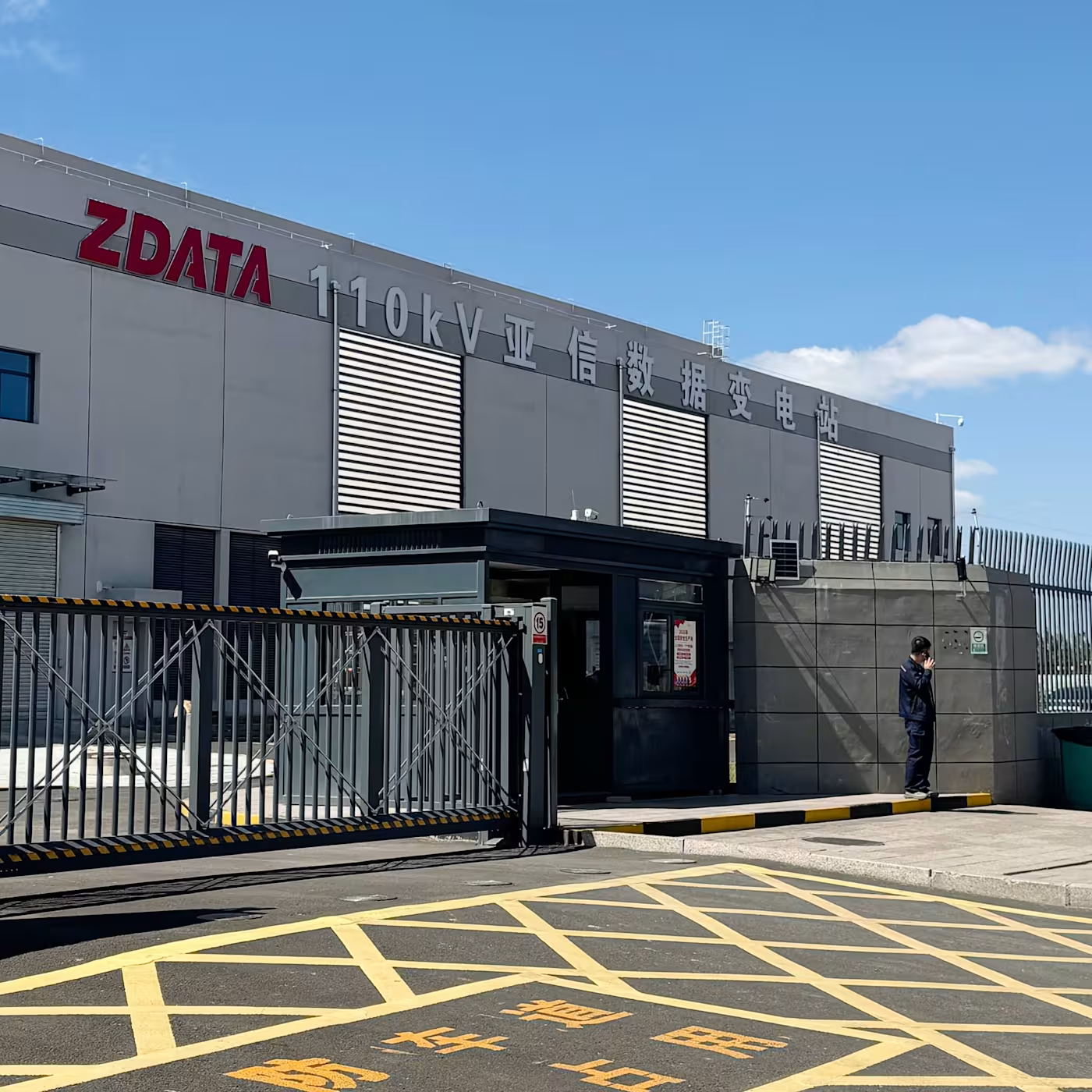
China is rapidly expanding artificial intelligence data center capacity across its energy-rich interior, positioning the country for leadership in the global AI infrastructure race. China currently operates 24 gigawatts of data center computing capacity—more than the rest of Asia combined but less than half the 56 gigawatts in the United States. An additional 50 gigawatts is under construction or has been announced, positioning China for a combined 74-gigawatt capacity by 2027-2028. Ulanqab, a remote agricultural city in Inner Mongolia, has emerged as the fastest-growing data center hub in Asia, with 15 gigawatts of computing capacity committed and 89 data centers built or planned. Construction in Ulanqab proceeds at accelerated speed (12-18 months versus 18-24 months in the US) at approximately 20 percent lower cost than larger Chinese cities, according to Goldman Sachs. Electricity costs in Ulanqab average 0.358 renminbi per kilowatt-hour, approximately 55 percent cheaper than Beijing rates. Companies including Alibaba, Huawei, ByteDance, DeepSeek, and Z.ai have established operations in Ulanqab, taking advantage of abundant wind and coal power, cold climate, and rapid construction capabilities. However, China’s infrastructure buildout faces a critical constraint: Beijing and Washington export restrictions on advanced Nvidia processors have created a bottleneck limiting deployment capacity despite infrastructure readiness.

Why It Matters?

China’s AI data center expansion validates Arthur Hayes’ thesis that global AI capex involves massive simultaneous overbuilding across geographies. The combined China (74GW projected) and US (56GW) capacity buildout creates a 130-gigawatt global infrastructure race arriving simultaneously at 2027-2028—exactly matching Hayes’ predicted inflection point when AI capex peaks and customers face their compute commitments. The speed of deployment (China building 33 percent faster than US) and cost advantages (55 percent electricity discount, 20 percent construction cost savings) suggest structural capacity will exceed demand if AI capex cycles tighten. The chip constraint further highlights vulnerability: despite massive facility buildout, processor availability limitations (NVDA export restrictions, limited Chinese fab capacity) mean infrastructure built cannot be fully deployed—creating “stranded asset” risk if demand disappoints. The convergence of infrastructure overcapacity with chip supply bottlenecks positions 2027-2028 as potential crisis inflection point for AI infrastructure investments globally. For investors, the implication suggests significant write-down risk for data center operators and equipment suppliers if capex commitments compress or AI model scaling plateaus sooner than consensus forecasts.

What’s Next?

Monitor capacity additions: if China reaches 74GW by late 2027 (validates overbuilding trajectory), combined with US 56GW suggests global capacity exceeding demand forecasts; if delays beyond 2028, suggests execution constraints moderating buildout. Track utilization rates: if Ulanqab facilities achieve 70%+ utilization (validates demand thesis), supports “no overbuilding risk” narrative; if stall below 50% (validates Hayes), validates stranded asset risk. Watch chip supply dynamics: if NVDA restrictions ease or Chinese fab capacity expands dramatically (validates deployment opportunity), reduces stranded capacity risk; if tighten further, validates infrastructure/processor mismatch. Finally, monitor capex guidance from hyperscalers (Google, Meta, Microsoft, OpenAI, Anthropic): if reduce AI infrastructure commitments in 2027-2028 (validates Hayes cycle peak), positions simultaneous global deleveraging as trigger for asset write-downs and equipment liquidation cascades across both Chinese and US data center operators.

Affected Tickers and Coins: NVDA | BABA | HWT | DLR | EQIX

Source: Financial Times

Previous Post

Prime Brokerage Bubble Swells to Trillion-Dollar Systemic Risk — Hedge Fund Leverage Hits 40X as Banks Abandon Safeguards for $47.9B Revenue Hit

Next Post

Samsung Records Won107.4tn Profit on AI Chip Boom — But Stock Falls on Peak Timing Concerns as Memory Shortages Lock in Long-Term Contracts

Recommended For You

China’s Military Is ‘Actively Soliciting’ Nvidia’s Most Advanced Chips for AI-Enabled Military Capabilities, a Congressional Commission Says in Its 2026 Report

by Team Lumida
5 hours ago

A congressional commission said China’s military is seeking advanced Nvidia chips and evading export controls, including via data centers in Malaysia.

Read more

Bipartisan Push to Attach AI Chip Export Limits to the December NDAA Gains Steam After the Huang Affair, With Schumer, Jeffries and Speaker Johnson Backing the AI Overwatch, MATCH and Chip Security Acts

by Team Lumida
13 hours ago

Lawmakers from both parties are pushing three chip export bills into the December defense bill after Jensen Huang’s resignation, but time is short.

Read more

Banks Pause a $480 Million Nvidia GPU Loan to Aolani Cloud Tied to ByteDance After New US Licensing Rules for Malaysia and Singapore Data Centers

by Team Lumida
1 day ago
ByteDance Is Buying Custom Chips From Taiwan Because It Cannot Buy Nvidia’s, Which US Rules Permit

Banks paused or reconsidered a $480 million Aolani Cloud loan for Nvidia GPUs tied to ByteDance after new US licensing rules, Bloomberg reported.

Read more

Commerce and Justice Say They Began Investigating Nvidia Partner Megaspeed in 2024, as Critics Ask Why It Kept Getting Chips After Nvidia’s ‘No Sell’ Listing

by Team Lumida
2 days ago

Commerce and Justice said they opened export-control probes into Megaspeed in 2024 and inspected it in June 2025, as critics question how it kept buying chips.

Read more

Nvidia Warns Chip Buyers That the Remote Access Security Act Could Expose Them to US ‘Legal Action’ and Caps Sales to Clouds Renting Over 50% of GPUs to Chinese Firms

by Team Lumida
2 days ago

Nvidia cautioned customers that the proposed Remote Access Security Act could bring US legal action over Chinese cloud access to its chips, CNBC reported.

Read more

Anthropic’s IPO Could Hand 300-Plus Investors a Windfall, With a $1.33 Trillion Valuation About 38% Above Its $965 Billion May Round

by Team Lumida
2 days ago

Anthropic’s IPO, expected to value it at $1.33 trillion or more, is set to reward over 300 investors, from Spark and Menlo to Amazon and Alphabet.

Read more

Commerce Moves to Close the Offshore Data-Center Loophole for Chinese AI Firms and Requires Licenses for Chip Exports to Five Countries, Its First Policy Response to the Nvidia Scandal

by Team Lumida
2 days ago

Commerce issued a rule curbing Chinese firms’ offshore access to Nvidia compute and requiring chip-export licenses for five higher-risk countries.

Read more

Trump Administration Plans to Name Nvidia, OpenAI and More Than Two Dozen AI Firms ‘National Champions’ as the BAI AI ETF Sits 33% Below Its June Record

by Team Lumida
3 days ago
The AI Capex Machine Keeps Roaring — Nvidia’s Manufacturing Partner Hon Hai Crushes Estimates as Server Demand Drowns Out Recession Fears

The Trump administration plans to name more than two dozen AI firms, including Nvidia and OpenAI, US national champions, the WSJ reported.

Read more

OpenAI Launches ChatGPT Wallet With Amex, Mastercard and Visa, Letting ‘Dots’ Agents Buy for U.S. Pro Subscribers

by Team Lumida
5 days ago

OpenAI launched ChatGPT Wallet with American Express, Mastercard and Visa, letting its “dots” agents make purchases for U.S. Pro subscribers over 18.

Read more

OpenAI’s Quarterly Revenue Tops $10 Billion for the First Time, Up Nearly 50% in a Quarter, as Anthropic’s Growth Slows to About 47%

by Team Lumida
1 week ago

OpenAI’s third-quarter revenue hit $10 billion for the first time, up nearly 50% from the prior quarter, as Anthropic’s growth slowed, Bloomberg reports.

Read more
Next Post
Samsung Records Won107.4tn Profit on AI Chip Boom — But Stock Falls on Peak Timing Concerns as Memory Shortages Lock in Long-Term Contracts

Samsung Records Won107.4tn Profit on AI Chip Boom — But Stock Falls on Peak Timing Concerns as Memory Shortages Lock in Long-Term Contracts

US Treasury Yields Climb on Waller Guidance — 10-Year Hits 2002 High as $22B 30-Year Auction Tests Global Demand for US Debt Amid Deficit Angst

US Treasury Yields Climb on Waller Guidance — 10-Year Hits 2002 High as $22B 30-Year Auction Tests Global Demand for US Debt Amid Deficit Angst

Leave a Reply Cancel reply

Your email address will not be published. Required fields are marked *

Related News

person holding remote pointing at TV

Netflix Raises Revenue and Margin Forecasts After Strong Q2 Results

July 18, 2025
Sui Launches Hashi Bitcoin Lending With $500M Commitments — Institutional Protocol Targets $1T Dormant Wealth as BTC Infrastructure Matures Despite Technical Breakdown, Validating Narrative/Price Divergence

Sui Launches Hashi Bitcoin Lending With $500M Commitments — Institutional Protocol Targets $1T Dormant Wealth as BTC Infrastructure Matures Despite Technical Breakdown, Validating Narrative/Price Divergence

October 9, 2026

Cryptocurrencies Rebound Amid Broader Market Optimism, Bitcoin Tops $86,000

March 24, 2025

Subscribe to Lumida Ledger

Browse by Category

  • Lifestyle
    • Family Office
    • Health and Longevity
    • Legacy
    • Next Gen Wealth
    • Trust, Tax, and Estate
  • News
    • Alt Assets
    • Crypto
    • Equities
    • Latest
    • Macro
    • Markets
    • Real Estate
  • Opinions
    • Investing Philosophy
    • Op-Ed
  • Research
    • Trackers
  • Themes
    • Aging & Longevity
    • AI
    • Biotech
    • CRE
    • Cybersecurity
    • Digital Assets
    • Legacy Brands
    • Nuclear Renaissance
    • Private Credit
    • Software
Facebook Twitter Instagram Youtube TikTok LinkedIn
Lumida News

Premium insights to help you invest beyond the ordinary. Lumida Wealth Management LLC (‘Lumida”) is an SEC registered investment adviser

CATEGORIES

  • Aging & Longevity
  • AI
  • Alt Assets
  • Biotech
  • CRE
  • Crypto
  • Cybersecurity
  • Digital Assets
  • Equities
  • Family Office
  • Health and Longevity
  • Investing Philosophy
  • Latest
  • Legacy
  • Legacy Brands
  • Lifestyle
  • Macro
  • Markets
  • News
  • Next Gen Wealth
  • Nuclear Renaissance
  • Op-Ed
  • Private Credit
  • Real Estate
  • Software
  • Themes
  • Trackers
  • Trust, Tax, and Estate

BROWSE BY TAG

AI AI chips Amazon Apple Artificial Intelligence Banking Bank of America China Commercial Real Estate CPI data centers Donald Trump EARNINGS ELON MUSK Federal Reserve financial services generative AI Goldman Sachs Google India Inflation Interest Rates Investment Strategy Japan Jerome Powell JPMorgan Markets Meta Microsoft Nasdaq Novo Nordisk Nuclear Energy Nvidia oil OpenAI private equity S&P 500 SEC Semiconductor stock market stock surge Tech Stocks tesla Trump Whale Watch

© 2025 Lumida Wealth Management LLC is an SEC registered investment adviser. Privacy Policy. Cookies Policy.
Disclaimer Important Information This site is for informational purposes only. Information presented on this site does not constitute as investment advice.

Lumida Wealth Management LLC (‘Lumida”) is an SEC registered investment adviser. SEC registration does not constitute an endorsement of the firm by the Commission nor does it indicate that the adviser has attained a particular level of skill or ability.

Lumida's website (referred to herein as the "Website") is limited to the dissemination of general information pertaining to its advisory services, together with access to additional investment-related information, publications, and links. Accordingly, the publication of the Website on the Internet should not be construed by any client and/or prospective client Lumida’s solicitation to effect, or attempt to effect transactions in securities, or the rendering of personalized investment advice for compensation, over the Internet.

Any subsequent, direct communication by Lumida with a prospective client will be conducted by a representative that is either registered or qualifies for an exemption or exclusion from registration in the state where the prospective client resides.

‍Lead Capture Forms: By submitting your contact information in the forms on this site, you are not obligated to invest in Lumida's product or services.
‍Address: Lumida Wealth Management, 25 W 39th Street Suite 700, New York, NY 10018

No Result
View All Result
  • Home
  • Earnings
  • News
    • Alt Assets
    • Crypto
    • Equities
    • Macro
    • Markets
    • Real Estate
  • Lifestyle
    • Family Office
    • Health and Longevity
  • Themes
    • Aging & Longevity
    • AI
    • CRE
    • Digital Assets
    • Legacy Brands
    • Nuclear Renaissance
    • Private Credit
  • About Us

© 2025 Lumida Wealth Management LLC is an SEC registered investment adviser. Privacy Policy. Cookies Policy.
Disclaimer Important Information This site is for informational purposes only. Information presented on this site does not constitute as investment advice.

Lumida Wealth Management LLC (‘Lumida”) is an SEC registered investment adviser. SEC registration does not constitute an endorsement of the firm by the Commission nor does it indicate that the adviser has attained a particular level of skill or ability.

Lumida's website (referred to herein as the "Website") is limited to the dissemination of general information pertaining to its advisory services, together with access to additional investment-related information, publications, and links. Accordingly, the publication of the Website on the Internet should not be construed by any client and/or prospective client Lumida’s solicitation to effect, or attempt to effect transactions in securities, or the rendering of personalized investment advice for compensation, over the Internet.

Any subsequent, direct communication by Lumida with a prospective client will be conducted by a representative that is either registered or qualifies for an exemption or exclusion from registration in the state where the prospective client resides.

‍Lead Capture Forms: By submitting your contact information in the forms on this site, you are not obligated to invest in Lumida's product or services.
‍Address: Lumida Wealth Management, 25 W 39th Street Suite 700, New York, NY 10018