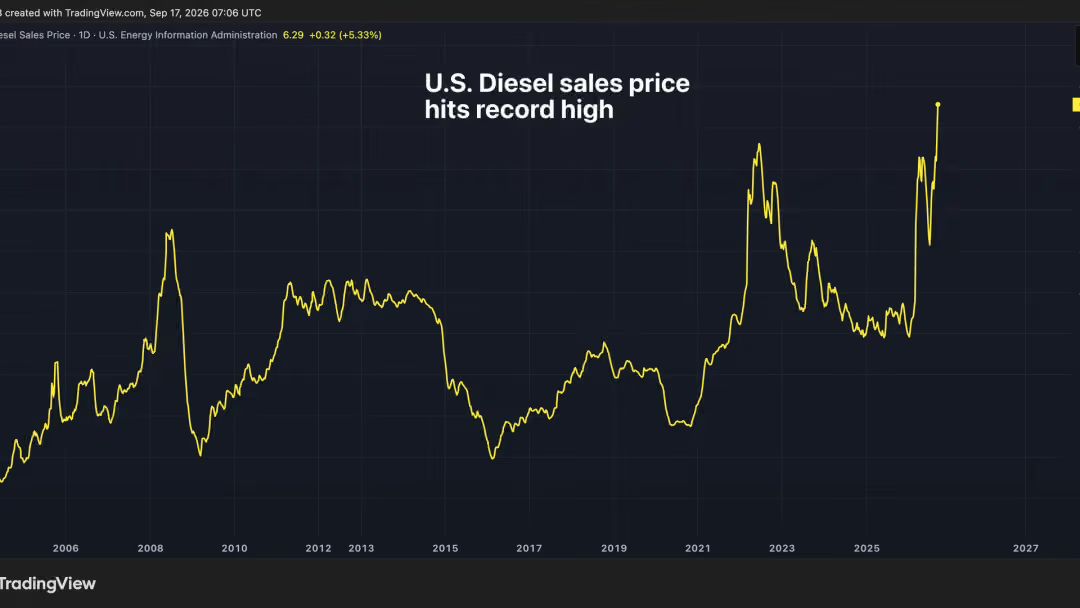
- US diesel prices surged to an all-time record of $6.29 per gallon, up nearly 80% year-to-date, driven by Middle East tensions (US-Israel-Iran conflict) disrupting crude flows and tight global refinery capacity. The record diesel spike is reigniting inflation fears across markets: Bitcoin is down 12% YTD at $76,400 while gold has retraced from early-year record of $5,600 and remains largely unchanged. Higher diesel prices threaten to feed through to transport costs, supply chains, and ultimately consumer prices.
- The timing of record diesel prices is problematic for monetary policy: the Fed is hiking by 25bps Thursday to 3.75%-4% range, with Goldman Sachs and Morgan Stanley expecting another 25bps hike in October. However, higher rates cannot address the root cause of diesel inflation—oil supply disruptions from geopolitical conflicts, not demand-side overheating. JPMorgan warns “Higher diesel prices can show up in inflation through business costs first, then potentially affect consumer prices over time.”
- Record diesel prices create specific headwinds for safe-haven assets (Bitcoin down 12%, gold unchanged but off highs) and technology stocks, which face dual pressure from higher Fed rates and supply-chain inflation. Unlike demand-driven inflation that rate hikes can suppress, supply-shock inflation (geopolitical oil disruptions) is rate-inelastic. Central banks (Fed, ECB, BOJ) are all tightening despite the structural nature of the inflation.
- Energy refiners (ExxonMobil, Marathon Petroleum, Phillips 66) benefit from record diesel prices and tight refinery capacity margins. However, transportation and logistics companies (XPO, trucking) face severe margin pressure from $6.29/gallon diesel. The supply-shock-driven inflation dynamic validates criticisms that hiking rates into an oil shock is a policy error.
What Happened?
US diesel prices hit an all-time record of $6.29 per gallon, up nearly 80% year-to-date, driven by Middle East geopolitical tensions (US-Israel-Iran conflict) disrupting crude flows and tight global refinery capacity. Bitcoin fell 12% YTD to $76,400 while gold remained largely unchanged, having retraced from early-year record of $5,600. The Fed is hiking rates by 25bps Thursday to 3.75%-4% range; Goldman Sachs and Morgan Stanley expect another 25bps hike in October. Higher diesel prices are expected to feed through to consumer inflation via transportation and supply-chain costs. The policy challenge: the inflation is supply-shock-driven (geopolitical oil disruptions), not demand-driven, making rate hikes potentially counterproductive.
Why It Matters?
For Bitcoin and gold investors, record diesel prices and Fed rate hikes create dual headwinds: higher rates pressure non-yielding assets while supply-chain inflation undermines safe-haven narratives. For transportation and logistics companies (XPO, trucking sector), $6.29 diesel severely pressures margins despite strong demand—operators can only pass through costs if shippers accept higher prices. For energy refiners (ExxonMobil, Marathon Petroleum, Phillips 66), record diesel prices expand refining spreads and margins while benefiting from tight capacity. For technology stocks, record diesel adds inflation pressure alongside Fed tightening, compressing valuations. For Fed policymakers, the diesel-inflation dynamic illustrates the policy dilemma: raising rates cannot resolve supply-shock inflation, only demand-side inflation.
What’s Next?
Monitor diesel prices for breaks above $7/gallon; if sustained above that level, it would signal worsening Middle East tensions and validate expectations for October Fed hike. Watch for corporate earnings guidance from trucking/logistics (XPO, J.B. Hunt); if Q3 guidance reflects diesel cost pressures, it would validate the margin compression thesis. Track refiner margins (crack spreads) for sustainability; if diesel refining spreads collapse on demand destruction, it would signal the supply shock is pricing out consumers. Monitor Bitcoin for break below $76,000; if crypto breaks lower despite rate-hike stabilization, it would signal diesel inflation is creating recession risk. Also watch for central bank communications; if Fed/ECB acknowledge that rate hikes cannot solve supply-shock inflation, it could trigger policy reversal. Finally, monitor oil price dynamics; if the Iran conflict escalates or ceases, it will determine whether diesel prices remain elevated or collapse.
Affected Tickers & Coins: BTC, GLD | XOM, MPC, PSX, XPO, QQQ, JPM, GS, MS
Source: CoinDesk