- A London High Court judge just dealt a major blow to thousands of Chinese victims trying to recover a £3.8 billion Bitcoin fortune. Justice Mark Turner ruled that Chinese law, not English law, should apply to the victims’ claims. That single ruling changes everything about who ultimately gets to keep the Bitcoin. The facts are these: Zhimin Qian, a Chinese national, orchestrated a massive fraud against thousands of victims in China between 2014 and 2017. She fled to Britain, was caught, and was jailed at Southwark Crown Court last year after pleading guilty. London’s Metropolitan Police seized 61,000 Bitcoin as part of the investigation—the world’s largest confirmed crypto seizure by law enforcement. Bitcoin has since soared from pennies to £62,384 apiece, meaning the haul is now worth £3.8 billion. The victims want that Bitcoin back. The UK Treasury wants to keep it as proceeds of crime. The judge just sided with the Treasury.
- The legal framework matters enormously. Under English law, the victims could have argued that the seized Bitcoin rightfully belonged to them—not that they were merely creditors owed money by an insolvent fraudster. That’s a much stronger position. They could have claimed property rights. Under Chinese law, the situation is different. Chinese victims are limited to creditor status, meaning they’re in the queue behind the government and other priority creditors. A lawyer for the victims said one victim told him: “It’s infuriating: they’ve made a fortune with this money, yet they only offer us meagre interest. Who wouldn’t be furious?” The judge ruled that because the fraud occurred in China, the money was taken in China, and the damage was suffered in China, Chinese law governs. English courts will now hear expert testimony on Chinese law to determine the outcome. That process favors the UK government.
- This is a preview of how crypto asset seizures will be handled globally. As law enforcement around the world seizes more crypto (especially from international crime rings), jurisdictional questions will matter enormously. Which country’s law applies determines who wins. The UK ruling creates precedent: if a crime occurs in jurisdiction A, but assets are physically seized in jurisdiction B, the law of jurisdiction A applies to claims. That means victims in authoritarian or weak legal systems (where they can’t easily pursue claims) will face headwinds trying to recover assets seized by stronger legal systems (like the UK). It also means wealthy countries like the UK that happen to have sophisticated law enforcement and crypto tracking capabilities can seize assets and keep them using favorable legal rules. That’s not necessarily wrong—but it does create an incentive structure where law enforcement agencies in wealthy countries are incentivized to seize crypto from foreign criminals, knowing they can retain control via favorable jurisdictional rulings.
- The victims are appealing and the case is far from over. But the momentum has shifted. The High Court’s ruling that Chinese law applies significantly narrows the victims’ path to recovery. The judge explicitly said his ruling doesn’t determine who keeps the Bitcoin—but it does determine which legal framework governs that determination. And the judge just chose the framework most favorable to the UK Treasury. For crypto markets and regulation, this signals that seized assets can be retained by countries with sophisticated law enforcement and favorable legal doctrines. For victims of crypto fraud, it signals that geography matters: if you’re defrauded in a weak jurisdiction and the fraudster is caught in a strong jurisdiction, the strong jurisdiction keeps your money. That’s not a bug in the system; it’s a feature of how global law enforcement works. But it does mean crypto fraud victims should be aware that recovering their assets through court proceedings is difficult when seized by foreign governments.
What Happened?
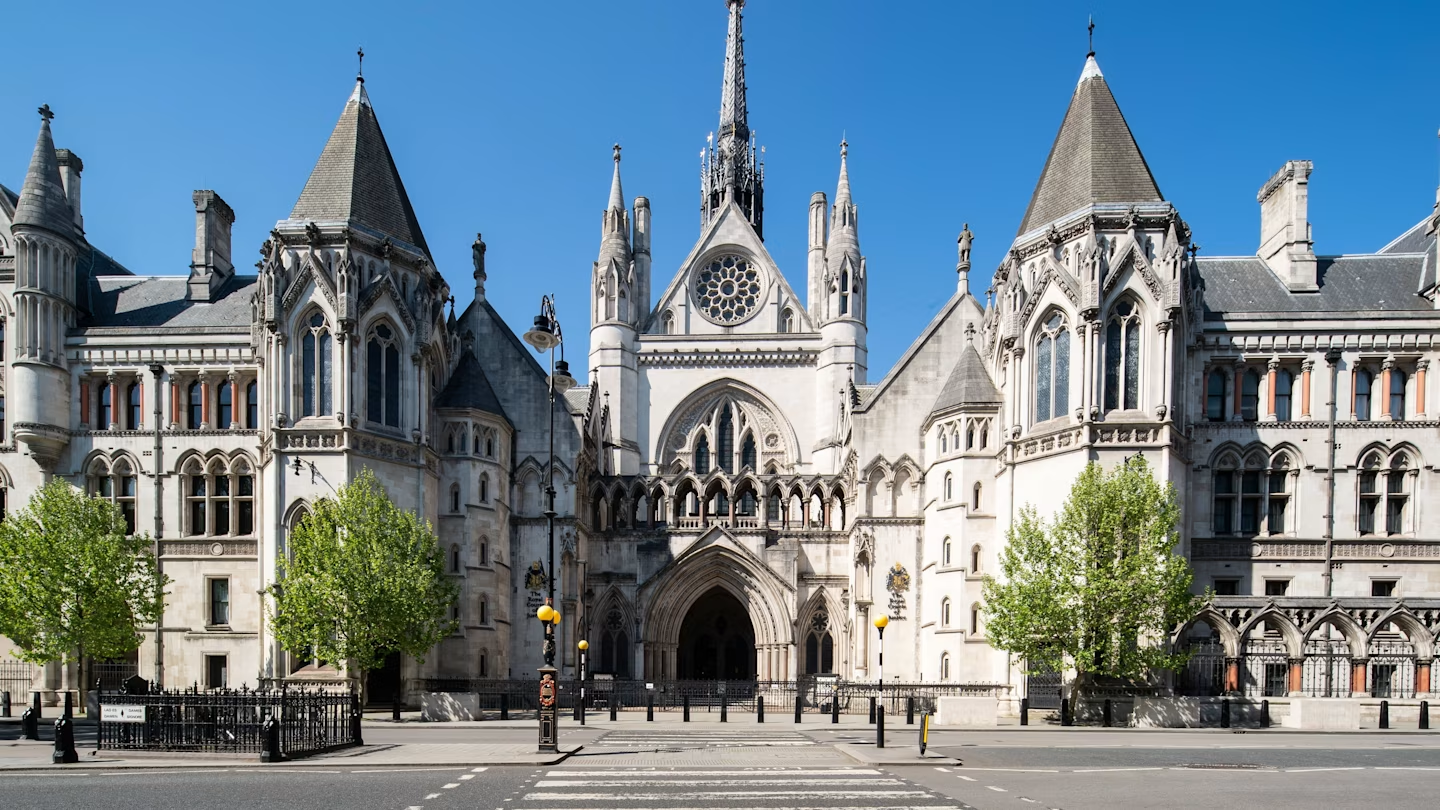
The High Court in London ruled on Monday that Chinese law, rather than English law, should apply to claims by thousands of Chinese fraud victims seeking to recover a £3.8 billion Bitcoin haul seized by UK law enforcement. Justice Mark Turner sided with the Crown Prosecution Service in the complex jurisdictional dispute over a cache of 61,000 Bitcoin seized during the investigation and prosecution of Zhimin Qian, a Chinese national who orchestrated a massive fraud against thousands of victims in China between 2014 and 2017. Qian fled to Britain, was arrested, and pleaded guilty to fraud charges at Southwark Crown Court last year. The seized Bitcoin has since appreciated significantly as the price of Bitcoin rose to £62,384 per coin, making the total haul worth approximately £3.8 billion. The civil case centers on whether victims can claim property rights to the seized Bitcoin (which English law would permit) or are limited to creditor status (which Chinese law would impose). Turner ruled that because the fraud, misrepresentation, and economic harm all occurred in China, Chinese law governs the victims’ claims. The judge stated: “The relevant damage occurred in China. The applicants parted with their money in China. The alleged fraudulent representations were made in China. The contractual relationships thereby induced were entered into in China. The immediate economic consequences of the alleged wrongdoing were likewise suffered in China.” While Turner clarified that his ruling does not determine who ultimately retains the Bitcoin, the decision narrows the victims’ legal path to recovery by applying a less favorable legal framework. The Crown Prosecution Service indicated there will be further hearings to determine the application of Chinese law and whether any victims can establish an interest in the Bitcoin. Law firm Fieldfisher, representing the claimants, said it is pursuing an appeal.
Why It Matters?
This ruling establishes a crucial precedent for how cryptocurrency seized in one jurisdiction will be treated when victims or claimants exist in another jurisdiction. The decision to apply the law of the jurisdiction where the crime occurred (rather than where the assets are held) has significant implications for the future of global crypto asset recovery. First, it creates an incentive structure for wealthy countries with sophisticated law enforcement to seize crypto from international criminals, knowing they can retain assets using favorable jurisdictional doctrines. Second, it weakens the position of victims in less developed or authoritarian legal systems. If a fraud occurs in a jurisdiction with weak victim protections and the fraudster is apprehended in a jurisdiction with strong property rights for asset holders, the strong jurisdiction’s legal system determines the outcome—typically in favor of government retention or restitution schemes designed by prosecutors, not by victim-favorable courts. Third, it signals that the geographic location of a crime determines which nation’s legal rules apply, even if the assets are seized and held thousands of miles away. For crypto specifically, this matters because digital assets leave no footprint—they can be seized anywhere and held anywhere, but the law that governs claims follows the crime, not the asset. Fourth, the ruling demonstrates that even when assets are physically held within a sophisticated legal system like the UK, that system may not protect foreign victims if the applicable law (Chinese law) doesn’t recognize their property rights. The victims become creditors rather than property owners, which weakens their legal position substantially.
What’s Next?
Monitor the appeal by Fieldfisher on behalf of the victims. If the appeal succeeds and English law is restored, the entire case dynamics flip. If the appeal fails, the High Court will proceed to hear expert testimony on Chinese law to determine whether and how much the victims can recover. Track the CPS’s statements about victim compensation schemes. The prosecution said victims could be compensated through a scheme run from China. The terms and eligibility of that scheme will be crucial to victims. If the scheme offers meaningful compensation, it reduces political pressure on the UK government. If it offers minimal compensation, it increases pressure. Watch whether this ruling affects other pending crypto asset seizure cases in the UK or other jurisdictions. If other courts cite Turner’s decision to apply the law of the jurisdiction where the crime occurred, it establishes a pattern. If courts instead try to apply the law of the jurisdiction where assets are held, the ruling becomes isolated precedent. Monitor statements from international law enforcement and regulatory bodies. If this ruling is cited favorably by law enforcement agencies seeking to retain seized crypto, expect pressure from victims’ advocates for legislative change. If critics argue the ruling is unfair to victims, it could trigger legislative responses aimed at protecting victim interests in seized asset cases. Finally, watch for any regulatory response from the UK government or other countries regarding how seized crypto should be treated when victims are foreign. If policymakers decide that fairness demands applying victim-favorable law even when assets are held domestically, legislative change could follow. Currently, the trend favors law enforcement retention authority.
Affected Tickers and Coins: BTC
Source: Financial Times