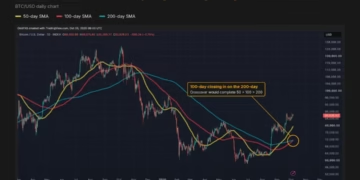
- Bitcoin is sitting out the risk trade. When the Nasdaq 100 jumped 3.4% on Monday, Bitcoin barely participated, and when stocks reversed on Tuesday, it fared worse, Bloomberg’s crypto newsletter reported, extending a stretch of unusually muted trading for an asset once synonymous with extreme swings.
- The performance gap is wide. Bitcoin is down around 16% this year, compared with a 10% gain for the S&P 500, and it has also lagged on one-month and six-month bases, according to data compiled by Bloomberg. Investors pulled over $1 billion from US spot Bitcoin ETFs over the five sessions through Friday, pushing cumulative net flows for the year into negative territory.
- Speculation has found other outlets. Possible culprits include higher yields, lingering damage from crypto liquidations and fallout from the record Binance hack, while AI stocks and platforms such as Hyperliquid compete for speculative capital. “We are so used to thinking of Bitcoin as the risk asset. It’s not anymore,” said Noelle Acheson, author of the Crypto Is Macro Now newsletter.
- Institutional hedging is dampening volatility. Paul Howard of trading firm Wincent said the growing use of derivatives and sophisticated hedging strategies “is helping to reshape Bitcoin’s volatility profile,” while FxPro’s Alex Kuptsikevich warned that “such caution hints at the possibility of a fresh downward turn at any moment.”
What Happened?
Many of the forces meant to sustain Bitcoin’s mainstream appeal remain in place, Bloomberg noted: regulators are friendly, Wall Street has built elaborate infrastructure for buying Bitcoin, and investors are still willing to chase speculative returns. Yet even products designed to attract a more durable class of buyers are struggling to draw fresh money. Bitcoin has historically lagged equities in risk-off or de-leveraging environments, most notably in 2018 and 2022, and it also underperformed while setting record highs in 2025. Separately, Goldman Sachs, Citigroup, Banco Santander and Deutsche Bank are among firms that have committed around $270 million toward a joint stablecoin venture, according to people familiar with the matter cited by Bloomberg.
Why It Matters?
If Bitcoin no longer trades as a high-beta proxy for tech, its role in portfolios is in flux: it is neither rallying with risk-on days nor acting as a haven on risk-off ones. Negative year-to-date spot ETF flows are especially telling because ETFs were supposed to provide steady institutional demand. The political backdrop is also shifting, with former banker Austin Campbell warning that “many significant figures in crypto aligned themselves with the Trump family. Those chickens are likely to come home to roost,” as Democrats prepare to take Congress.
What’s Next?
Watch US spot Bitcoin ETF flows for signs that redemptions are slowing, and whether Bitcoin can participate in the next sustained equity rebound. Rising yields after the hot October CPI and a likely December Fed hike are a headwind for non-yielding assets. With Democrats set to control Congress after their midterm sweep, the industry also faces the prospect of tougher rules and closer scrutiny of its ties to President Trump, Bloomberg said.
Affected Tickers and Coins: BTC, IBIT, COIN, QQQ
Source: Bloomberg