- Countries and regions most aligned with the US bought a net $174.3 billion of Treasuries, excluding bills, in the first eight months of 2026, according to Bloomberg’s analysis of Treasury and State Department data. That was the lowest for the period since 2021 and down more than 60% from a year earlier.
- Asia led the pullback. Japan, the biggest foreign holder of Treasuries, bought just $389 million, down 99% from a year earlier, South Korea sold $23.8 billion, the most for the period in records going back to 1977, and Taiwan was also a net seller.
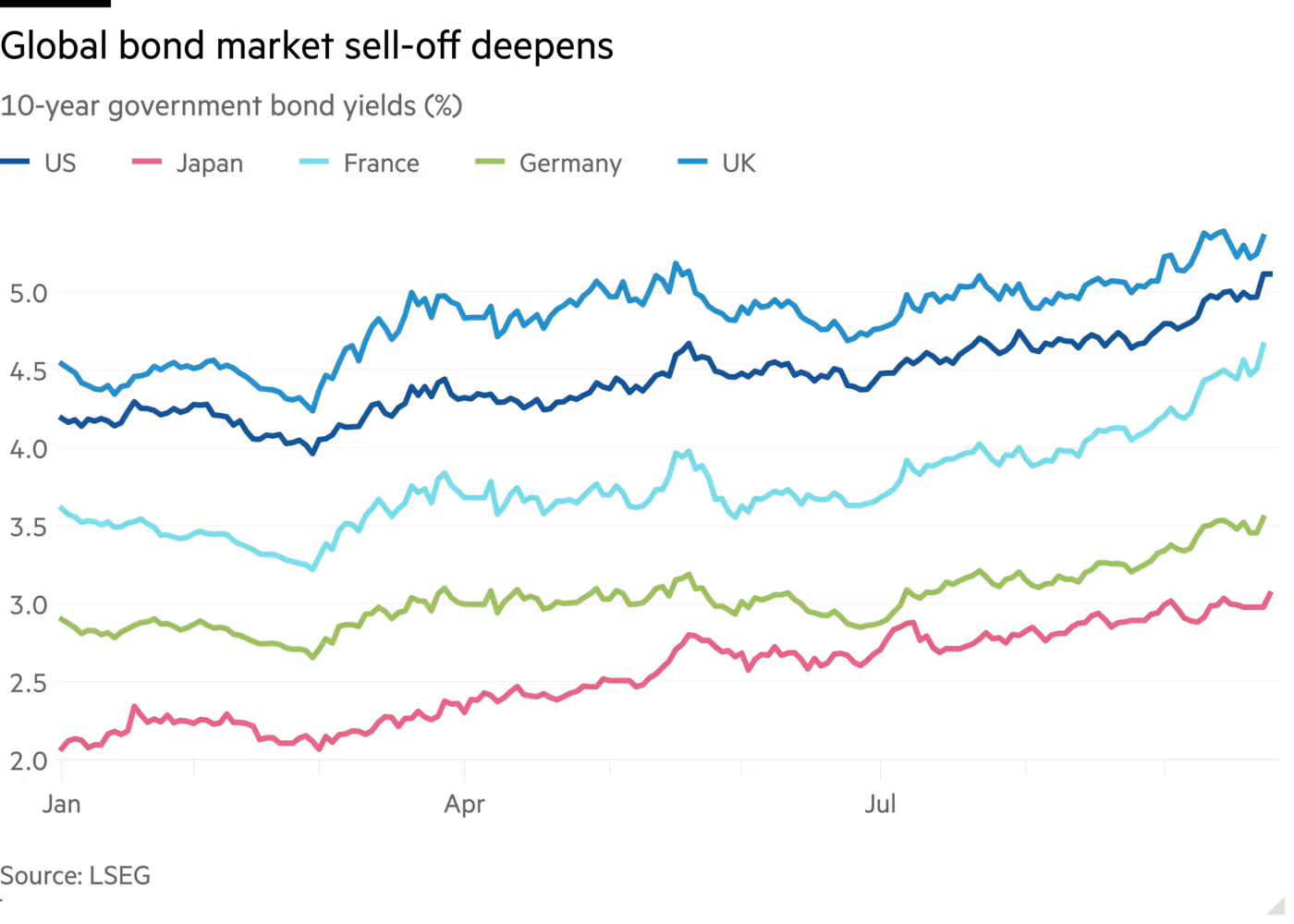
- Private investors including hedge funds, banks and mutual funds have filled the gap, lifting their share of federal debt to about 70%, near the highest since 1990. But they are more sensitive to price, which helped push the 10-year yield above 5% this year; it rose about three basis points to 5.02% on Wednesday.
- Foreigners still owned $7.85 trillion of Treasuries as of August, near a record, but their share of the market has shrunk to less than a third from a peak of 52% in 2012. “The Treasury market isn’t losing foreign buyers – it’s losing automatic buyers,” said State Street’s Masahiko Loo.
What Happened?
Bloomberg classified 57 countries and regions as most-, least- or neutrally-aligned with the US based on how often their votes on key United Nations resolutions match Washington’s. US-aligned buyers slashed purchases of Treasuries with an original maturity of more than one year, while the least-aligned group bought $17.1 billion from January through August, reversing four straight years of selling and amounting to a tenth of what aligned countries bought. China remained the biggest seller, ahead of Korea, while the UK, Hong Kong and India were the biggest buyers. The data include both official and private investors and may attribute holdings to custodial centers rather than ultimate owners.
Why It Matters?
With US debt above $40 trillion, the loss of price-insensitive buyers means Washington must lean on investors who demand more compensation. Weak currencies, rising yields at home, demand for stocks and unease over US policy are all contributing: the yen sank to its weakest in four decades, the won fell to its lowest since 2009 before recovering, and higher Japanese yields have narrowed the extra return from investing abroad. Brad Setser of the Council on Foreign Relations calls it “dereservification,” with more foreign assets flowing through pension funds and state banks instead of central-bank reserves. “The Treasury will fund itself – the question is the price and the volatility of the price,” said Deutsche Bank’s Shoki Omori.
What’s Next?
For Treasury Secretary Scott Bessent and Fed Chair Kevin Warsh, a more price-sensitive buyer base means markets can react sharply to worries about monetary policy, deficits or White House signals. The Bank of Korea said in September it plans to broaden investments beyond US bonds for part of its reserves, and BofA’s Oliver Levingston sees signs of a gradual unwind of the yen carry trade. Some foreign money is shifting into US stocks and corporate debt rather than leaving US assets, and PGIM’s Robert Tipp noted that alternatives to the $32 trillion Treasury market remain “few and far between.”
Affected Tickers and Coins: TLT, IEF, GOVT
Source: Bloomberg