
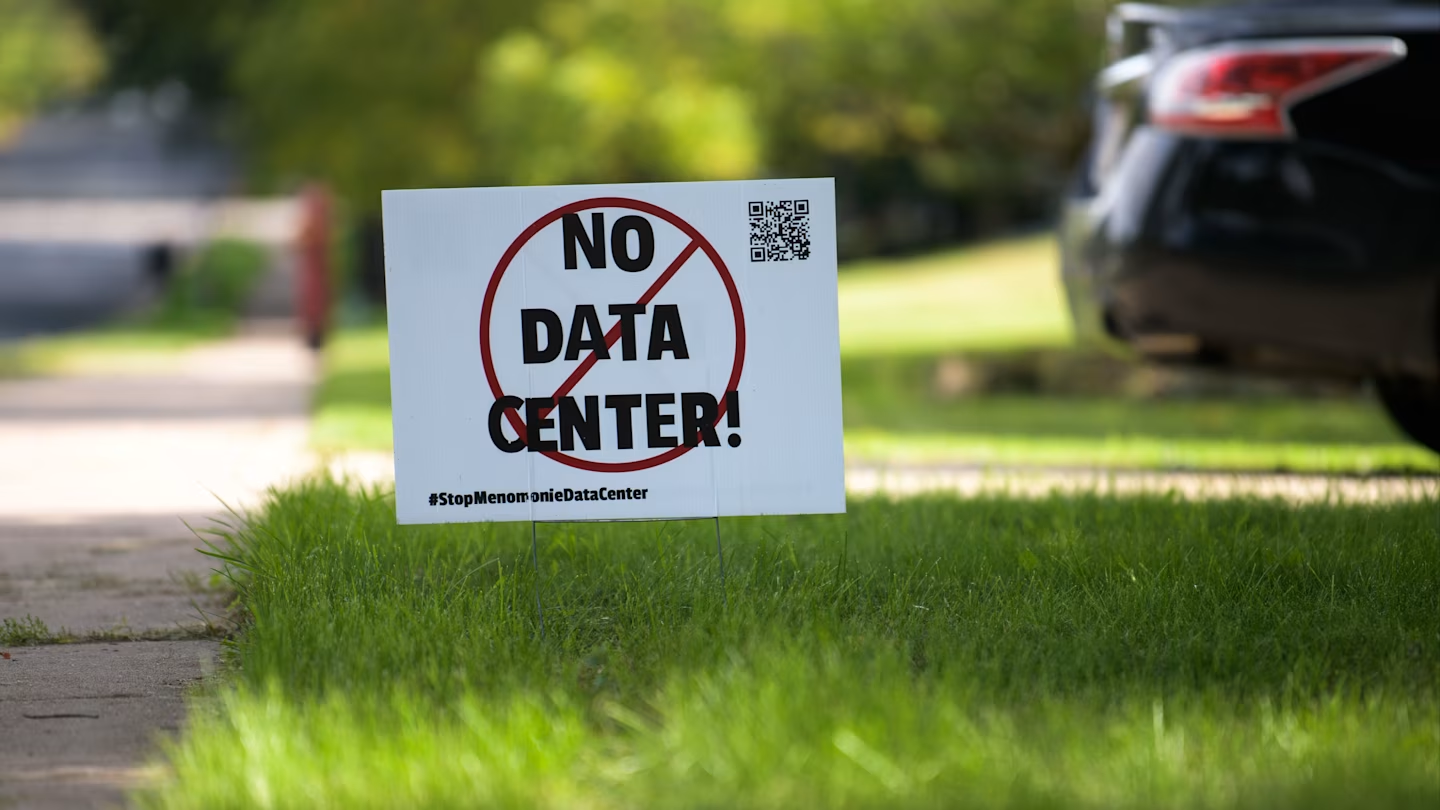
- AI Infrastructure Coalition (AIIC) launching Wednesday pledges to mitigate data centre backlash ahead of November midterms. Members (Google, Meta, Microsoft, Andreessen Horowitz, Digital Realty, Entergy, Lumen, QTS, PG&E) committing to: cover energy costs, fund community organizations (schools, hospitals), minimize water usage, prioritize local hiring, increase transparency. Kyrsten Sinema (former Democratic senator, now AIIC co-chair): pledges “set gold standard” to ensure “American AI dominance” matches “American values.” AIIC polling shows voters much more likely to support data centres when presented with these principles.
- Community opposition mounting across US. 1,000+ communities attempted moratoriums/restrictions on AI infrastructure in 2026. H1 2026: 100+ data centre projects worth $200B affected by protests/policies per Data Center Watch (10a Labs). Polling shows large majorities of both Democratic and Republican voters oppose data centres in their neighborhoods (validates Article 162 on geopolitical override of efficiency). Issue rising up midterm agenda: Michigan Republican Mike Rogers calls for one-year pause; Texas’s Ken Paxton vows to strip subsidies. Both parties moving anti-data-centre positions to court voters.
- Trump defying MAGA coalition, endorsing data centres. Trump dismissed data centre critics as wanting to end up “backwards and poor”—defying MAGA members calling for construction pause. Also dismissing AI safety concerns as “hoax” driven by Chinese actors to undermine US tech (validates Articles 162/165 on geopolitical override). Trump lunch Tuesday with AI leaders (Anthropic, OpenAI, Nvidia, Palantir, others) yielded commitment to “work with local communities”—could mean oil/gas supply, education, financial help. Trump claims locals “have become very rich” from data centres.
- Senate votes on energy-cost burden this week. Proposal for AI companies to shoulder increased energy costs. Validates Articles 140/155/167 on data center power constraints becoming binding, forcing policy intervention. Sinema blamed backlash partly on “sophisticated, targeted misinformation machine, largely driven by foreign efforts” but acknowledged Americans’ “organic” concerns are valid. AIIC response validates that political opposition real enough to require proactive community-engagement strategy (pledges, polling, public relations).
What Happened?
AI Infrastructure Coalition (Google, Meta, Microsoft, others) unveiling Wednesday pledges to mitigate data centre backlash. Commitments: cover energy costs, fund schools/hospitals, minimize water usage, local hiring, transparency. Kyrsten Sinema co-chairs, frames as “set gold standard” for American AI dominance matching American values. 1,000+ US communities attempted moratoriums/restrictions in 2026; 100+ data centre projects worth $200B affected in H1 per Data Center Watch. Polling shows majorities of both parties oppose data centres in neighborhoods. Both Republican (Mike Rogers pause, Ken Paxton subsidies-strip) and Democratic candidates taking anti-data-centre positions ahead of midterms. Trump defying MAGA coalition opposition, calling critics “backwards and poor,” dismissing AI safety as “hoax.” Trump lunch Tuesday with AI leaders (Anthropic, OpenAI, Nvidia, Palantir) yielded commitment to work with communities. US Senate likely voting this week on proposal for AI companies to shoulder energy-cost burdens.
Why It Matters?
Data centre backlash validates that AI capex infrastructure (Articles 155/167) now politically contested—not just financial/technical question but electoral issue. 1,000+ community moratoriums + 100+ affected projects worth $200B validates scale of grassroots opposition. Both parties moving anti-data-centre positions signals political vulnerability: pro-AI growth (Articles 162 geopolitical priority) colliding with local community concerns (energy costs, water usage, gentrification). Trump’s lunch with AI leaders + subsequent “work with communities” guidance validates that geopolitical AI priority (Article 162 US vs. China) overrides local opposition, but requires political appeasement (pledges, community funding). Sinema’s framing of opposition as partly “foreign misinformation” validates defensive posture: industry concerned enough to hire ex-senator, commission polling, launch coordinated PR (validates Articles 165/171 on industry defensiveness on AI risks). Senate vote on energy-cost burden validates policy escalation: if passes, forces AI companies to internalize infrastructure costs (validates Articles 140/155 on capex ROI deterioration). Validates Articles 140/155/167 thesis: capex scale ($500B+) now requires political consensus (not just financial engineering); if midterm elections swing anti-data-centre, could force capex slowdown.
What’s Next?
Monitor Senate vote this week on energy-cost burden: if passes, validates capex cost escalation (validates Articles 140/155/167 ROI pressure). Track AIIC pledge uptake: if members commit publicly to energy/water/hiring pledges, validates appeasement strategy; if vague/delayed, validates industry reluctance to cost-internalize. Watch midterm election outcomes November 5: if anti-data-centre candidates win (validates Article 178 Trump popularity risks), could force policy shifts (moratoriums, subsidies-strip). Monitor hyperscaler capex guidance: if Companies cite political opposition to data centre projects as capex-reduction driver, validates community backlash materializing in corporate strategy. Track local moratorium/restriction outcomes: if communities successfully implement bans (validates 1,000+ community attempts), validates infrastructure deployment slowdown trajectory. Finally, watch Trump policy post-election: if Trump preserves pro-data-centre stance despite midterm anti-data-centre surge, validates geopolitical AI priority (Article 162) overriding electoral/community pressure. If Trump shifts to appeasement (endorses moratoriums/subsidies-strip), validates political pressure forcing policy U-turn.
Affected Tickers and Coins: GOOGL | META | MSFT | Anthropic | OpenAI | NVDA | Palantir | Digital Realty | Entergy | PG&E
Source: Financial Times


