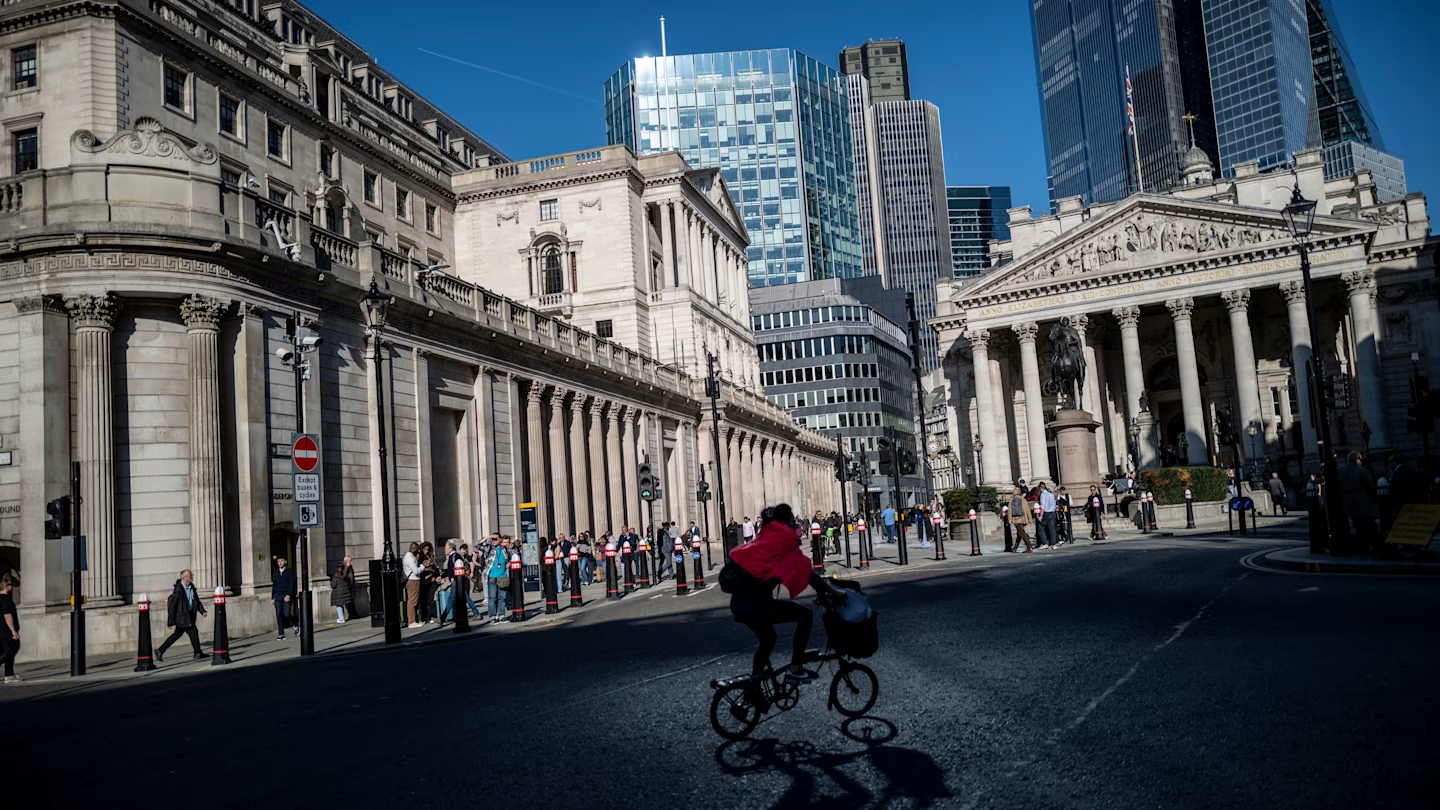
- Bank of England and Federal Reserve have stepped up scrutiny of bank exposures to large trading firms after turmoil at AI-focused hedge fund Situational Awareness caused large losses at Jane Street, world’s most profitable trading firm ($40bn revenues last year). Regulators asking global banks about exposure to trading firms including Jane Street and Ken Griffin’s Citadel Securities. Regulators seeking information on firms’ risk appetite, how exposures evolved during day, and how risk controls operated. Fed and BoE had made understanding banks’ exposure to non-bank financial intermediaries longer-term priority; intensified efforts following Jane Street’s $15bn July loss.
- Jane Street loss stemmed from multibillion-dollar losses at Leopold Aschenbrenner’s hedge fund Situational Awareness, in which Jane Street had invested. Scale of loss indicated Jane Street takes far more risk than typical market maker. Jane Street also has stake in Anthropic (OpenAI competitor). Despite $15bn loss, Jane Street generated $40bn in net trading revenues since start of year—eclipsing record 2025 gains. Typical trading firms like Jane Street, Citadel Securities, Susquehanna, Hudson River Trading have diversified beyond low-risk market-making into large proprietary trading with directional bets. Unlike hedge funds with external investors, trading firms exclusively manage founders/employee capital, enabling them to take outsized risks.
- Regulatory focus on prime broker leverage exposure is critical: banks provide leverage to trading firms and hedge funds via prime brokerage, extending credit to finance equities trades, derivatives transactions, and bond positions. Prime broking has become “big business for banks, helping power record profits across Wall Street.” Banks face losses if trading firm defaults on financed trades. BoE also probed rapid growth of financing Asian equities by London prime brokers this year, after AI-driven stocks (SK Hynix) made extraordinary gains. BoE noted “rising intraday exposures—particularly for firms providing market access, clearing, and financing to electronic market-makers—continues to pose potential risks.”
- Potential regulatory outcomes: If Fed/BoE believe banks taking excessive risks financing trading firms, they can increase high-quality liquid assets (HQLA) required for banks to hold—reducing leverage banks can extend. Capital requirement increases would lower prime broking profitability and returns. Jane Street’s $15bn loss validates regulatory concern: if single trading firm can lose $15bn, concentration risk is real. Regulatory tightening could limit trading firms’ leverage/risk-taking, reducing their capital availability for venture investments (including Anthropic). Systemic importance of trading firms makes them regulatory priority going forward.
What Happened?
Bank of England and Federal Reserve increased scrutiny of bank exposures to trading firms following Jane Street’s $15 billion loss on AI hedge fund Situational Awareness. Regulators asking global banks about exposures to trading firms (Jane Street, Citadel Securities) and seeking information on risk appetite, intraday exposure evolution, and risk controls. Jane Street loss stemmed from Leopold Aschenbrenner’s hedge fund Situational Awareness, which Jane Street had invested in. Despite $15B July loss, Jane Street generated $40bn net trading revenues since start of year. Jane Street also holds stake in Anthropic. BoE probed rapid growth of London prime brokers financing Asian equities this year (SK Hynix, other AI stocks). Regulatory focus on non-bank financial intermediaries (trading firms, market makers) becoming priority as systemic importance grows. Prime broking is major profit driver for JPMorgan, Bank of America, Goldman Sachs, Citigroup.
Why It Matters?
For bank shareholders (JPM, BAC, GS, C), regulatory scrutiny on prime broking exposures could force capital requirement increases, reducing leverage banks can extend to trading firms and lowering prime broking profitability. Prime broking is record profit driver for Wall Street; tightening would pressure earnings. For trading firm employees/founders (Jane Street, Citadel), regulatory limits on prime broker leverage could constrain risk-taking and returns. For venture capital funding landscape, if trading firms scale back due to regulatory pressure, it reduces capital availability for AI startups like Anthropic. For international investors, BoE’s focus on Asian equity financing by London prime brokers could trigger restrictions on leverage-driven trading in Asian markets, reducing volume/liquidity. For Anthropic, Jane Street’s status as major stakeholder facing regulatory scrutiny/leverage limits could reduce future funding availability if Jane Street needs to de-risk.
What’s Next?
Monitor Fed/BoE formal guidance on prime broker capital requirements; if regulators impose higher HQLA requirements, it would pressure JPM/BAC/GS/C prime broking profitability. Watch bank earnings for prime broking revenue guidance; if banks warn of regulatory headwinds, it would validate tightening thesis. Track Jane Street’s public statements on risk management; if firm signals scaled-back risk-taking, it validates regulatory pressure. Monitor Anthropic funding rounds; if Jane Street reduces venture capital contributions, it could pressure Anthropic’s valuation or IPO timeline. Watch for regulatory enforcement actions against prime brokers; if fines/restrictions imposed, it would signal regulators are serious about de-risking. Track trading firm hiring/compensation; if trading firms scale back hiring, it signals capital constraints from regulatory scrutiny. Also monitor Asian equity market liquidity; if London prime brokers reduce leverage on Asian stocks, it could trigger sell-offs in AI-driven names like SK Hynix.
Affected Tickers & Coins: JPM, BAC, GS, C, MSFT
Source: Financial Times