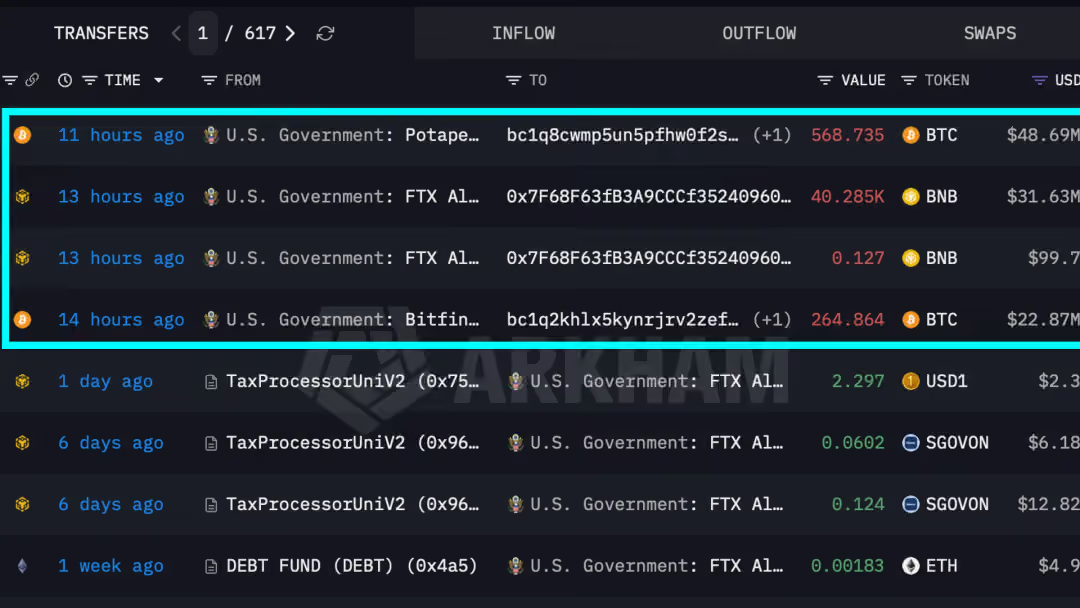
- Wallets linked to the U.S. government transferred over $100 million in cryptocurrency on Tuesday, according to blockchain intelligence firm Arkham. Government moved 833.599 BTC ($71.6M) to two unlabeled addresses, which then forwarded the coins to Coinbase Prime deposit addresses. Separately, government wallet sent 40,285 BNB ($31.63M) through two additional unlabeled addresses. The movements, while significant in volume, do not represent a confirmed sale—instead resembling custody transfers or consolidation of existing holdings.
- Source funds shed light on enforcement and seizure operations. BTC originated from Potapenko/Turogin forfeited funds (568.7 BTC) and Bitfinex hack case seizures (264.9 BTC)—both multi-year enforcement actions recovered from illicit sources. BNB came from Alameda Research seizures, reflecting government’s asset recovery from FTX collapse aftermath. This pattern demonstrates government’s consolidation of recovered enforcement assets, not new purchase of taxpayer funds. U.S. government maintains ~$27.5 billion in total crypto holdings, all from seizures and forfeitures—no direct capital allocation to crypto purchases.
- Coinbase Prime routing validates custody infrastructure maturation. Movement to Coinbase Prime deposit addresses signals institutional-grade custody strategy rather than sale preparation. Coinbase Prime offers government-grade security and regulatory compliance, suggesting U.S. government building professional infrastructure for long-term crypto holdings. Under March 2025 executive order, bitcoin forfeited to government is meant to be held in Strategic Bitcoin Reserve—transfers align with this framework rather than indicating liquidation intent. Market commentator Jose Rosell: “A transfer is not the same as a sale.”
- Market sentiment risk remains despite no-sale narrative. Transfers of government crypto holdings routinely spark liquidation fears among retail investors, creating temporary sell pressure. While this transfer appears operational (custody consolidation), the $100M+ volume could trigger cascading stops or technical breakdowns if interpreted as sale signal. Government holding pattern matters: $27.5B in seized assets represents 0.13% of Bitcoin’s $20T+ market cap but carries psychological weight as regulatory narrative. Clarity from Treasury on Strategic Bitcoin Reserve implementation would reduce speculation.
What Happened?
Wallets linked to the U.S. government transferred more than $100 million in cryptocurrency on Tuesday, according to blockchain intelligence firm Arkham. The government sent 833.599 BTC, worth approximately $71.6 million at the time of transfer, to two unlabeled addresses that subsequently forwarded the coins to addresses Arkham labels as Coinbase Prime deposit addresses. A separate government-labeled wallet sent approximately 40,285 BNB, worth $31.63 million, to unlabeled address 0x7F68F63fB3A9CCCf352409603421E0A574FbAD90, which then forwarded all assets to second unlabeled address 0x6fB3Fe7b7E78AbB84CE007cBC7412C850B15A579. The BTC originated from Potapenko/Turogin forfeited funds (568.7 BTC) and Bitfinex hack case seizures (264.9 BTC). The BNB came from assets seized from Alameda Research.
Why It Matters?
Government crypto transfers routinely spark liquidation fears among investors, but this movement appears operational rather than sale-related. The routing through Coinbase Prime—institutional-grade custody platform—suggests the U.S. government is consolidating holdings using professional infrastructure rather than preparing for liquidation. Under a March 2025 executive order, bitcoin forfeited to government is meant to be held in Strategic Bitcoin Reserve, and these transfers align with that framework. U.S. government maintains approximately $27.5 billion in total crypto holdings, all from seizures and forfeitures with no taxpayer funds used for new purchases. The consolidation move validates maturing government approach to crypto asset management, using institutional custody rather than self-custody or exchange balances.
What’s Next?
Monitor Treasury communication: if government releases Strategic Bitcoin Reserve implementation details (validates clarity), reduces speculation and stabilizes market; if remains silent, continued transfer rumors could trigger volatility. Track Coinbase Prime holdings: if government continues consolidating there (validates professional custody), suggests long-term reserve strategy; if moves to different custody, suggests strategy change. Watch market reaction: if sell-off follows transfer narrative despite no-sale confirmation (validates retail fear), demonstrates perception risk for government holdings. Finally, monitor regulatory clarity: if March 2025 executive order details emerge (validates reserve framework), could resolve whether government intends accumulation, holding, or eventual monetization of $27.5B seized assets.
Affected Tickers and Coins: BTC | BNB
Source: CoinDesk