- The Treasury sold $39 billion of 10-year notes at 5.3%, below the prevailing yield before the auction, which indicates strong demand. Bid-to-cover jumped to 2.77, the highest since 2016, and non-dealer investors took down a record 97.5% of the sale.
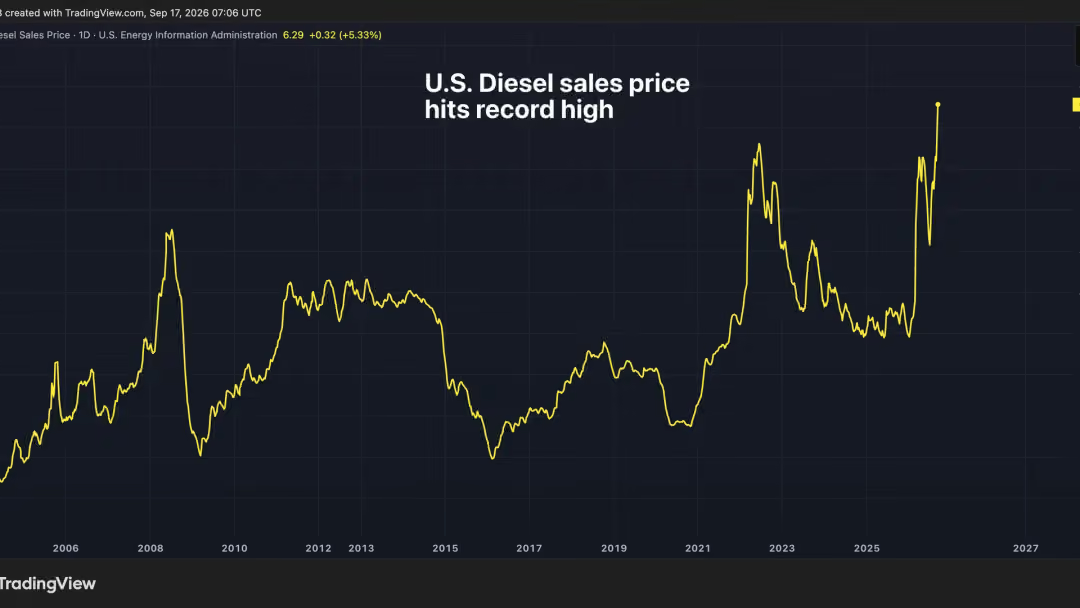
- Yields erased earlier increases on the result. The 10-year finished little changed at 5.28% after reaching 5.36% intraday, and the 30-year was roughly flat at 5.66% having climbed earlier on rising oil prices that raised concern about faster inflation and further rate increases.
- Monty Gandhi, rates strategist at SMBC, said deeper-pocketed investors are finally finding these levels appealing, noting that larger players began unwinding short positions around 5% and appear to be re-entering gradually.
- Separately, Ray Dalio told the Forbes Global CEO Conference in Singapore that artificial intelligence is a classic bubble approaching its bursting point, driven by the large amount of debt being taken on to fund it. He said the market is in the part of the cycle before that point but close to it.
What Happened?
Technology companies are spending hundreds of billions on AI, increasingly financed with debt, while market gains concentrate in a handful of stocks and the S and P 500 and Nasdaq 100 reached record highs this week. Dalio also identified wealth taxes and other pressures to convert unrealised gains into cash as potential triggers, observing that paper wealth has to be sold before it can be spent, and that this is usually where bubbles are pricked.
Why It Matters?
The composition of the auction matters more than the headline yield. Non-dealer investors taking a record 97.5% means end buyers absorbed the paper rather than primary dealers warehousing it, which is the distinction between genuine demand and an auction that merely cleared. Combined with a bid-to-cover of 2.77, the strongest since 2016, this is the first substantial evidence that the relentless rise in long-term yields has found a level where real money is willing to commit. For anyone positioning in duration, that is more informative than any forecast, though one auction does not establish a floor. The two stories here are mechanically the same story. Dalio argument is not that AI valuations are detached from fundamentals in the abstract, it is that the buildout is debt-financed and that rising rates eventually make the financing unworkable. That makes the clearing level for Treasury yields the variable his thesis depends on. If demand is genuinely returning around 5.3%, the cost of financing AI infrastructure stabilises and his trigger recedes; if yields resume climbing, it activates. The current evidence of enormous bridge lending being written for acquisitions, with roughly $35 billion from a single bank in recent days, all of which must be refinanced into bond markets, shows how much corporate borrowing is queued behind this question. His second trigger is the one receiving least attention and it connects to developments elsewhere. Wealth taxes and other mechanisms forcing unrealised gains into cash compel selling by people whose wealth sits in concentrated equity positions, which is exactly the cohort holding the AI gains. Hungary has just introduced a wealth tax from January 2027 assessed on end-2026 valuations, California and New York are weighing similar measures, and reporting suggests wealthy individuals worth $160 billion have left the UK. Forced liquidity events in concentrated positions are a different mechanism from a valuation correction, and they are becoming more common.
What Next?
Whether subsequent auctions show similar non-dealer participation is the test of whether demand at these levels is durable or a one-off. Watch the 30-year, which at 5.66% remains the most sensitive point on the curve and which climbed on oil before the 10-year result pulled it back. Oil prices are now a direct input into the rate path, so the G7 release and any Hormuz resolution matter for bonds as well as for energy. For the AI question, corporate debt issuance to fund infrastructure is the series to follow, since Dalio mechanism runs through financing cost rather than through sentiment. Equity markets at record highs while yields sit at 24-year highs is an unresolved tension that one of the two markets will eventually settle.
Affected Tickers and Coins: ZN, ZB, TLT
Source: Bloomberg