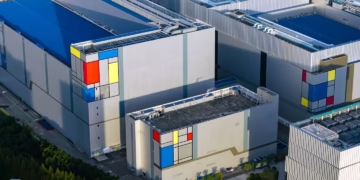
- Samsung Electronics said it expects operating profit for this quarter to be more than double what it earned in all of 2025, a remarkable figure driven by memory pricing. Shares fell regardless, which the Wall Street Journal attributes to how lofty expectations for AI beneficiaries have become.
- Taiwan Semiconductor reported September sales up 55% from a year earlier, but down 0.6% from the previous month. Its US-listed shares slipped in premarket trading on the sequential decline rather than rising on the annual growth.
- Applied Digital, a data centre developer, said quarterly revenue more than quadrupled on demand from AI hyperscalers while still recording a loss. Its shares rose premarket.
- Taken together the three reactions describe what the market is actually paying for: Samsung delivered extraordinary absolute profit and fell, TSMC delivered 55% annual growth and fell on a sequential dip, and Applied Digital delivered no profit at all and rose on growth rate.
What Happened?
The three updates arrived on the same morning, with US equity futures pointing to a second consecutive decline after benchmarks reached records, crude up 5.2% on Houthi attacks and Gulf production shut-ins, and the 10-year Treasury yield at 5.31%.
Why It Matters?
Expectations have moved past results, and this is as clean an illustration as the market provides. A company guiding to a single quarter of operating profit exceeding its entire previous year would normally be among the better earnings events of a cycle, and the shares fell. That means the figure was already embedded in the price and investors were looking for something beyond it. When exceptional absolute performance no longer moves a stock, the margin for disappointment has become very thin. The TSMC detail is the one to track most closely. A 0.6% sequential decline is noise in isolation and the 55% annual growth is the dominant fact, but TSMC monthly revenue is the best real-time read on AI hardware demand available anywhere, since essentially every advanced accelerator passes through its fabs. The market treated the monthly number as more informative than the annual one, which tells you investors are now watching for the inflection rather than the level. One month establishes nothing, and a second consecutive sequential decline would matter a great deal. Applied Digital rising while unprofitable completes the picture. Capital is still rewarding capacity construction regardless of whether it earns anything, which is consistent with the broader financing environment where AI firms are raising enormous sums and lenders are accepting structures they would not otherwise. The combination, punishing profitable deceleration while rewarding unprofitable growth, is characteristic of a theme in its later stages rather than its early ones. For Samsung specifically, the profit guidance quantifies the memory squeeze reported earlier, with the company quoting around $4 a gigabit for HBM4 memory, roughly three times current rates, while simultaneously raising Galaxy handset prices because of the same shortage.
What Next?
TSMC October monthly revenue is the single most useful datapoint for anyone assessing whether AI hardware demand is still accelerating, and a second sequential decline would be the first genuine evidence of a plateau. Samsung full results will confirm whether the memory pricing driving the guidance is contracted or merely quoted. For Applied Digital and similar developers, the question is when revenue growth converts into profit, and whether investors continue funding capacity before it does. Consumer price data on October 14 and the Federal Reserve meeting later this month set the discount rate against which all of these valuations are judged.
Affected Tickers and Coins: 005930, TSM, APLD, NVDA, MU
Source: The Wall Street Journal