Key takeaways
Powered by lumidawealth.com
- Crypto-treasury stocks are unwinding: As bitcoin/ether fell, companies that issued stock and debt to accumulate tokens are seeing their shares slide, reducing their ability to raise new capital for purchases.
- Losses are now visible and sentiment-driven: Strategy is near/under its average bitcoin cost basis after BTC dipped below ~$76k, while ether-treasury firms face multi-billion paper losses.
- Key risk is “forced seller” dynamics: If prices keep falling and equity premiums compress (mNAV approaches/breaks 1), some firms may be pushed toward selling tokens—potentially creating a negative feedback loop for crypto prices.
- Shareholders may be the biggest losers: Investors paying a premium for token exposure via corporate proxies (instead of holding the underlying coins) are absorbing volatility, dilution risk, and governance/financing risk layered on top of crypto beta.
What Happened?
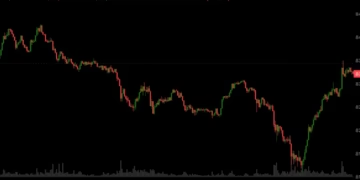
Bitcoin fell below $76,000 over the weekend before stabilizing near ~$78,000, while ether traded around ~$2,300—both sharply off prior peaks. The selloff hit companies that built a corporate strategy around accumulating crypto (often funded by stock/debt issuance), sending their shares lower and tightening their ability to keep buying. Strategy—holding more than 700,000 bitcoin—moved into paper-loss territory versus its average purchase price, and its shares have fallen materially from their highs. Ether-focused firms such as BitMine Immersion Technologies reported large unrealized losses as ether declined, while other crypto-treasury names tied to assets like solana also dropped.
Why It Matters?
This is a stress test of the “crypto-treasury” model: when token prices rise, these companies behave like leveraged upside proxies; when prices fall, the same structure can amplify downside through weaker equity prices, tougher fundraising conditions, and mounting skepticism about solvency. The market’s central fear is a reflexive loop—lower token prices → lower equity valuations/premiums → less access to capital → potential token selling to support balance sheets or buy back stock → even lower token prices.
A key metric is mNAV (enterprise value divided by the value of crypto holdings). When mNAV is comfortably above 1, companies can issue shares at a premium and keep accumulating; when it approaches/breaks 1, the premium disappears and the “self-funding accumulation” flywheel can stall—or flip into pressure to sell. Even without near-term debt maturities, the combination of dilution, sentiment swings, and funding dependence makes these vehicles structurally fragile in risk-off regimes.
What’s Next?
Watch (1) whether crypto prices continue stabilizing or resume sliding—because prolonged weakness raises the probability of treasury-model capitulation, (2) mNAV levels and secondary/offering activity, which signal whether these firms can still fund purchases without destructive dilution, and (3) near-term catalysts like Strategy’s upcoming financial results and any guidance on liquidity, dividends, and debt service. Also monitor Washington’s crypto regulatory timeline: delays were cited as a sentiment headwind, and any clarity could either relieve pressure or confirm that the “mainstreaming” narrative is cooling.