Key takeaways
Powered by lumidawealth.com
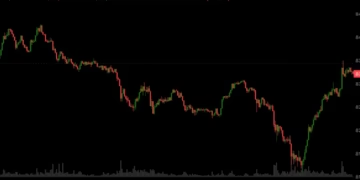
- Bitcoin fell to ~$60,033 then rebounded to ~$66,700 in the same session, highlighting extreme volatility.
- Market focus has shifted to whether $60,000 holds; a break could open downside toward the mid-$50,000s.
- The move reflects forced deleveraging: large liquidations, ETF outflows, and broader risk-off conditions amplified selling pressure.
- Corporate and institutional exposure is showing strain, including Strategy’s large mark-to-market loss tied to its Bitcoin holdings.
What Happened?
Bitcoin swung sharply after a steep selloff pushed it down as much as ~4.8% to about $60,033, before buyers stepped in and lifted it back to roughly $66,700 on the day. Other major tokens also saw sharp intraday reversals, underscoring a market driven by liquidation dynamics and thin liquidity.
Why It Matters?
For investors, this is a signal that crypto has shifted from a trend-driven market to a positioning-driven market, where leverage and liquidity dominate price action. Volatility surged (options-implied volatility jumped materially), and liquidations hit billions, implying forced selling rather than purely discretionary risk reduction. The pressure is also spilling into the “crypto balance sheet” trade: corporate holders like Strategy reported large mark-to-market losses, and spot Bitcoin ETFs saw meaningful outflows—both of which can tighten incremental demand during drawdowns.
What’s Next?
The key near-term level is $60,000. If it holds, traders may treat the move as a capitulation-style flush with tactical dip-buying support; if it fails, the market is increasingly braced for a slide into the mid-$50,000s. Watch three indicators: (1) whether ETF flows stabilize or keep bleeding, (2) whether liquidations slow materially (signaling deleveraging is mostly done), and (3) whether implied volatility stays elevated, which would keep risk premiums high and rallies fragile.