Key Takeaways
Powered by lumidawealth.com
- Bitcoin posted its fourth consecutive weekly loss and failed to hold a weekend bounce toward ~$71,000, signaling weak follow-through.
- The token is down >40% from its October peak near ~$127,000, while the broader crypto market has shed nearly $2T in value.
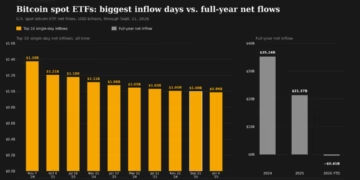
- US spot Bitcoin ETFs have seen ~$8.4B in net outflows since the Oct. 10 liquidation-driven selloff, a key sentiment and liquidity headwind.
- Analysts are split: some see a potential base above the 200-week moving average (~$58,239), while others view the rebound as a “bearish pause” with resistance near ~$69,000 and ~$73k–$75k.
What Happened?
Bitcoin fluctuated after recording a fourth straight weekly decline, with a weekend rally fading quickly. After briefly approaching ~$71,000 on Saturday, the token ended the week down and slid further toward the mid-$60,000s on Monday, while Ether also declined. The drawdown remains steep: Bitcoin is more than 40% below its October high near ~$127,000, and the broader crypto market has lost almost $2 trillion in value over the same period.
Why It Matters?
Market structure is being driven by positioning and flows, not just narratives. Persistent ETF outflows act as a measurable signal of institutional risk reduction and reduce incremental demand that can stabilize price after sharp declines. The October 10 liquidation event appears to have reset sentiment, and the market is still searching for a durable “floor.” For investors, the key is whether crypto can reclaim key resistance levels with improving flows, or whether rallies continue to fail and turn into lower highs—keeping volatility elevated and forcing more deleveraging.
What’s Next?
Watch US spot Bitcoin ETF flows and corporate/treasury sentiment as near-term indicators of whether capital is returning or still exiting. Technically, the 200-week moving average around ~$58,239 is a widely watched downside level, while ~$69,000 is the immediate hurdle and ~$73,000–$75,000 is the next resistance band if momentum improves. Also watch major bank and sell-side forecast revisions, as downward target resets can influence positioning and risk limits across institutional portfolios.