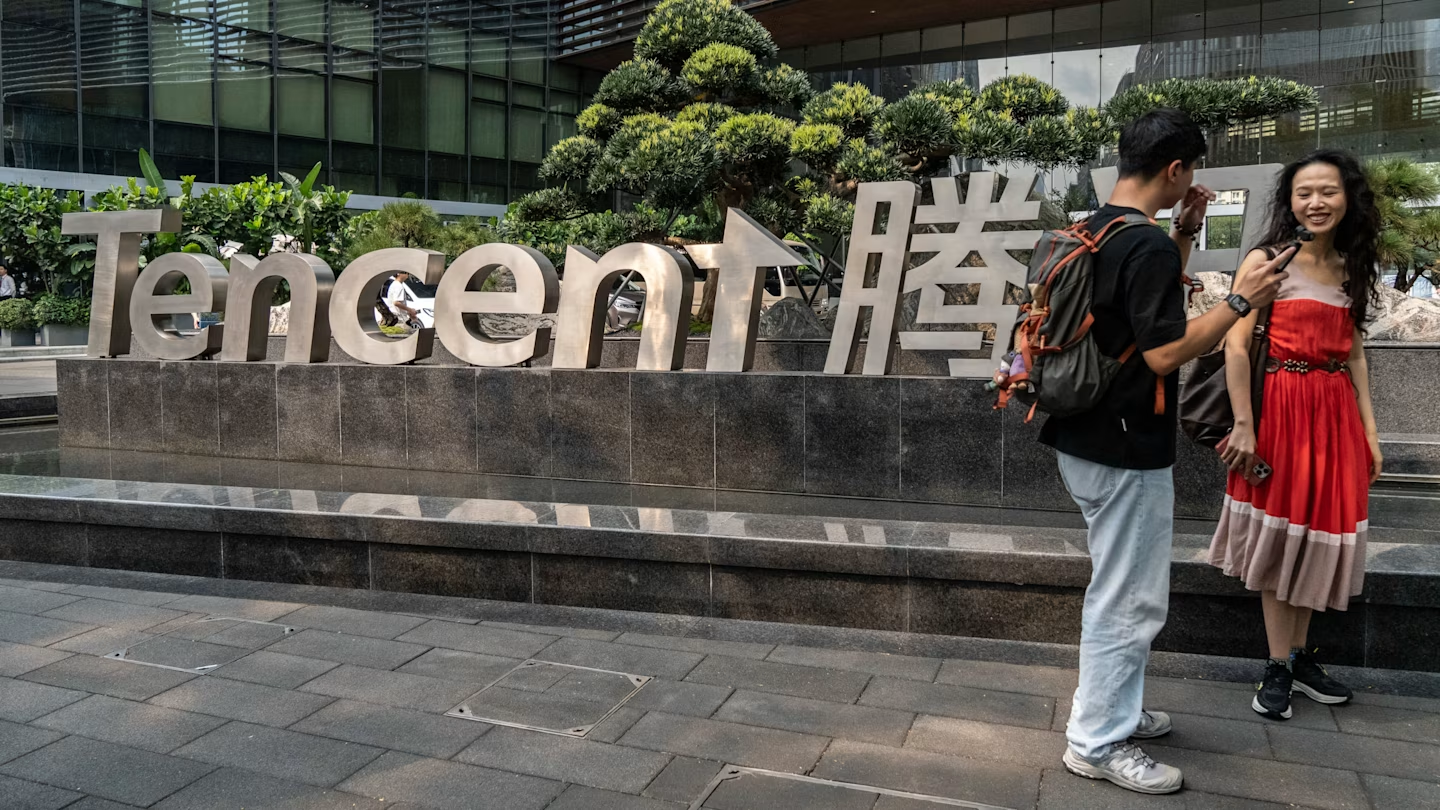
- Tencent’s largest Oracle deal: 100K advanced chips, $7B five-year Southeast Asia lease. Tencent signed agreement accessing multiple Oracle data centers in Southeast Asia for five years. Deal provides ~100K advanced AI chips unavailable in China. Estimated worth $7B with ~30% upfront payment. Enables Tencent to train cutting-edge AI models + develop agentic tools (validates Articles 162/167 on geopolitical sourcing imperative). Bypasses two constraints: (1) China domestic chip shortage, (2) US export controls preventing Nvidia advanced processors (validates Articles 162/167/180 on export-control arbitrage via offshore access).
- Negative free cash flow Q2 validates capex intensity. Tencent’s $7B lease contributed to negative FCF Rmb13.8B ($2B) in Q2—first negative quarterly FCF in decade-plus (validates Articles 140/155/167 on infrastructure-investment magnitude forcing balance-sheet stress). Upfront 30% payment validates capital requirements. Competition: ByteDance/Alibaba remain largest Southeast Asia data-center clients, driving prices up + extending lease terms (validates Articles 140/155/162 on capex-cost inflation from geopolitical supply constraints).
- Tencent’s model capabilities catching Alibaba’s Qwen; WeChat AI agents scaling. Hunyuan latest models show “substantial improvements” closing gap with Alibaba’s Qwen (validates domestic model competition intensifying). Tencent rolling out Xiaowei embedded agent in WeChat (1.4B+ users) executing tasks across mini-programs (ordering, booking, etc.). WorkBuddy office agent leading PC-based Chinese market (validates Articles 165/169/184 on agentic AI deployment—Tencent implementing WeChat superapp agents similar to Article 169 on banks’ auto-sweep agents, validates infrastructure enabling mass-market agent deployment).
- Infrastructure capex +176% YoY validates geopolitical priority override. Q2 capex jumped 176% YoY to Rmb53B ($7.9B) for AI infrastructure + computing pre-payments (validates Articles 155/162/167 on China treating AI capex as non-discretionary strategic spending, despite negative FCF). Tencent restructured infrastructure/data departments, hired top talent (validates Article 155/162 on organizational prioritization of AI capability). Validates that ByteDance/Alibaba competitive pressure + US export controls forcing acceleration (validates Articles 140/155/162 on policy-driven capex concentration).
What Happened?
Tencent signed $7B five-year lease with Oracle for access to 100K advanced AI chips across Southeast Asia data centers. Deal includes ~30% upfront payment. Enables training of models requiring advanced processors unavailable in China due to domestic shortage + US export controls on Nvidia chips. Deal contributed to Tencent’s negative Q2 free cash flow of Rmb13.8B ($2B)—first negative quarterly FCF in decade. Infrastructure capex jumped 176% YoY to Rmb53B ($7.9B) for AI infrastructure + computing pre-payments. Tencent’s Hunyuan models closing gap with Alibaba’s Qwen. Tencent deploying Xiaowei agent in WeChat (1.4B+ users) for mini-program execution. WorkBuddy office agent leading China PC-based agent market. ByteDance + Alibaba remain largest Southeast Asia data-center clients, driving lease terms + pricing higher.
Why It Matters?
Tencent’s $7B Oracle lease validates Articles 155/162/167 on geopolitical sourcing imperative: Chinese tech companies forced to access US offshore resources due to domestic constraints (chip shortage) + US export controls (Nvidia embargo). Negative FCF validates Articles 140/155/167 on capex intensity forcing balance-sheet stress (validates that Chinese companies prioritizing AI race over financial discipline). Lease prices rising (due to ByteDance/Alibaba demand + export-control scarcity) validates Articles 140/155 on capex-cost inflation from geopolitical constraints. Hunyuan closing Qwen gap validates Articles 162/164 on Chinese AI companies catching up despite US technology restrictions (validates that access to compute (via offshore lease) enabling model quality convergence). WeChat Xiaowei + WorkBuddy agent scaling validates Articles 165/169/184 on agentic AI deployment ramping mass-market (validates that geopolitical compute access enabling China to pursue agent-based services similar to US platforms like Article 169 Meta Muse). Infrastructure capex +176% validates Articles 155/162 on strategic priority of AI capability over profitability (validates that policy override of shareholder returns).
What’s Next?
Monitor Tencent Q3/Q4 capex: if remains elevated +150%+ YoY (validates sustained geopolitical investment), validates continued AI prioritization. Track FCF recovery: if negative FCF persists into Q3 (validates capital-intensity continuing), validates balance-sheet stress duration. Monitor Oracle deal expansion: if Tencent increases lease commitments (validates model-training demand surge), validates scaling trajectory. Watch ByteDance/Alibaba capex: if match/exceed Tencent’s (validates arms-race dynamics), validates geopolitical capex concentration. Monitor Xiaowei/WorkBuddy adoption: if scale materially (validates WeChat agent monetization), validates consumer AI infrastructure value. Track Hunyuan vs Qwen benchmarks: if closes completely (validates Articles 162/164), validates Chinese capability convergence despite US restrictions. Monitor US export controls escalation: if tighten (validates policy response to Chinese offshore workarounds), could force additional capex for alternative compute. Finally, watch Oracle financials: if reveals Tencent deal scale in earnings (validates revenue concentration risk from single customer), validates dependency dynamics.
Affected Tickers and Coins: Tencent (TCEHY) | ORCL | BABA | NVDA | ByteDance
Source: Financial Times