
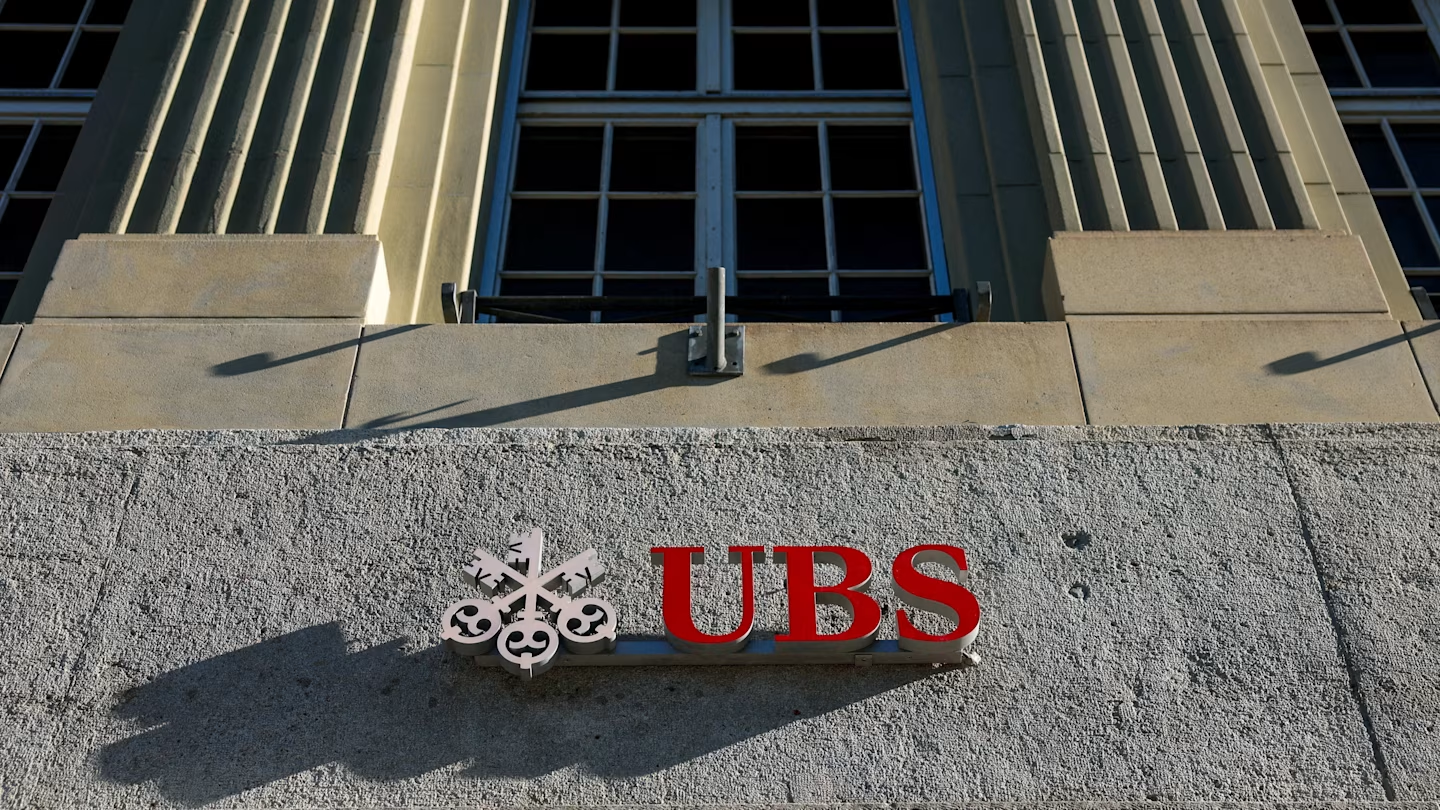
- Artisan Partners demanding UBS leave Switzerland; major shareholder pressure on capital rules. Artisan Partners (manages 60M+ UBS shares, 1.8% stake ~£3B, top shareholder) published letter Wednesday urging board to relocate headquarters. Called Switzerland “no longer attractive or desirable location.” Proposed CET1 requirement: 90% coverage (government 100%, committee compromise 50%). Would force UBS increase CET1 from $56B to $72B (~$16B additional at parent bank). Artisan: “aside from temporary friction…no compelling reason for UBS to remain Swiss…36 billion reasons to leave” (validates Articles 140/159 on capital-constraint severity forcing geographic relocation decisions).
- Switzerland’s upper house surprised markets by rejecting softer compromise. After Credit Suisse 2023 collapse, Switzerland proposed stringent capital rules. August committee: 50% CET1, 50% cheaper AT1 debt (compromise). BUT: last week upper house rejected, voted 90% CET1—closer to government’s original 100% plan (validates Articles 162/180 on regulatory hardening post-crisis). Surprise move validated investor concerns about Switzerland’s capital-rule trajectory. Rules now to lower house; not yet final. Artisan thesis: capital rules making Switzerland uncompetitive for large international banks (validates Articles 140/155 on regulatory costs forcing strategic relocation).
- Cevian Capital (1.4% stake) also urging relocation; second major shareholder pressure. Cevian told FT last year that running large international bank from Switzerland would become “not viable” under government’s proposals. Now vindicated by upper house voting for 90% CET1. Validates that shareholder concerns about competitive disadvantage credible (validates Articles 140/155 on regulatory-cost burden). Other shareholders haven’t publicly pressured UBS, but some privately discussed with senior leadership that they should “consider all options” post-parliament decision (validates that relocation thesis now mainstream investor discussion, not isolated view).
- UBS defending Switzerland residency; lobbying for proportionate regulation. UBS statement Thursday: “goal to continue operating successfully as global bank from Switzerland…protect shareholders’ interests…continue lobbying for regulation that is targeted, proportionate and internationally aligned.” Validates that UBS internally fighting capital requirements while preparing contingency plans (validates Articles 140/155 on firms hedging regulatory bets). Artisan urged board to “act in light of grim reality…part ways with country and regulatory structure that leave it no real choice”—validates shareholder frustration with management’s passive stance (validates Articles 140/159 on stakeholder pressure escalation).
What Happened?
Artisan Partners (UBS’s largest shareholder, 1.8% stake ~£3B, 60M+ shares) demanded UBS relocate from Switzerland in letter published Wednesday. Called Switzerland “no longer attractive or desirable.” Switzerland’s upper house last week rejected compromise capital requirement (50% CET1/50% AT1), voted instead for 90% CET1 coverage—closer to government’s original 100% proposal. Would force UBS increase CET1 from $56B to $72B (~$16B additional at parent bank). Artisan: “36 billion reasons for UBS to leave.” Cevian Capital (1.4% stake) also previously urged relocation. Other shareholders privately discussing relocation options with management. UBS defended Switzerland residency Thursday, committed to lobbying for proportionate regulation. Rules now to lower house; not yet final.
Why It Matters?
Artisan’s shareholder pressure validates Articles 140/159 on capital constraints forcing strategic relocation decisions. Switzerland’s regulatory hardening (upper house rejecting softer compromise, voting 90% CET1) validates Articles 162/180 on post-crisis regulatory tightening. UBS capital requirement ($56B→$72B) validates magnitude: $16B additional CET1 = material balance-sheet burden (validates Articles 140/159 on regulatory costs constraining bank operations). Cevian’s relocation thesis now validated by parliament decision—validates that shareholder concerns credible, not speculative. Other shareholders’ private discussions on relocation options validate that thesis now mainstream (validates Articles 140/155 on regulatory pressure forcing strategic reassessment). UBS’s defensive posture (lobbying for proportionate rules while defending Swiss residency) validates internal hedging: preparing for relocation while hoping regulation softens. Credit Suisse 2023 collapse context validates Switzerland’s political motivation for stringent UBS capital rules (validates Articles 140/159 on policy response to past failures creating current constraints).
What’s Next?
Monitor lower house vote on capital rules: if maintains 90% CET1 (validates Articles 162/180 on regulatory persistence), validates that relocation thesis credible. If softens to 50-70% (validates policy compromise), validates that UBS lobbying working, relocation pressure easing. Track UBS management commentary: if shifts tone toward relocation consideration (validates Articles 140 on strategic pivot), validates board responding to shareholder pressure. Watch Artisan/Cevian next moves: if escalate pressure (shareholder votes, board actions), validates relocation momentum building. Monitor other major banks’ positions: if Deutsche Bank/Credit Suisse successors also consider relocation, validates that Switzerland’s competitive position deteriorating (validates Articles 140/155 on regulatory costs as structural disadvantage). Track UBS share price: if declines (validates investor conviction on capital-constraint drag), validates market belief that relocation thesis material. Monitor Switzerland’s regulatory response: if government moderates capital rules (validates policy recognition of competitiveness concerns), validates political pressure materializing. Finally, watch for relocation announcements: if UBS moves headquarters (validates Articles 140 on regulatory arbitrage, validates London/New York as destinations), validates shareholder campaign success.
Affected Tickers and Coins: UBS | Artisan Partners | Cevian Capital | Swiss National Bank
Source: Financial Times


