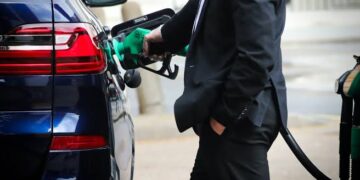
- Ireland announced energy measures in Tuesday budget aimed at easing voter anger over rising fuel and heating costs, including a reduction in carbon tax on home-heating oil and gas. Finance Minister Simon Harris said the tax will not increase again during the lifetime of this government.
- Harris said the decision not to proceed with future increases will ultimately leave the carbon tax rate at less than half the level set out in the original trajectory, describing extraordinary circumstances as calling for extraordinary measures.
- The finance ministry is also extending a temporary reduction in fuel excise rates, currently due to expire in November, through to the end of February 2027.
- The measures follow protests in April when haulier and farmer groups brought the country to a halt by blocking roads and the country only oil terminal over fuel costs.
What Happened?
The package is part of a broader effort to address a cost-of-living squeeze that has generated significant political pressure.
Why It Matters?
Carbon pricing bends at exactly the point it was designed to work. The mechanism exists to make fossil fuels progressively more expensive and shift behaviour, and Ireland has now abandoned the remainder of its planned increases because fuel became expensive for reasons outside its control. The result is a carbon tax rate that will end up below half its legislated path, which is a substantial retreat from a central instrument of national climate policy. This is the second such reversal in your reading this fortnight, following the European Commission examining a one-year postponement of methane import monitoring rules, and the pattern matters more than either individual decision. For anyone modelling European decarbonisation, long-dated carbon price forecasts have just become less reliable, and companies that invested on the assumption of a rising trajectory are facing a weaker signal than they planned around. The political mechanism deserves attention because other governments will have noticed it. Hauliers and farmers blockaded roads and the only oil terminal in the country in April, and the policy response is not a temporary relief measure but a permanent commitment not to raise the tax again for the life of this government. Direct action over fuel costs produced a structural policy change, which is a lesson available to protest movements across Europe facing identical pressures. There is a fiscal dimension too. EU officials have been warning that member states are not grasping the seriousness of bond market conditions while continuing to request budget flexibility, and energy tax cuts reduce revenue at precisely that moment. Ireland is in a stronger position than France or Italy to absorb that, but the direction of travel across the bloc is governments spending more and taxing energy less while borrowing costs rise.
What Next?
The fuel excise reduction now runs to the end of February 2027, giving a dated point at which the government must either extend again or allow costs to rise into an election cycle. Watch whether other European governments follow with carbon tax or fuel duty measures, since the UK is under pressure to cancel a planned January fuel duty increase and the Commission has signalled flexibility on climate requirements. The G7 release of up to 100 million barrels of diesel and oil is the external variable that would reduce the pressure behind all of these decisions. For carbon markets, the question is whether national rollbacks begin affecting the EU emissions trading system, which is the larger mechanism and so far unaffected.
Affected Tickers and Coins: BZ, HO, EIRL
Source: Bloomberg