
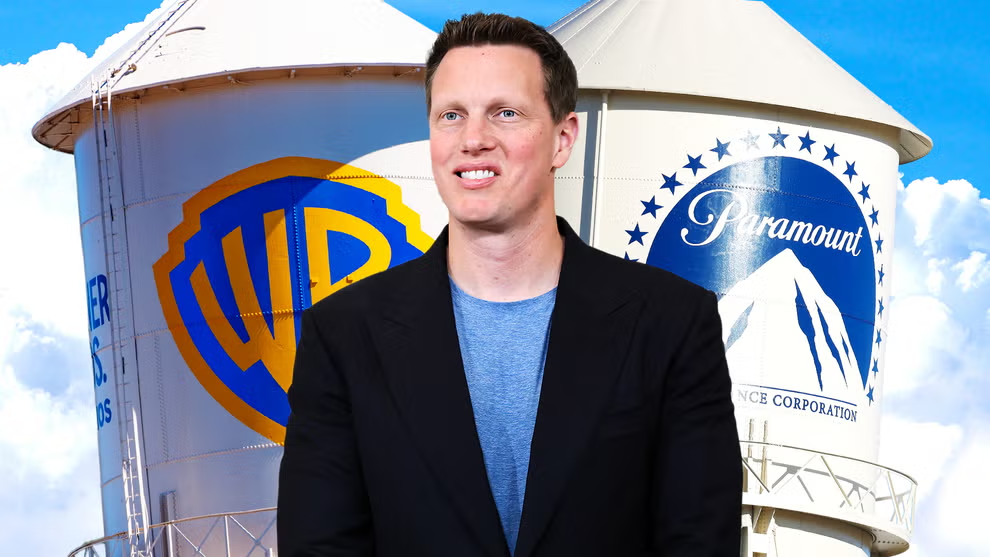
- RedBird Capital Partners contributed $4 billion of new equity financing to fund Paramount Skydance acquisition of Warner Bros. Discovery, according to a person familiar with the investment. That brings Gerry Cardinale firm total contribution to the combined company, which will be called Skydance, to $6 billion.
- The $110 billion acquisition closed Tuesday, one of the largest media mergers ever completed, after chief executive David Ellison fought Netflix for control and defended against antitrust lawsuits.
- Warner Bros. Discovery traded at 30.95 and finished unchanged on the day the deal completed, while Skydance was quoted at 9.55, up 2.30%.
- RedBird previously backed last year Skydance Media merger with Paramount, an investment of more than $8 billion alongside the Ellison family, which created the platform for this transaction. Cardinale described the moment as defining for the industry.
What Happened?
Cardinale founded RedBird after a career as a Goldman Sachs investment banker and has acted as adviser and dealmaker for Ellison through both the Paramount and Warner Bros. acquisitions. The financing had not previously been made public.
Why It Matters?
Warner Bros. Discovery closing completely flat on the day a $110 billion acquisition completed tells you the outcome had been fully priced for some time, with no arbitrage spread remaining and no residual doubt after the antitrust challenges and the California settlement were resolved. That is unremarkable in itself and useful as confirmation that the contested phase is genuinely over. The scale of the bet is what deserves scrutiny. A $110 billion media combination is being assembled at a moment when the 30-year Treasury yields 5.663% and the sector faces two separate pressures: the continued decline of linear television and the prospect that AI agents reshape how content is discovered and purchased. Goldman Sachs placed both Netflix and Paramount Skydance in its basket of companies exposed to AI agents eroding consumer inertia, so the merged entity is buying scale in a business where the demand side is being questioned. RedBird $6 billion represents roughly 5.5% of the transaction value, meaning the balance sits in debt and existing equity, and the leverage is what determines whether this works. The competitive logic is at least coherent. Netflix wanted these assets and did not get them, so rather than ceding the library to the dominant streamer, the industry now has a second entity of comparable scale. Whether two large players produce better economics than one dominant one plus fragmented rivals is the open question, and the history of media consolidation is not encouraging on that point. For investors the practical matter is that this is now a differently shaped company with a new name and ticker, and prior exposure to either constituent has been converted into something with a materially different balance sheet.
What Next?
The integration is where the value is won or lost, and Cardinale has publicly framed the merger as being about growth rather than cuts, a claim that will be tested against the cost synergies such deals normally require to justify their price. Watch the debt structure and refinancing schedule given current long-term yields. Netflix response is the competitive variable, since it pursued these assets and now faces them in a single rival. Subscriber and advertising trends across the combined portfolio are the operating measures that matter, and the first full quarter of reporting will be the earliest meaningful read. For index and fund holders, the ticker change from the previous Paramount Skydance listing to Skydance is a practical item to confirm.
Affected Tickers and Coins: WBD, NFLX
Source: Bloomberg


