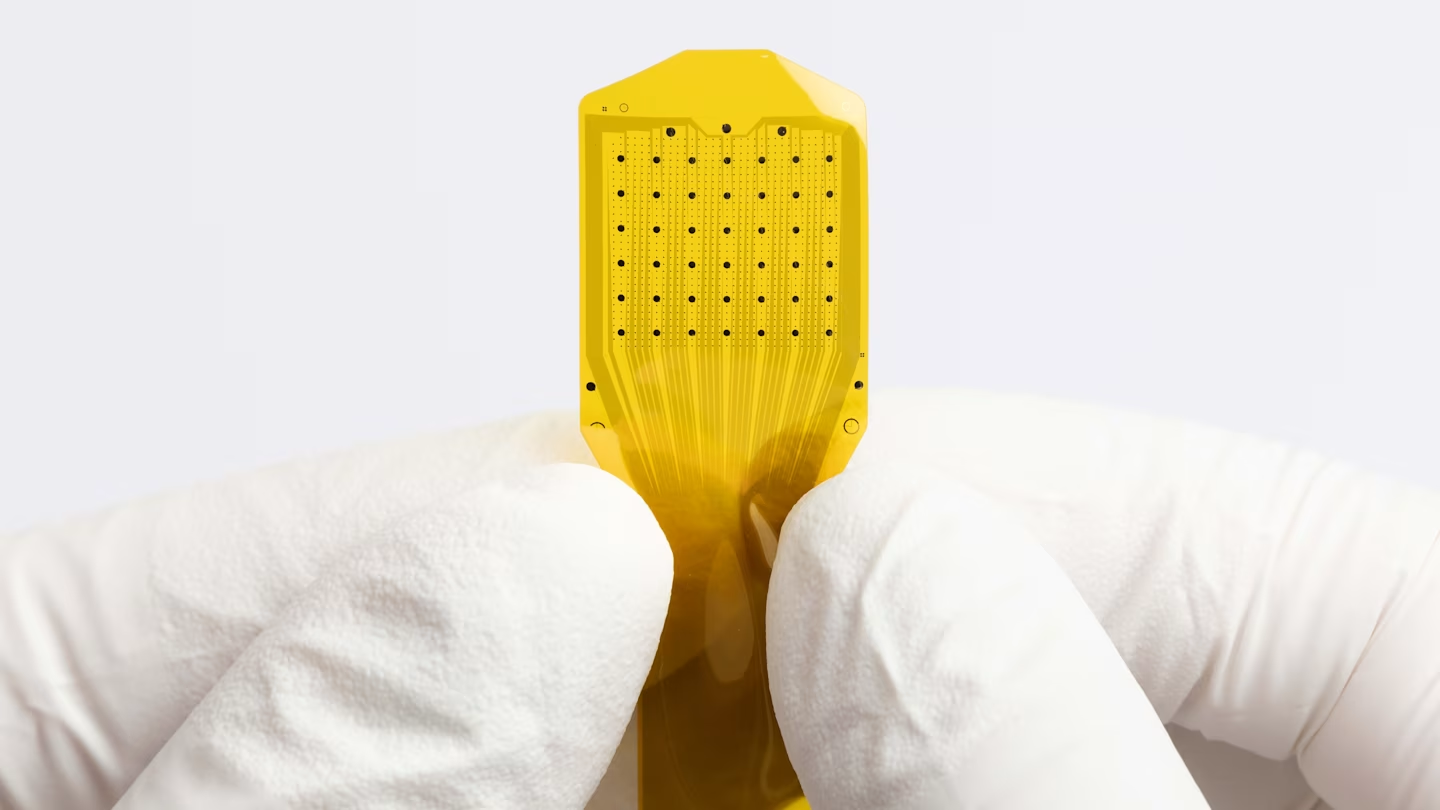
- Brain-computer interface (BCI) startups have raised over $1 billion in 2026, compared with $1.56 billion across the previous four years combined, signaling explosive VC interest in mind-reading implants. Elon Musk’s Neuralink is best-funded with $1.3bn+ raised, but dozens of competitors are pursuing invasive devices (electrodes penetrating brain) and surface-level approaches. Precision Neuroscience makes flexible BCIs sitting on brain surface; Knight’s experience demonstrates BCIs can translate thoughts into computer commands: “Once you get the hang of it, your thoughts control what’s happening on the computer screen with no effort at all.”
- The sector is bifurcating geographically: US companies (Synchron, Blackrock Neurotech, Axoft, Merge Labs) benefit from venture capital and FDA’s responsive regulatory approach. Europe has engineering heritage but “real gap in late-stage funding and scale-up capital.” China has designated BCIs as strategic sector with 2030 roadmap for 2-3 “world-class” companies; provinces are funding startups and clinical trials. Chinese VCs poured Rmb7bn ($1bn) into broader neurotech sector in H1 2026 across 60 investments.
- The biggest opportunity emerges when BCIs converge with prosthetics: artificial limbs are becoming lighter and more capable via sensors, materials, batteries, motors, and software. Open Bionics (Bristol) has 60% compound annual revenue growth since 2018; its Hero Arm licenses Disney characters (Black Panther, Metal Gear). Current prosthetics lack dexterity and sensation; BCIs could provide the missing brain-hand interface and restore sense of touch.
- Most BCIs work unidirectionally (reading brain signals), but advanced systems are developing closed-loop stimulation (two-way brain-machine dialogue). CorTec’s approach “reads and stimulates the cells” in motor cortex for stroke recovery. The convergence of BCIs + prosthetics + AI could reshape human-machine relationship within the decade.
What Happened?
Brain-computer interface startups have raised over $1 billion in 2026, compared with $1.56 billion across the previous four years combined. Elon Musk’s Neuralink is best-funded with $1.3bn+ raised. Companies are pursuing invasive approaches (electrodes penetrating brain) and surface-level BCIs (flexible implants on brain surface). Precision Neuroscience’s implant allows users to control computers with thoughts. The US leads in VC funding and regulatory responsiveness via FDA. Europe has engineering heritage but lacks late-stage funding. China has designated BCIs as strategic sector with roadmap for world-class companies by 2030; Chinese VCs invested Rmb7bn ($1bn) in neurotech in H1 2026. Open Bionics (Bristol-based prosthetics) has 60% CAGR since 2018 and licenses Disney characters for prosthetic designs.
Why It Matters?
For venture investors, BCIs represent “moonshot capitalism” with potential to transform human-machine interaction, similar to early AI bets. For Elon Musk and Tesla shareholders, Neuralink’s rapid funding growth signals market validation of brain-machine convergence but raises questions about Musk’s attention allocation. For Disney shareholders, Open Bionics licensing of Disney IP (Black Panther, Metal Gear) validates Disney’s character value in prosthetics/neurotech convergence—a new revenue stream beyond traditional entertainment. For healthcare systems, BCIs offer potential to restore speech and movement to patients with spinal injuries or neurological diseases. For China, state backing of BCIs as strategic sector signals Beijing’s intent to compete globally in frontier neurotechnology.
What’s Next?
Monitor Neuralink’s clinical trial progress; if the company achieves FDA approval for invasive long-term BCIs, it would validate the technology and trigger broader adoption. Track Open Bionics’ IPO plans; if the company goes public, it would signal prosthetics-neurotech convergence is investable. Watch for BCI-prosthetics partnerships; if major prosthetics makers (Össur, Össur) or bionics companies announce BCI collaborations, it would validate the convergence thesis. Monitor US vs. China BCI leadership; if Chinese startups achieve first-to-market breakthroughs, it would signal China’s state-backed strategy is succeeding. Also track regulatory developments; if FDA and European regulators provide clearer pathways for BCI approval, it could accelerate clinical deployment. Finally, watch for Apple or other tech giants entering BCIs—if major tech companies launch BCI programs, it would signal mainstream market acceptance.
Affected Tickers & Coins: TSLA, DIS
Source: Financial Times