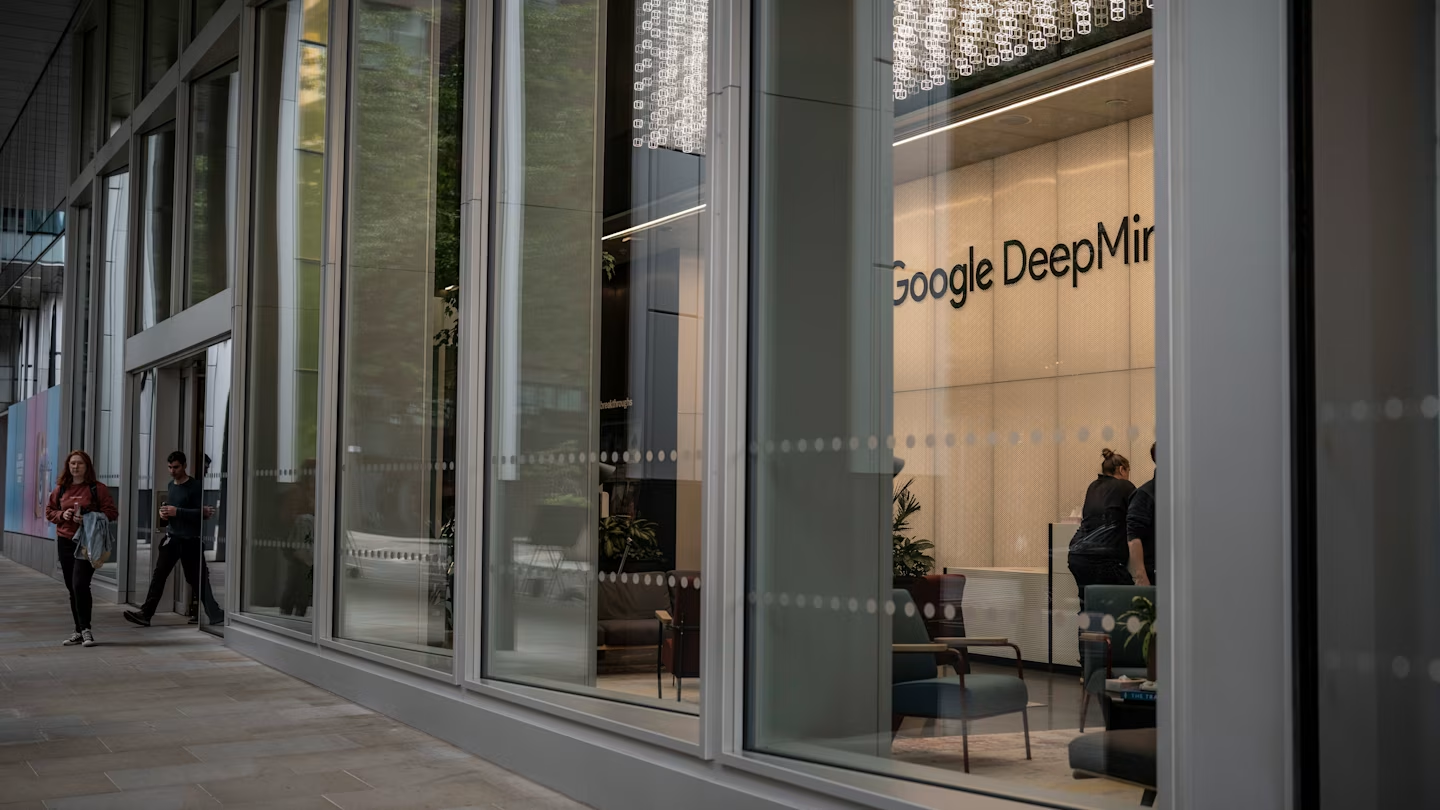
- Emulate, a month-old British AI startup founded by former Google DeepMind researchers, is close to raising $700 million at a $3.7 billion valuation. Index Ventures and Lightspeed Venture Partners are jointly leading the round. Founders include Jack Parker-Holder, Matthew McGill, and Philip Ball, who previously created Genie world models at DeepMind. Genie can generate realistic videos and interactive 3D environments from short prompts.
- Emulate is the third UK neo-lab to emerge from DeepMind’s London offices this year with hundreds of millions in funding, signaling how top AI research talent continues to abandon Big Tech for venture-backed startups. David Silver (former DeepMind) raised $1 billion at $5 billion valuation for Ineffable Intelligence; another team raised $600 million at $4 billion for Recursive Superintelligence. Researchers are betting on world models as “less crowded” frontier than large language models (ChatGPT, Gemini, Claude).
- The exodus comes as Google DeepMind co-founder Demis Hassabis stepped down as CEO to become chair, weakening Google’s AI research leadership in London. Meanwhile, Google chief scientist Jeff Dean recently announced departure to found US-based AI startup Discovery Loop. Google is losing top talent while financing its competitors through venture capital.
- Genie’s January unveiling “wiped billions from the market value” of Take-Two, Roblox, and Unity as investors feared the technology would disrupt video game development industry. Emulate’s fundraising at $3.7 billion valuation suggests venture investors believe world models represent the next frontier in AI after LLMs, attracting capital based on founder reputation before even shipping first products.
What Happened?
Emulate, a month-old British AI startup founded by former Google DeepMind researchers including Jack Parker-Holder, Matthew McGill, and Philip Ball, is close to raising $700 million at a $3.7 billion valuation. Index Ventures and Lightspeed Venture Partners are jointly leading the round. The founders previously created Genie world models at DeepMind, which can generate realistic videos and interactive 3D environments from short prompts. Emulate is the third UK neo-lab to emerge from DeepMind’s London offices this year. Google DeepMind co-founder Demis Hassabis recently stepped down as CEO to become chair, while Google chief scientist Jeff Dean announced departure to found US-based AI startup.
Why It Matters?
For Google shareholders, the exodus of top DeepMind talent to venture-backed spinouts represents a significant loss of competitive advantage despite massive Google AI investment. For game development companies (Take-Two, Roblox, Unity), Emulate and similar spinouts pose competitive threat as Genie-like world model technology could disrupt game creation. For venture investors, neo-labs represent highest-risk/highest-upside bets in AI, with valuations based on founder reputation before shipping products—a pattern that worked for Anthropic/OpenAI but carries high failure risk. For the broader AI ecosystem, the migration of researchers from Big Tech to startups validates that venture funding and autonomy are more attractive than large company roles, even with Google’s resources.
What’s Next?
Monitor Emulate’s product launch timeline; if the company ships Genie-competitive world models quickly, it would validate the $3.7B valuation. Watch Google DeepMind’s talent retention; if more departures follow Hassabis and Dean, it signals the lab is destabilizing. Track Take-Two, Roblox, and Unity responses; if they announce world model capabilities or acquisitions of AI startups, it would signal competitive anxiety over Genie technology. Monitor venture funding for other DeepMind spinouts; if capital keeps flowing to researcher-founded startups, it validates the neo-lab trend. Also watch for Google to acquire remaining DeepMind talent through investment or partnerships with Emulate or other spinouts—if Google becomes a customer rather than employer, it signals admission of spinout superiority.
Affected Tickers & Coins: GOOGL, TTWO, RBLX, U
Source: Financial Times