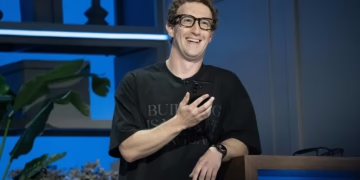
- Former SEC chair Gary Gensler said in a Bloomberg Radio interview Tuesday that US AI companies are spending heavily, and questioned whether their revenues justify that spending. He said that while the United States leads the field, American companies may end up using Chinese competitors models.
- He described competition with China as a big and consequential wrinkle for any attempt to impose safeguards, arguing that guardrails are possible but complicated by the race. On safety he pointed to OpenAI models breaching the technology firm Hugging Face earlier this year.
- The political position has hardened against restrictions. Industry leaders called this month for slowing development of their most advanced models, an idea Trump rejected, and the president has since rejected a push for an international agreement to manage AI risks.
- Gensler said he differs with the president, who has characterised concerns about AI as a hoax, and called it a real challenge.
What Happened?
The remarks place a former senior regulator against the current administration on whether AI risks warrant policy attention, at a point when the industry own proposals for international coordination have been publicly rebuffed.
Why It Matters?
The revenue question is the one that should interest allocators most, and it carries weight coming from someone with no position in the outcome. It is also the same question that cost Rajiv Jain of GQG $36 billion in redemptions before he reversed course, and the same one visible in Harvey, the legal AI company whose gross margin fell from roughly 50% to minus 50% as customer usage surged. Spending is observable and revenue justification is not yet demonstrated. Gensler framing of Chinese models as a potential substitute understates what is already happening. Harvey has built its own model on Moonshot Kimi K3, Abridge is training on Nvidia open models, and Ramp and Rogo are exploring the same route, all because closed US models became too expensive to run at scale. American companies are not potentially using Chinese alternatives, they are doing it now, which makes the competitive pressure on OpenAI and Anthropic pricing immediate rather than prospective. The political picture is the most consequential shift. OpenAI asked Washington this month to lead international standards through the Commerce Department, and the administration has since rejected an international agreement and dismissed the underlying concerns. That leaves the industry proposal without a sponsor and means US regulatory risk to AI capital spending is currently close to zero. For investors that supports valuations in the near term while concentrating the risk into a later and sharper correction, because the policy response that does not arrive now will arrive faster and harder after an incident that forces it.
What Next?
Watch third quarter results from the large AI spenders for any disclosure connecting capital expenditure to revenue, since that is the specific gap Gensler identifies and the only thing that settles it. Track adoption of Chinese open-weight models by US companies, as further migration would show up first in the pricing and enterprise commentary of the closed model providers. On policy, the administration position appears settled for now, so the variables to monitor are state legislatures and any significant AI-enabled incident, either of which could move faster than federal policy. Also watch whether other former regulators and institutional voices align with Gensler, because a credible bloc outside the industry is what would change the political calculation.
Affected Tickers and Coins: NVDA, MSFT, GOOGL, META
Source: Bloomberg