- Novo Nordisk presented capital markets day strategy targeting launch of more than five blockbusters by end of decade with 150 billion Danish kroner ($23 billion) in pipeline sales by 2035. However, shares fell as much as 7.7% in early trading as investors expressed disappointment with lack of specific growth targets. CEO Mike Doustdar acknowledged shortcomings: “We need to work harder, and we will.” Company recently dropped “Nordisk” from name for day-to-day use to boost brand recognition and cut staff/management layers to improve execution and aggressiveness.
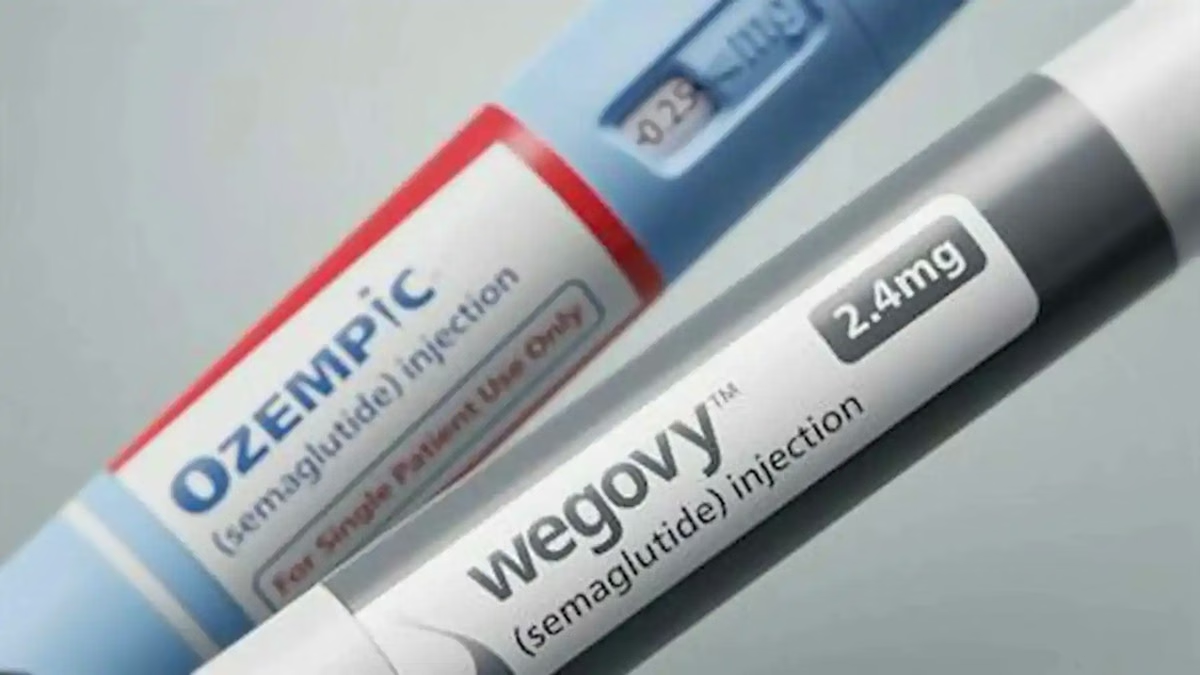
- Novo faces structural competitive challenges despite being first-mover in next-generation obesity medicines. Company initially struggled meeting demand for blockbusters (Ozempic/Wegovy GLP-1 agonists) and moved more slowly than Eli Lilly on direct-to-consumer sales, allowing Lilly to gain market share with Mounjaro (tirzepatide). Novo encountered series of clinical trial disappointments raising investor questions on growth sustainability. Patent expiration for Ozempic/Wegovy in Europe and US approaching early next decade, creating generic competition headwinds. Company previously guided profit/revenue may decline as much as 6% this year.
- Obesity market increasingly crowded as competitors (Eli Lilly, AbbVie, Merck, Pfizer) enter space. Novo’s first-mover advantage eroding as manufacturing and execution challenges allowed Lilly to establish stronger market position. Capital markets day failure to provide specific growth targets suggests management’s own uncertainty on execution and pipeline success. Clinical trial disappointments (details not disclosed in article) create downside risk to 2035 blockbuster projections. Patient capital abandoning Novo as Lilly’s execution/market position improves.
- Share price decline (-7.7%) validates market skepticism on Novo’s growth runway. Investors had hoped for more aggressive guidance; instead received vague targets ($23bn by 2035). For context: Novo previously dominant obesity market with Ozempic/Wegovy; patent cliffs and Lilly competition now threatening revenue trajectory. Doustdar’s turnaround efforts (name change, staff cuts, direct-to-consumer push) insufficient to convince market of competitive recovery. Novo’s challenges benefit Lilly’s valuation as market consolidates around Lilly’s superior execution on obesity blockbusters.
What Happened?
Novo Nordisk held capital markets day (September 21, 2026) presenting pipeline strategy targeting 5+ blockbuster launches by end of decade with 150 billion Danish kroner ($23 billion) in pipeline sales by 2035. However, share price fell as much as 7.7% in early trading as investors expressed disappointment with presentation. Article notes investors “had hoped to see more specific growth targets.” CEO Mike Doustdar acknowledged execution shortcomings: “We need to work harder, and we will.” Novo recently rebranded by dropping “Nordisk” from day-to-day usage to improve brand recognition. Company cut staff and management layers to improve aggressiveness. Novo facing patent expiration for blockbuster obesity drugs Ozempic/Wegovy in Europe/US early next decade. Company previously guided profit/revenue may decline 6% this year.
Why It Matters?
For Novo shareholders (NVO), capital markets day disappointment validates concerns about company’s competitive position vs Eli Lilly. Lack of specific growth targets suggests management uncertainty on execution and pipeline success. Share decline (-7.7%) reflects investor loss of confidence in turnaround efforts (rebranding, staff cuts, direct-to-consumer push). For Eli Lilly shareholders (LLY), Novo’s execution challenges and pipeline disappointments reinforce Lilly’s superior market position in crowded obesity space. Lilly’s Mounjaro (tirzepatide) gaining share from Novo’s GLP-1 Ozempic/Wegovy. For obesity market investors, Novo’s challenges suggest winner-take-most dynamics favoring Lilly as competitors consolidate. For pharma investors broadly, Novo’s capital markets day highlights execution/manufacturing risks in obesity drug market.
What’s Next?
Monitor Novo’s clinical trial results; if additional pipeline disappointments emerge, it could trigger further share declines. Watch Novo’s direct-to-consumer sales execution vs Lilly; if Novo fails to match Lilly’s DTC strength, it validates competitive concerns. Track Novo’s profitability guidance; if company guides to larger profit decline than 6%, it would signal earnings headwinds from competition/patent cliffs. Monitor Ozempic/Wegovy patent litigation/expiration timeline; any acceleration of generic entry would pressure Novo’s revenue cliff. Watch for M&A activity; if Novo becomes acquisition target, it would validate market’s loss of confidence in standalone turnaround. Also monitor Lilly’s obesity market share gains; if Lilly captures 50%+ of obesity market, it confirms Novo’s competitive decline and validates Lilly’s execution superiority.
Affected Tickers & Coins: NVO (Novo Nordisk), LLY (Eli Lilly), ABBV (AbbVie), MRK (Merck), PFE (Pfizer)
Source: Bloomberg