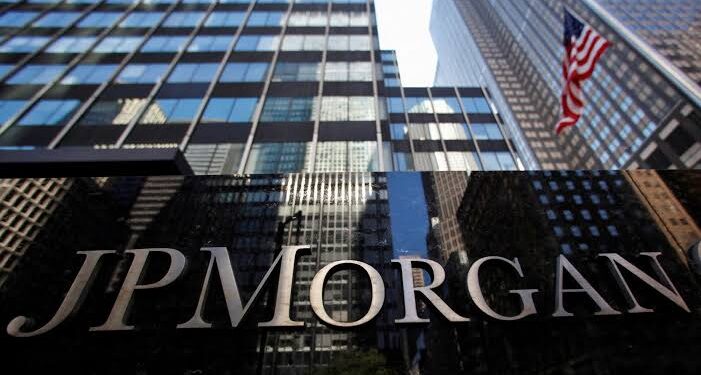
- The SEC censured JPMorgan Chase and its securities unit in a cease-and-desist order issued Friday, alleging the firm failed to detect that one of its security-backed swaps traders had been fined by UK authorities and was not permitted to trade in the US without special relief. The lapse ran from late 2021 to early 2024.
- No monetary penalty was imposed. The order cites the firm remedial efforts and its self-reporting of the apparent violation. JPMorgan did not admit the allegations and did not immediately respond to a request for comment.
- Before the firm secured authorisation in March 2024, the trader executed 100 security-based swap transactions with or for US counterparties and supervised sales traders who carried out at least 700 more. The order states that no systems or supervisory procedures alerted JPMorgan that a statutorily disqualified person was effecting or supervising those transactions.
- The underlying UK matter was mild. The regulator now known as the Financial Conduct Authority fined the unnamed employee in 2011 over a failure to report some customers potential insider trading, and said the conduct was neither deliberate nor reckless and that his integrity was not in question.
What Happened?
A sanction from a foreign regulator meant the individual should not have been authorised to trade in the US unless the firm obtained relief. JPMorgan secured that permission in March 2024, but according to the SEC nobody at the firm informed the trader or his supervisor that he could not transact until then.
Why It Matters?
The absence of a fine is the most useful information here. A supervisory failure spanning more than two years and roughly 800 transactions produced a censure and nothing more, with the SEC explicitly crediting self-reporting and remediation. For compliance functions weighing whether to disclose a discovered problem, that is a concrete precedent rather than a theoretical benefit, and it is worth citing internally. The mildness of the underlying conduct is the second lesson and the one most likely to catch other firms. A 2011 finding that the regulator itself described as neither deliberate nor reckless, with integrity not in question, nonetheless created a US statutory disqualification. Disqualification attaches to the existence of the finding, not to its severity, which means historic foreign regulatory actions that look trivial on their face can carry significant US consequences years later. Any broker-dealer employing staff with overseas regulatory histories has the same exposure. The specific control gap is identifiable and probably common. Nobody told the trader or his supervisor that he was disqualified, so the individual was unaware of his own status, which points to a failure in screening foreign regulatory actions at onboarding and monitoring them thereafter. That is a fixable systems problem rather than a cultural one. For shareholders this is immaterial, with the stock up 0.42% on the day and no penalty assessed. The value sits entirely in the precedent, both on enforcement posture toward self-reporters and on how far statutory disqualification reaches.
What Next?
Watch whether the SEC brings similar supervisory cases against other broker-dealers, since the issue described is systemic rather than firm-specific and the order effectively publishes the template. Whether subsequent cases also avoid penalties will show if the no-fine outcome reflects a durable policy toward self-reporting or the particular facts here, including the absence of any alleged harm to counterparties. Compliance teams should treat this as prompting a review of how foreign regulatory actions against employees are screened and monitored over time. Any guidance from the SEC on statutory disqualification arising from overseas sanctions would be the clearest follow-up, given how mild the triggering finding was in this instance.
Affected Tickers and Coins: JPM, GS, MS
Source: Bloomberg