Key takeaways
Powered by lumidawealth.com
- Strategy reported a $12.4B Q4 net loss driven by mark-to-market declines on its Bitcoin holdings as BTC fell below key levels
- The firm’s core playbook — issuing stock/debt when shares trade at a premium to its BTC holdings — is stalling as that premium fades and funding tightens
- With Bitcoin below Strategy’s ~$76,052 cost basis, pressure rises on capital-raising plans and the sustainability of future accumulation
- Investors are increasingly treating Strategy less like an operating business and more like a levered Bitcoin vehicle, with the stock down sharply from prior highs
What Happened?
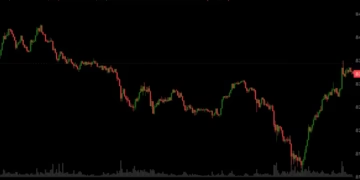
Strategy Inc., led by Michael Saylor, reported a $12.4 billion net loss for Q4, largely due to mark-to-market losses on its large Bitcoin position as Bitcoin traded below $65,000. The decline pushed the value of Strategy’s Bitcoin holdings below its cumulative cost basis for the first time since 2023, intensifying scrutiny on a company that has effectively operated as a high-beta proxy for Bitcoin exposure.
Why It Matters?
Strategy’s business model has relied on one key advantage: its stock trading at a premium to the value of its Bitcoin holdings, allowing it to raise capital (equity and debt) and buy more Bitcoin in a reinforcing loop. With that premium now diminished and market conditions tighter, the mechanism that powered years of rapid accumulation is weakening.
This matters for investors because it shifts the risk profile from “aggressive Bitcoin accumulation strategy” toward a more constrained setup: less flexibility to raise money, higher sensitivity to Bitcoin drawdowns, and rising questions about how much downside the balance sheet can absorb if BTC stays below cost basis. It also underscores a broader theme in crypto: as spot Bitcoin ETFs make access easier and cheaper, Strategy’s role as a “preferred proxy” becomes harder to defend.
What’s Next?
Markets will focus on whether Strategy can reopen funding channels (including preferred equity structures) without relying on a large equity premium — and whether it signals a credible pathway to continued purchases in a downcycle. Bitcoin’s level relative to Strategy’s ~$76k cost basis will remain a key pressure point, alongside liquidity, debt servicing capacity, and investor appetite for more dilution or leverage.
If Bitcoin stabilizes and rallies, Strategy could regain its premium and resume its flywheel. If volatility persists or BTC weakens further, investors will watch for forced de-risking, reduced buying pace, or a longer-term repositioning into something closer to a passive Bitcoin trust rather than an “accumulation machine.”