
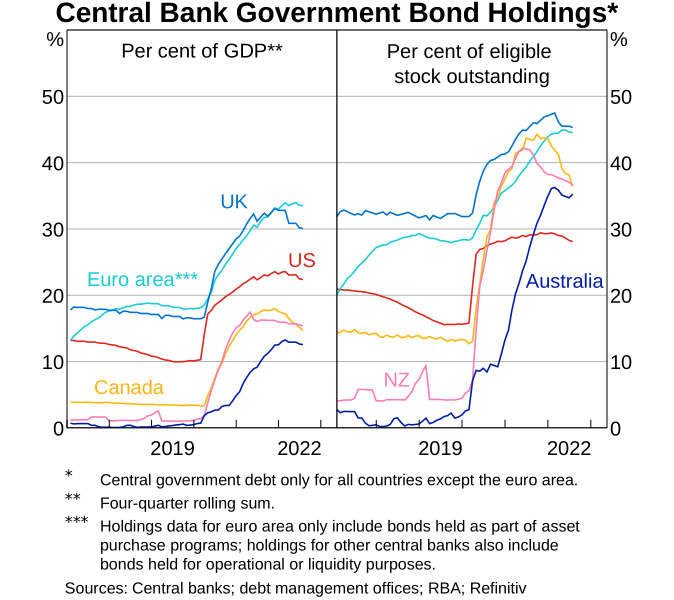
- The Bank of England is considering stopping sales of long-dated bonds (20 and 30-year gilts) that it accumulated during quantitative easing, according to reports of drafts prepared by BOE, Treasury, and Debt Management Office officials. Currently, long-dated debt accounts for 20% of BOE sales; a £50 billion annual QT pace would imply just £4 billion in long-dated disposals. The MPC will decide on the next year’s QT program on Thursday.
- The BOE holds substantial unrealized losses on its long-dated bond portfolio as yields have surged: 30-year gilt yields reached 5.94% Tuesday, approaching 6% for the first time since 1998. Long-maturity debt losses intensified after renewed US-Iran fighting lifted oil prices and inflation expectations. Governor Andrew Bailey previously signaled a desire to reduce interest-rate risk by disposing of these bonds, but political pressure and market functioning concerns may force a reversal.
- A permanent shift away from long-dated sales would represent a significant departure from recent BOE messaging and strategy. The central bank has argued that QT has modest impact on gilt yields—estimating only 20-30 basis points of the total 10-year yield increase stems from its sales. Stopping long-dated disposals while maintaining overall QT would preserve BOE credibility on balance-sheet normalization while potentially signaling greater flexibility to Treasury pressures.
- The decision hinges on two competing risks: holding long-dated bonds locks in losses and interest-rate risk for decades; stopping sales risks appearing politically dependent on the Treasury and undermining BOE independence. Higher energy prices and inflation expectations are now pushing sterling rates higher without BOE assistance, reducing the need for active long-dated sales and giving the BOE political cover to pause that component of QT.
What Happened?
The Bank of England is considering halting sales of long-dated bonds (20 and 30-year gilts) as part of its quantitative tightening program, according to reports that officials at the BOE, Treasury, and Debt Management Office have drafted plans. The move would mark a significant shift from recent BOE messaging and strategy. The central bank is facing substantial unrealized losses on its long-dated bond holdings after yields surged; 30-year gilt yields reached 5.94% on Tuesday and are approaching 6% for the first time since 1998. The MPC will decide on the next year of its QT program on Thursday, with market participants expecting the pace of balance-sheet run-off to reduce to £50 billion annually.
Why It Matters?
For gilt investors and sterling allocators, a BOE pause on long-dated bond sales removes supply pressure from one of the most sensitive parts of the curve, potentially stabilizing 30-year yields near current levels. For the BOE’s credibility and independence, the shift is double-edged: stopping long-dated sales due to mounting losses and political pressure could be perceived as a capitulation to Treasury concerns, undermining the institution’s operational autonomy. For macro investors, the decision signals that the BOE is becoming more responsive to balance-sheet pain than to monetary-policy principles, a dynamic that may invite future political pressure on rate decisions. The move also reflects broader global trends: central banks worldwide accumulated massive long-dated bond holdings during pandemic QE and are now facing severe unrealized losses as rates normalize, forcing uncomfortable choices between loss realization and balance-sheet normalization.
What’s Next?
Watch the MPC’s Thursday decision on the pace of QT and any specific guidance on long-dated bond sales—a pause would validate the Telegraph report, while continuation would suggest the BOE is maintaining strategy despite losses. Monitor BOE communication for language around “balance-sheet risk management” or “normalized operations”; euphemistic framing suggests internal discomfort with losses. Track 30-year gilt yields closely: if they break above 6%, political pressure on the BOE to cease long-dated sales will intensify. Also monitor Bank of England Governor Bailey’s next communication; if he softens language on balance-sheet normalization or acknowledges losses, it signals the institution is preparing markets for a shift. Finally, watch for contagion: if the BOE effectively ends QT on long-dated debt, expect questions about whether other central banks (Fed, ECB) will do likewise, potentially supporting longer-dated bond markets globally.
Source: Bloomberg


