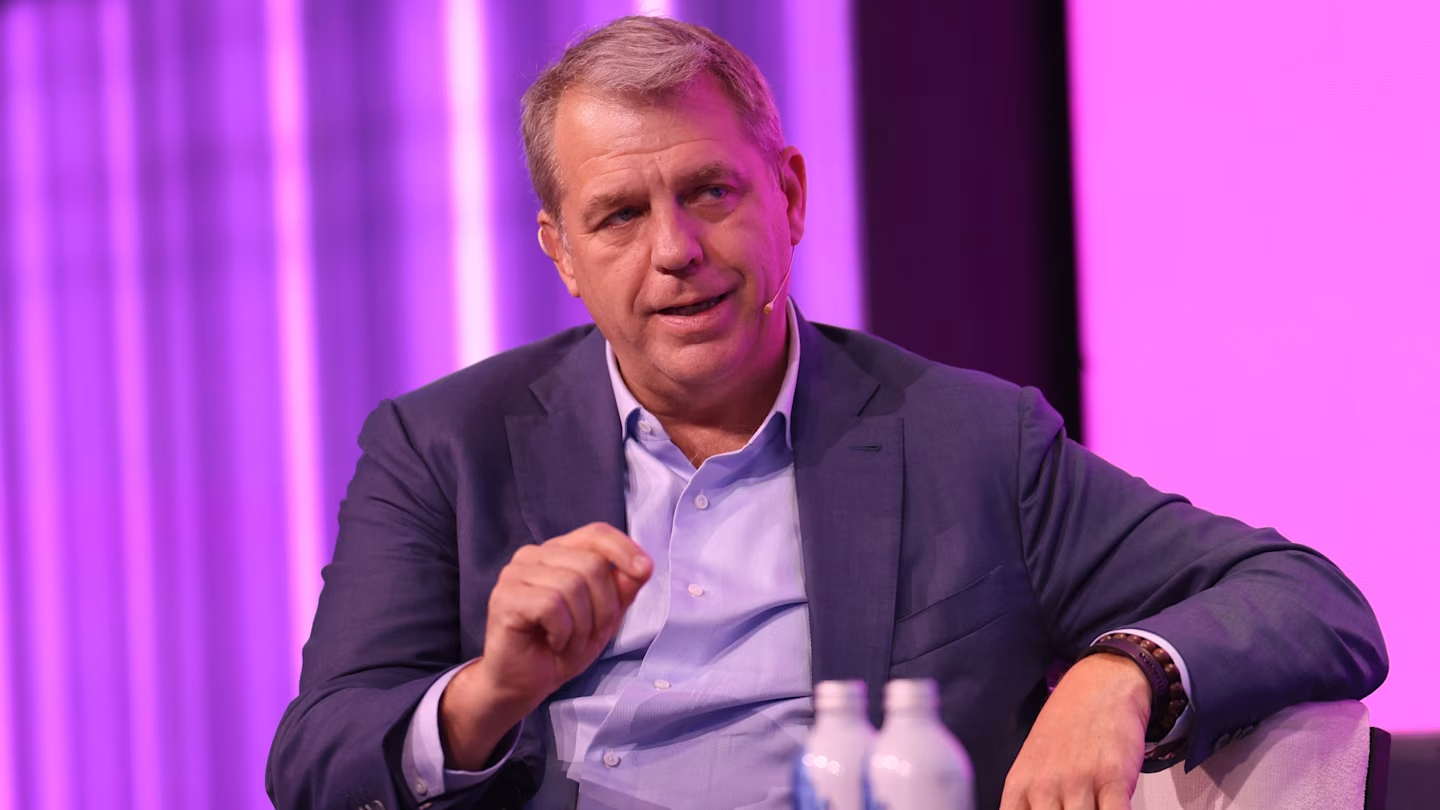
- Todd Boehly secured backing of US government and Gulf power brokers to bid for Lukoil’s international assets (valued $20bn after March 2026 write-off). Consortium includes: US International Development Finance Corporation (Ben Black-led, taking mid-teens equity stake), Sheikh Tahnoon bin Zayed al-Nahyan (UAE national security adviser, brother of UAE president), Al-Khayyat family (Syria-Qatari billionaires with Trump family ties on property/energy projects). Lukoil assets include 3bn+ barrels proven/probable reserves, oil/gas fields from Central Asia to Mexico, thousands petrol stations, large European refining portfolio (Bulgaria and Romania’s biggest refineries). Boehly just sold Chelsea FC stake to focus on deal. FT reports Boehly “worked on potential deal for months,” proposal “advanced” but deal not yet finalized with Lukoil.
- Challenges Carlyle’s January deal: Carlyle Group agreed to buy assets in January 2026 but transaction stalled in Washington awaiting US government approval. FT: “Other bidders who previously expressed interest have now dropped out.” Boehly consortium’s proposal raises unusual conflict: US government (DFC) simultaneously bidding for assets while White House decides their fate. FT quotes source: “Yes, there is that concern” about Carlyle disadvantage. If Boehly consortium wins, Carlyle loses $20bn deal.
- Governance structure: Sheikh Tahnoon’s International Holding Company (IHC) leading consortium with Allied Investment Partners (UAE). Al-Khayyat family taking smaller stake, Boehly and DFC controlling majority of board. Al-Khayyat brothers emerging as “increasingly prominent partners in projects involving figures close to Trump administration.” Family holds stake in Albanian property development with Ivanka Trump and Jared Kushner. Also pursuing Syria pipeline reconstruction with Tom Barrack (Trump’s Syria envoy). UCC (Khayyat-controlled) recently secured Libya oilfield concession and taking minority stake in Venezuelan gasfield (BP-operated).
- Boehly’s portfolio concentration risk: Boehly owns Security Benefit, Kansas-based $60bn life insurer (one of US’s top annuity sellers). ~40% of Security Benefit’s portfolio invested in Boehly’s other portfolio companies. Insurance holdings under scrutiny amid probe into insurers controlled by Mark Walter (longtime Boehly partner, former Chelsea co-owner). High concentration risk: $60bn insurer betting on Boehly-related assets. Lukoil acquisition would further concentrate retirees’ savings into Boehly empire.
What Happened?
Todd Boehly (recently sold Chelsea FC stake) secured backing of US government and Gulf power brokers to bid for Lukoil’s international assets valued at $20bn (March 2026 write-off). Consortium includes: US International Development Finance Corporation (Ben Black-led, taking mid-teens equity stake), Sheikh Tahnoon bin Zayed al-Nahyan (UAE national security adviser), Al-Khayyat family (Syria-Qatari billionaires with Trump family ties). Lukoil assets include 3bn+ barrels proven/probable reserves, oil/gas fields Central Asia to Mexico, thousands petrol stations, large European refining portfolio (Bulgaria/Romania’s biggest refineries). Boehly proposal “advanced” but deal not yet finalized with Lukoil. Challenges Carlyle Group’s January 2026 deal (stalled awaiting US approval). Other bidders dropped out per FT. Governance: Sheikh Tahnoon’s IHC leading with Allied Investment Partners (UAE); Al-Khayyat family smaller stake; Boehly and DFC controlling majority board. Raises conflict concern: US government bidding and deciding approval simultaneously.
Why It Matters?
For Carlyle shareholders (CG), losing $20bn Lukoil deal would reduce 2026 deal flow and earnings. For energy investors (refinery operators: MPC, VLO, PSX), Lukoil’s European refining capacity remaining operational (under Boehly or Carlyle) affects regional refining spreads. For US political observers, DFC investment validates Trump administration’s interest in Russian asset seizure/sanctions monetization. For Boehly’s Security Benefit policyholders (US retirees), concentration risk increases if Lukoil acquisition succeeds (40% of $60bn insurer already invested in Boehly deals). For geopolitical analysts, Al-Khayyat family’s growing role in US-sanctioned asset deals (Libya, Venezuela, Syria, now Lukoil) signals Trump administration’s preference for dealmakers with regional connections.
What’s Next?
Monitor Lukoil’s formal decision between Boehly and Carlyle bids; if Boehly consortium selected, it validates Trump administration’s prioritization of Russian asset acquisition over traditional buyout firms. Track US Treasury approval process; if Boehly wins, White House will face political pressure on conflict-of-interest optics (government bidding and approving). Watch Carlyle’s response; if company contests decision or exits Russian asset space, it suggests deal was strategically important. Monitor Security Benefit’s portfolio composition; if Lukoil adds to Boehly concentration, insurance regulators may scrutinize. Also track Al-Khayyat family’s other energy deals (Libya, Venezuela, Syria); if syndicated with similar Trump-tied partners, it suggests coordinated energy asset strategy. Finally, watch Lukoil’s other asset sales (Kazakhstan government deal subject to Treasury approval, Iraq West Qurna transfer); if approvals granted, it validates White House’s Lukoil asset sequencing.
Affected Tickers & Coins: CG (Carlyle), MPC (Marathon Petroleum), VLO (Valero), PSX (Phillips 66), USO (oil)
Source: Financial Times