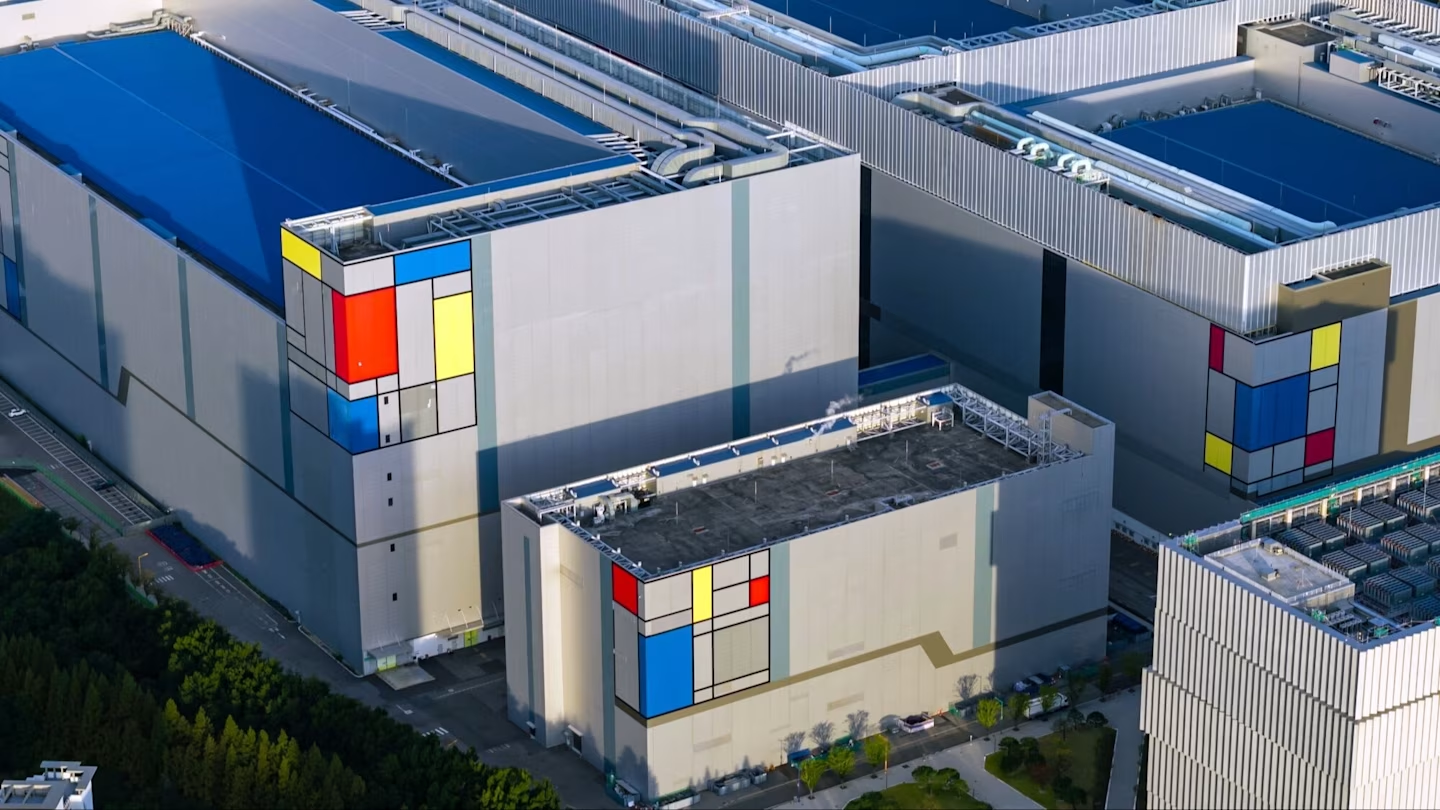
- Samsung Electronics posted record Q3 operating profit of Won107.4tn ($80.2bn), up 880% YoY from Won12.2tn, driven by AI-driven memory chip demand and persistent supply shortages. Sales surged 126.6% YoY to Won195tn. Fourth consecutive quarter of record performance validates AI capex cycle strength through 2026. Company became world’s first tech to report >Won100tn quarterly operating profit. Memory chip demand (DRAM, HBM4) from AI data centers remains insatiable; contract prices for DRAM expected to rise 10-15% Q4. Long-term supply contracts with AI companies at premium prices locking in margins, reducing industry boom-bust cyclicality. Samsung advanced HBM4 chip development, narrowing gap with rival SK Hynix. Stock more than doubled this year, valuing company at ~$1.3tn. Yet stock fell 2.4% on earnings day despite record profit—signaling investor concern about cycle sustainability.
- Long-term contract lock-in represents structural shift reducing cyclicality but raising peak timing concerns. Analysts note AI companies signing multi-year supply agreements at escalating prices (new contracts >existing contract prices), protecting chipmakers’ margins into 2027-2028. SK Securities analyst: “Even if peak earnings somewhat lower, period at high levels much longer, maximizing cumulative cash generation.” This validates institutional capital stickiness—major buyers (Google, Meta, Microsoft, OpenAI) committed to multi-year capex, reducing near-term demand risk. But investor skepticism emerges: stock valuation gap vs US peers (Samsung 11.8 P/E vs Philly Semi Index 39.5 P/E) suggests market pricing samsung at discount, skeptical of sustainability. Albert Yong (Petra Capital): “Investors waiting for clearer signals upcycle can continue next/year after” and concerned about “when industry will peak out.” Pattern mirrors Hayes thesis: capex contracts lock in, but investors already pricing inflection risk.
- Won appreciation currency headwind + consumer electronics losses offset memory chip bonanza. South Korean won appreciated >14% vs dollar in Q3—largest quarterly gain since 1998. Samsung makes most revenue outside home country; currency headwind reduces dollar-denominated profits. Smartphone + home appliances businesses suffered >Won1tn combined operating losses Q3, unable to pass memory chip cost increases to consumers. Price pressure on non-AI buyers (smartphone makers, computer OEMs) confirms memory shortage squeezing broader tech industry. If consumer demand softens (validates macro headwind), broader electronics industry faces margin compression despite AI chip profitability.
- Valuation disconnect + peak timing skepticism validate Hayes overbuilding thesis convergence timing. Samsung trading at 11.8 P/E (half US semiconductor peer average 39.5) suggests market pricing in cycle peak risk despite record earnings. Analysts expect “tighter market” into 2027 per Micron guidance, supporting long-term contract thesis. But if AI capex cycles compress 2027-2028 (validates Hayes thesis), demand destruction hits suddenly. Long-term contracts provide downside protection for chipmakers but also lock them into declining price environment if capex tightens. Investor skepticism (stock down 25% from June peak despite record earnings) suggests institutional players already pricing 2027-2028 inflection. Convergence: Samsung earnings validate AI infrastructure buildout peak (now Q3 2026); but market pricing suggests peak is behind us, setting up 2027 demand cliff.
What Happened?
Samsung Electronics reported record quarterly operating profit of Won107.4 trillion ($80.2 billion) for the July-to-September period, a nearly ninefold increase from Won12.2 trillion in the same quarter last year. Sales surged 126.6 percent year-over-year to Won195 trillion. The company achieved its fourth consecutive quarter of record performance, driven by sustained demand for memory chips from artificial intelligence companies and prolonged supply shortages. Samsung became the world’s first technology company to report quarterly operating profit exceeding Won100 trillion. Memory chip prices are expected to rise 10-15 percent in the fourth quarter according to market researcher TrendForce. Analysts note that new long-term supply contracts between chipmakers and AI companies are being signed at prices higher than existing contracts, locking in elevated margins. Samsung has also made progress developing advanced HBM4 chips, narrowing its technical gap with rival SK Hynix. The company’s stock has more than doubled this year, reaching a valuation of approximately $1.3 trillion. However, Samsung shares fell 2.4 percent on the day of earnings announcement despite the record profit, signaling investor concerns about the sustainability of the AI-driven demand cycle.
Why It Matters?
Samsung’s record earnings validate the strength of the AI infrastructure capex cycle through 2026, with long-term supply contracts locking in high prices and protecting chipmaker margins into 2027-2028. This structural shift from transactional spot markets to multi-year agreements reduces the industry’s traditional boom-bust cyclicality, providing visibility for sustained profitability. However, the market’s muted response to record earnings—stock fell despite beating expectations—signals investor skepticism about peak timing. Samsung trades at a 11.8 price-to-earnings ratio, approximately one-third the valuation of the Philadelphia Semiconductor Index at 39.5, suggesting the market is pricing in significant downside risk. This valuation disconnect parallels Arthur Hayes’ overbuilding thesis: the infrastructure is being built and long-term demand committed, but investors are already positioning for the cycle’s inflection. The won’s 14 percent appreciation against the dollar in Q3—largest quarterly gain since 1998—creates a currency headwind that will reduce dollar-denominated profits going forward. Additionally, Samsung’s consumer electronics divisions (smartphones, home appliances) posted combined operating losses exceeding Won1 trillion as they struggled to pass memory chip cost increases to customers, indicating that broader technology demand is feeling margin pressure from supply constraints.
What’s Next?
Monitor Samsung’s full quarterly results for currency impact quantification: if won gains persist (validates headwind), future earnings guidance could disappoint despite stable chip demand. Track long-term contract repricing: if new contract prices continue escalating (validates sustained AI demand), supports continuation thesis; if stall or decline (validates capex plateau), signals market-driven price softening. Watch consumer electronics segment recovery: if smartphone/appliances demand rebounds (validates cyclical upswing), margin pressure eases; if continues deteriorating, suggests broader tech demand softening ahead of 2027 inflection. Finally, monitor HBM4 mass production ramp and competing offerings: if Samsung successfully deploys HBM4 at scale (validates technical catch-up with SK Hynix), competitive dynamics tighten and pricing power moderates; if deployment delays, validates supply constraint persistence and pricing discipline through 2027. Most critically, watch for management guidance on 2027-2028 demand: if conservative (validates peak concerns), validates Hayes thesis; if bullish, challenges peak timing skepticism.
Affected Tickers and Coins: SSNLF | NVDA | MU | INTC | AMD
Source: Financial Times