- Markets are breathing easier after President Trump posted on social media Thursday that the U.S. was having “productive discussions” with Iran and would not strike the country before the November 3 midterms. That simple statement reversed much of the week’s damage. Nasdaq-100 contracts rallied, oil futures slipped, and the mood shifted from defensive to optimistic heading into the weekend. The clarity matters: earlier in the week, a Pentagon report suggesting the U.S. might be preparing for renewed combat in Iran had spooked traders and investors, pushing oil higher and stocks lower. Trump’s statement removed that uncertainty, at least for now.
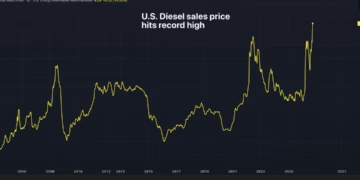
- Oil is giving back the week’s gains. Brent crude, which had spiked on Iran war fears, is now slipping as traders price in reduced geopolitical risk. That matters because oil prices ripple through corporate earnings expectations. Higher oil means higher energy costs, which compresses margins for airlines, shipping companies, and manufacturers. Airlines in particular benefit from falling oil prices—jet fuel is one of their biggest expenses. With Brent retreating, that headwind disappears, making equity valuations look more attractive heading into earnings season.
- The stock market had been on edge all week. Tuesday’s Federal Reserve minutes showed officials expected another rate hike before year-end, which alone would have been a drag on equities. Add Iran war fears on top of that and traders were positioning defensively, rotating out of growth stocks and into safer bets. That’s why Crypto got hit hard: risk appetite shut off. Now, with the Iran concern removed and Fed policy still on the table (but not an immediate shock), equities can refocus on earnings and economic data. The Nasdaq, which is most sensitive to rate expectations, can rally once the geopolitical cloud lifts.
- Friday morning will test whether the rally holds. Weekend news could surface—Trump could walk back the Iran comment, or intelligence could change the calculus—but for now, the market is pricing in a less-hawkish geopolitical scenario and lower oil prices. Small-cap stocks should benefit more than large-cap because they’re more exposed to oil prices and less able to hedge. Tech and growth, hit hardest by rate fears, should stabilize. The real test comes next week with more economic data and continued Fed commentary.
What Happened?
President Trump posted on social media Thursday that the U.S. was engaged in “productive discussions” with Iran and would not strike the country before November 3, 2026—the midterm election date. The statement immediately improved market sentiment after a week of geopolitical anxiety. Nasdaq-100 futures rallied sharply, benchmark Brent crude futures slipped, and the broader equity market set up for a positive open Friday. Earlier in the week, a Pentagon report that the U.S. was preparing for renewed combat in Iran had spooked traders, pushing oil higher and stocks lower. The Federal Reserve’s rate hike expectations, communicated in Wednesday’s meeting minutes, had already put pressure on equities, particularly growth and technology stocks. With Trump’s Iran statement, one major risk factor was removed, allowing markets to refocus on corporate earnings and economic fundamentals.
Why It Matters?
Geopolitical risk directly affects asset prices through multiple channels. Oil prices spike on war concerns, raising energy costs for companies and consumers. That depresses margins and consumer spending power. Equities suffer because growth expectations fall and discount rates rise (investors demand higher returns for the additional uncertainty). Conversely, when geopolitical risk recedes, those pressures reverse. For the stock market specifically, this timing is critical: earnings season is approaching, and companies need to project confidence to justify current valuations. Coming into Friday with reduced geopolitical anxiety gives them a better chance to do that. The Nasdaq, which was hit hard by Fed rate expectations and Iran fears, can stabilize. Oil’s retreat also helps margin-sensitive sectors like airlines, shipping, and chemicals. The fact that Trump could shift market sentiment with a single social media post also highlights how much macro risk pricing depends on executive statements rather than fundamental earnings changes.
What’s Next?
Monitor geopolitical headlines through the weekend and into next week. Trump could reverse course, intelligence could change, or the Iranian government could make statements that reignite tensions. If the Iran narrative holds, oil should continue drifting lower and equities should grind higher into earnings season. Watch the Fed calendar: any new comments from officials could shift rate expectations back into focus, potentially undoing the geopolitical relief. Track oil specifically—if Brent stabilizes above $100, that signals the market still prices in some risk; if it slides toward $95 or lower, that shows confidence in the peace narrative. Monitor airline and energy stocks: airlines should outperform if oil stays low, energy stocks should underperform. The broader test is whether the rally Friday holds through the weekend or if there’s a late-week reversal. If Monday opens higher and holds those gains, that confirms the market is moving past Iran fears and back to normal risk-on positioning. If early buying gets sold into, that would suggest traders are still nervous and using the rally to reduce exposure.
Affected Tickers and Coins: QQQ (Nasdaq-100) | XLE (Energy) | XLF (Financials) | Brent Crude Futures
Source: Market reporting