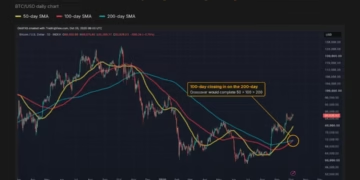
- Bitcoin surged as much as 9.4% to trade around $77,000 on Friday, putting the token on track for a weekly gain of approximately 22% — its largest since March 2023 and a dramatic recovery from the $58,642 low reached at the end of June — as Treasury Secretary Bessent’s bond buyback expansion unleashed a combination of forced short covering and fresh institutional buying that accelerated throughout the week.
- The mechanical driver of much of the rally was a short squeeze: over $2 billion in bearish Bitcoin bets in the perpetual futures market were liquidated between August 19 and 21 according to CoinGlass data, as rapid price appreciation forced traders who had positioned for continued weakness to cover at escalating losses, adding fuel to the upside move in the self-reinforcing cascade typical of highly leveraged crypto markets.
- Institutional demand via spot Bitcoin ETFs provided genuine buying support: the 13 U.S.-listed spot Bitcoin ETFs added more than $1 billion in inflows during the week, putting them on track for their largest weekly inflows since January — signaling that institutional allocators are treating the Bessent-triggered macro shift as a genuine re-entry catalyst rather than a noise event to be faded.
- Standard Chartered’s global head of digital-assets research Geoffrey Kendrick told clients that “for the first time this year there is now a risk my end-year forecast (of USD100k) is too low” — while a dissenting voice, Adam Morgan McCarthy of LO:TECH, argued that gold’s clean rally “carries this week’s real macro signal” and that Bitcoin’s move was “inflated” by forced short liquidations rather than authentic investor demand for currency and inflation hedging.
What Happened?
Bitcoin extended its post-Bessent rally into Friday, trading around $77,000 after jumping as much as 9.4% during the Asian session — putting it on track for approximately a 22% weekly gain that would be the largest since March 2023. The rally’s roots lie in Wednesday’s Treasury announcement that the government would at least double its purchases of longer-dated bonds, which sent yields lower, weakened the dollar to a three-month low, and triggered a broad risk-asset rally. In crypto, the macro shift collided with a market heavily short-positioned after months of price declines from Bitcoin’s October 2025 all-time high above $126,000 — creating conditions for a violent short squeeze that forced over $2 billion in liquidations. Spot Bitcoin ETFs simultaneously began attracting institutional inflows at the fastest pace since January, providing genuine demand support. Trump’s meeting with Coinbase, Kraken, and Blockchain.com executives and his public push for the Senate to pass the Clarity Act added a regulatory tailwind on top of the macro driver.
Why It Matters?
The 22% weekly gain raises a fundamental question that market participants are actively debating: is this the beginning of a genuine new Bitcoin bull cycle, or primarily a mechanical short squeeze that will fade once the liquidation cascade is exhausted? The distinction matters enormously for forward positioning. Rachael Lucas of BTC Markets noted that “the real driver was the US Treasury doubling long-dated bond buybacks, which pulled long yields lower and lifted risk appetite broadly” — adding that “nothing has rewritten Bitcoin’s long-term case, but nothing’s rewritten its volatility either.” McCarthy at LO:TECH was more skeptical of the move’s authenticity, pointing to gold’s simultaneous rally to its highest level since May as a cleaner signal of where genuine macro hedging demand is flowing. The ETF inflow data, which shows real dollars entering the market through regulated vehicles, provides the strongest evidence that at least some of the week’s move represents authentic institutional demand rather than purely mechanical short covering.
What’s Next?
The key near-term test is whether Bitcoin can hold the gains above $70,000-$75,000 as short squeeze dynamics fade in the coming days and the market needs to attract genuine long buyers to sustain elevated prices. Standard Chartered’s Kendrick has flagged the possibility that his $100,000 year-end target may be too low — a meaningful upgrade in tone from an institutional voice that carries weight in crypto markets. The structural catalysts for sustained upside include continued ETF inflows, Clarity Act legislative progress, further macro relief from yields, and a return of retail participation that has been conspicuously absent from this week’s institutional-led move. Bitcoin remains approximately 40% below its October 2025 all-time high above $126,000, meaning a full recovery to record levels would require sustained demand across all market participant cohorts — a bar this week’s short squeeze alone has not cleared.
Source: Bloomberg