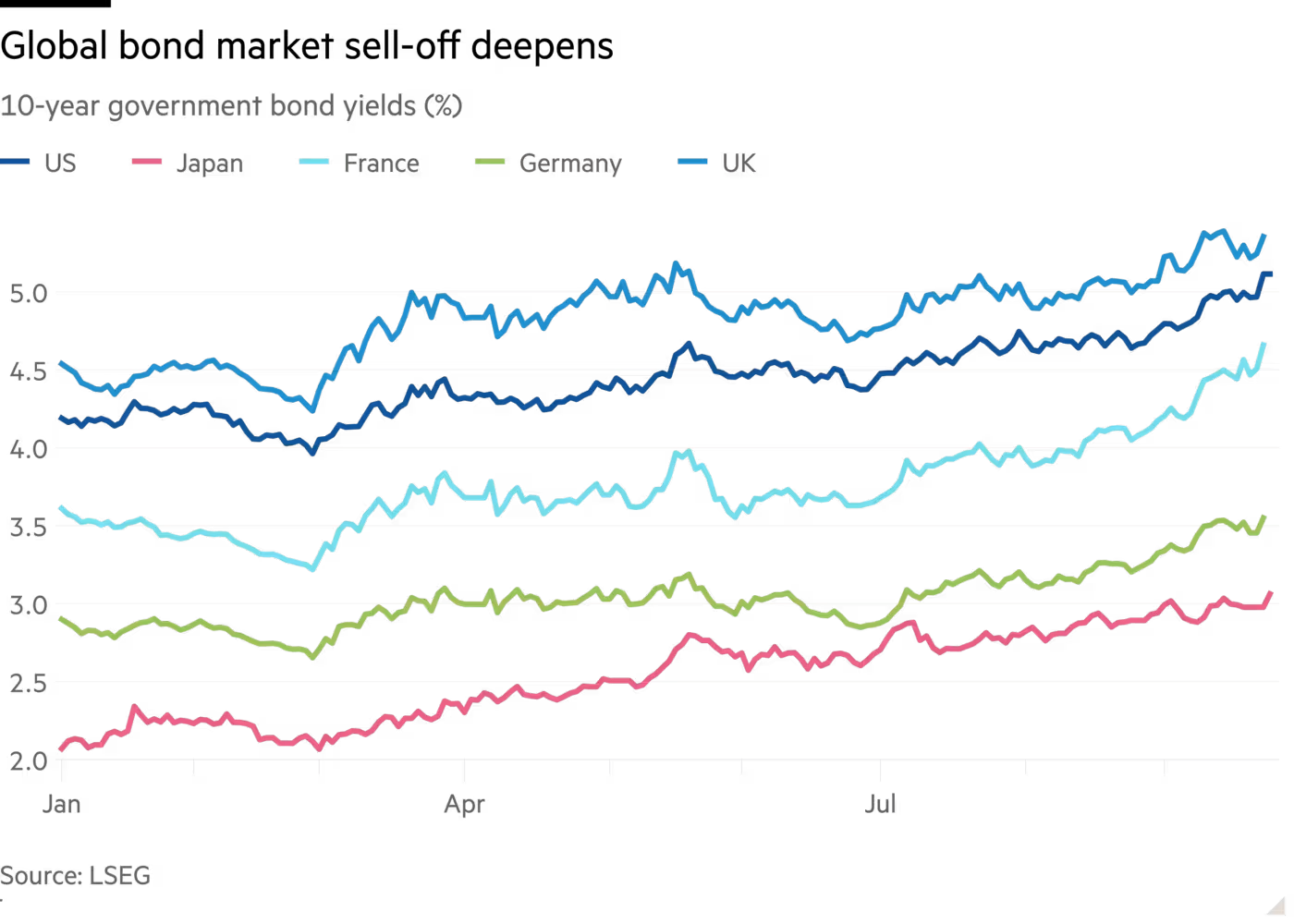
- Global bond rout deepens: 10-year US Treasury yields rose to 5.15% (highest since 2007, +0.03pp from Wed, following +0.15pp Wed spike). 30-year yields reached 5.45% (highest since 2004). Biggest US Treasury sell-off since last year’s trade war. Oil rebound to $105 (Brent $105.35, +2.2% Thu, +4% Wed) adding inflation fears. Yields rising NOT from inflation expectations per se (Mansoor Mohi-uddin, Bank of Singapore) but from AI-led growth strength + large US fiscal deficits + supply-side shock (Iran war, oil >$105). Global bond market showing “correlated move higher in yields. There’s no escape,” per Eric Robertsen (Standard Chartered). Hedge fund deleveraging exacerbating sell-off: forced dumping of bets that short-term debt would outperform (per Mohit Kumar, Jefferies).
- Global yield spike spillover: Japan 10-year government bond yield rose to 3.08% (highest since 1996), reflecting BoJ policy lag perception vs Fed tightening. German Bund 3.58% (up 0.03pp), UK gilts 5.39% (up 0.04pp). Global synchronized sell-off validates “correlated move” thesis. Market pricing BoJ has not tightened enough, hasn’t signaled firm future intent on inflation target. Yen weakness likely vs USD from yield differential (capital flight to higher US yields).
- Structural negative feedback loop: Supply glut concerns (record global issuance) + big government deficits running simultaneously + surging bond yields = vicious cycle. Governments aggressively increasing spending while cost of borrowing rising. OECD warned Wednesday surging yields “major concern” for public finances. Robertsen: “It’s fiscal risk made worse by political uncertainty. You’re in this negative feedback loop.” Validates Article 124 (Global Debt $365T) and OECD Article 117 warnings on 10-year yields, fiscal dominance, debt service costs.
- Oil-growth-rates feedback: Strong PMI data (fastest pace in 5 years) + oil rebound (Iran-US tensions at UN, hostile tone) + Fed tightening bets (>70% October hike odds, up from ~50% start of Wed) creating self-reinforcing cycle. Derivative traders speculating faster rate hikes. Diesel export restriction discussion (US policy) adding supply uncertainty. “Supply-side shock accompanied by overheating economy—central bank must deal with,” per Andrew Pease (Russell Investments). Market now pricing this scenario.
What Happened?
Global bond rout deepened Thursday: 10-year US Treasury yields rose to 5.15% (highest since 2007, +0.03pp from Wed). 30-year yields 5.45% (highest since 2004). Biggest US Treasury sell-off since last year’s trade war. Oil rebounded to $105.35 (Brent, +2.2% Thu, +4% Wed). Japan 10-year yield 3.08% (highest since 1996), German Bund 3.58%, UK gilts 5.39%. Global “correlated move higher in yields” (no escape per Standard Chartered). Hedge funds forced to dump short-term debt outperformance bets (exacerbating sell-off). Yields rising from AI-led growth + US fiscal deficits + supply-side shock (Iran tensions, oil), not inflation expectations per Bank of Singapore. Strong PMI (fastest growth in 5 years) + oil rebound driving rate hike speculation (>70% October odds, up from ~50% start of Wed). Supply glut concerns + big deficits running = negative feedback loop (governments increasing spending while borrowing costs rise). OECD warned surging yields “major concern” for public finances. Diesel export restrictions discussion adding supply uncertainty.
Why It Matters?
For bond investors (TLT, IEF), global yield spike validates duration risk across all geographies (no safe haven). For FX traders, US yields attracting capital from Japan/Europe (yen/euro weakness likely). For governments, negative feedback loop (rising borrowing costs + big deficits) validates fiscal crisis concerns from Articles 124/117. For equity investors, stock pressure from higher discount rates despite growth strength. For oil/commodity traders, protracted higher oil prices likely (per market expectations). For central banks, supply-side shock + overheating economy scenario requires policy response.
What’s Next?
Monitor Fed October decision; if rate hike occurs as >70% odds suggest, it validates market pricing. Track global government bond auctions; if demand weakness continues, yields could spike further. Watch BoJ/ECB communications; if signal faster tightening, it could ease yen/euro pressure. Monitor Iran-US negotiations; if escalates, oil could spike past $110 (supporting yield pressure). Track hedge fund leverage/positioning; if forced selling continues, bond volatility could increase. Also monitor corporate bond spreads; if widen from equity/rate pressure, it signals stress. Finally, watch government spending announcements; if austerity emerges, it could ease negative feedback loop (but politically unlikely).
Affected Tickers & Coins: TLT, IEF, USO, SPY, QQQ
Source: Financial Times