- U.S. crude inventories including the Strategic Petroleum Reserve plunged 17.8 million barrels last week, the largest single-week decline on record, bringing total stocks to their lowest level in nearly a year.
- Overseas crude exports have averaged 5.3 million barrels per day so far this month — a pace that would be the highest on record — as global buyers scramble for alternatives to Middle Eastern supply blocked by the Hormuz closure.
- The SPR is being tapped at a record weekly pace of 1.4 million barrels per day, with some of those barrels being sent directly overseas to cushion allies from the energy shock.
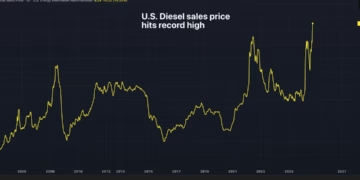
- U.S. gasoline prices have surged to a national average above $4.55 per gallon — near the highest since 2022 — creating mounting political pressure on Trump to reopen the strait before midterm elections.
What Happened?
Data from the U.S. Energy Information Administration released Wednesday showed that total U.S. crude inventories — including the Strategic Petroleum Reserve — dropped 17.8 million barrels last week, the largest single-week decline in the history of the data series. Excluding strategic reserves, nationwide petroleum stocks still fell approximately 9 million barrels. The draw is being driven by a surge in exports: American crude shipments have averaged 5.3 million barrels per day so far in May, a pace that would represent an all-time monthly record. The U.S. has effectively become the emergency oil supplier of last resort for Asian and European buyers who cannot access Middle Eastern crude while the Strait of Hormuz remains effectively closed.
Why It Matters?
The Strait of Hormuz normally carries roughly 20% of global oil flows. With that chokepoint blocked by the Iran war, the world has turned to the U.S. to fill the gap — and American stockpiles are paying the price. The SPR drawdown at 1.4 million barrels per day is the fastest weekly pace on record, meaning the emergency cushion designed to buffer supply shocks is itself being depleted at an extraordinary rate. Meanwhile, peak summer driving demand in the U.S. is just beginning, adding domestic consumption pressure on top of export demand. The result is a supply picture tightening faster than almost anyone anticipated, with pump prices above $4.55 per gallon already creating political pain for an administration that has positioned energy dominance as a signature achievement.
What’s Next?
The pace of SPR drawdown cannot be sustained indefinitely. If the Hormuz closure persists into summer driving season while exports remain near record levels, domestic supply cushions will erode to levels that could start pushing prices toward — or past — $5 per gallon nationally. That threshold historically triggers significant consumer spending shifts and political backlash. The midterm elections are now a live variable in U.S. energy and foreign policy: every week of $4.50+ gasoline is a week that strengthens Trump’s incentive to accept an Iran deal that reopens Hormuz, even on terms that would otherwise be politically difficult. Watch the negotiation track — energy economics may be driving the diplomatic timeline more than military considerations at this point.
Source: Bloomberg