- Situational Awareness, the AI-focused hedge fund founded by former OpenAI researcher Leopold Aschenbrenner, is down approximately 67% in July after incurring heavy losses on concentrated AI stock positions, according to a person who saw a letter the firm sent to investors; in the letter, Aschenbrenner wrote “We let you down this month” — an unusual direct acknowledgment of failure from a fund manager who had previously attracted significant assets on the strength of his widely-read “Situational Awareness” essay predicting AGI within years and his fund’s extraordinary 270% gain after fees through May 2026; the July collapse erases more than two-thirds of the year’s gains in a single month, a loss magnitude that reflects the extreme concentration risk inherent in a thesis-driven fund betting specifically on public AI infrastructure stocks at a moment when the AI narrative has been disrupted by circular financing concerns, valuation fatigue, and the broader risk-off environment triggered by the Iran conflict and Fed credibility questions.
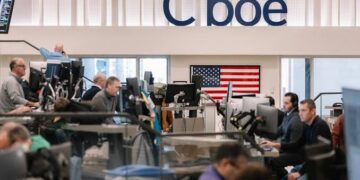
- The fund’s response to the drawdown was to sell the bulk of its public equity positions through a large block transaction, with Ken Griffin’s Citadel purchasing a significant portion of those holdings — a transaction that illustrates both the scale of Situational Awareness’s forced liquidation and the opportunistic positioning of Citadel, which as one of the world’s largest and most sophisticated hedge funds has the balance sheet and conviction to absorb large AI infrastructure positions at distressed prices that Situational Awareness could no longer hold; the fund also backed out of a deal to sell $3.5 billion of Anthropic shares, a transaction that would have provided significant liquidity but apparently could not be completed on terms acceptable to Situational Awareness — possibly because the Anthropic secondary market price had moved during the AI selloff, reducing the deal’s attractiveness relative to the fund’s carried cost; the fund continues to hold private investments including its Anthropic stake and an investment in AI chip startup MatX.
- Aschenbrenner’s background is unusual for a hedge fund founder: a native of Germany, he entered Columbia University at 15 and graduated as valedictorian in 2021, worked briefly at the FTX Future Fund (the philanthropic arm of Sam Bankman-Fried’s crypto exchange before its collapse), then joined OpenAI, where he focused on AI safety research before being fired in 2024; following his departure, he published the “Situational Awareness” essay — a detailed argument that AGI could arrive within years and would reshape the global economy and geopolitical competition — which gained substantial traction among investors, researchers, and policymakers in Silicon Valley and Washington; the essay became the thesis document for his fund, which launched in 2024 and attracted assets rapidly from investors who treated his public market positions as a leading indicator of the AI trade; with the fund’s quarterly 13-F filings scrutinized for position changes, Aschenbrenner had become one of Wall Street’s most closely watched AI investors in less than two years.
- The Situational Awareness collapse is a case study in the risks of thesis-driven concentrated funds in rapidly evolving technology sectors: the fund’s investment strategy reflected a coherent and internally consistent view of how AI infrastructure demand would drive semiconductor, cloud, and power company valuations — and that view produced extraordinary returns when the AI narrative was accelerating; but when the narrative inflected — simultaneously hit by circular AI financing concerns (the Nvidia/$750B deal structure), AI stock valuation fatigue post-SK Hynix earnings, Fed credibility concerns driving risk-off, and Iran war geopolitical disruption — the fund’s concentrated public market positions amplified the drawdown rather than allowing for selective navigation; the lesson for investors is not that the AI thesis is wrong, but that public market concentration in a single sector theme without meaningful hedging creates catastrophic drawdown exposure when multiple narrative headwinds converge simultaneously.
What Happened?
Leopold Aschenbrenner’s Situational Awareness hedge fund — which had gained 270% after fees through May 2026 on concentrated AI infrastructure stock bets — fell approximately 67% in July as AI stocks sold off sharply. The fund sold the bulk of its public equity positions in a large block transaction, with Citadel (Ken Griffin) stepping in as the buyer. The fund also backed out of a deal to sell $3.5 billion in Anthropic shares. Aschenbrenner wrote in an investor letter: “We let you down this month.” The fund retains private positions including its Anthropic stake.
Why It Matters?
The Situational Awareness collapse is the most dramatic single-fund casualty of the July AI stock correction — a 67% monthly loss in a fund that had been Wall Street’s most closely watched AI trade is a stark illustration of how quickly concentrated thesis-driven positions can unwind when multiple headwinds converge. Citadel’s willingness to buy those same positions at distressed prices signals that well-capitalized institutional investors see the July selloff as a buying opportunity rather than a structural AI investment thesis collapse — the divergence between forced seller (Situational Awareness) and strategic buyer (Citadel) is itself a meaningful data point about where smart money sees AI infrastructure value.
What’s Next?
Watch whether Situational Awareness survives as an operating fund — a 67% monthly loss creates significant redemption pressure, and if investor redemption requests exceed the fund’s private investment illiquidity, further forced selling could follow; watch Citadel’s next 13-F filing to see which specific AI infrastructure positions it acquired from Situational Awareness and at what implied valuations; watch the Anthropic secondary market for any renewed deal activity around the $3.5 billion block that Situational Awareness backed out of; and watch whether the Aschenbrenner “Situational Awareness” essay and AGI-arrival thesis retains its market influence after this episode, or whether the fund’s performance has undermined its author’s credibility as a practical investor rather than a theorist.
Sources: The Wall Street Journal, Bloomberg