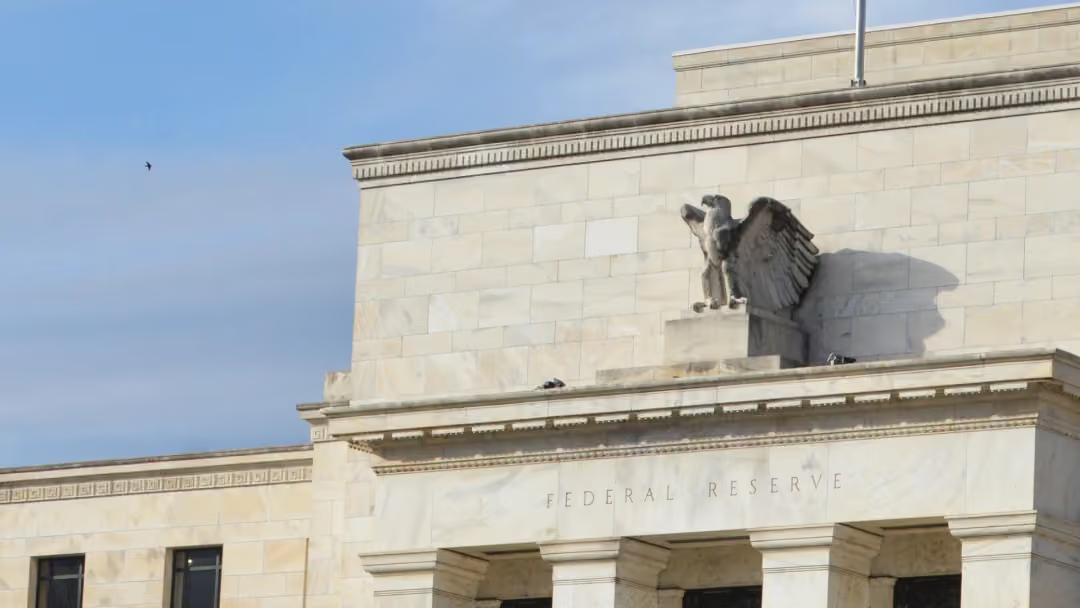
- Fed proposes stablecoin capital/reserve framework: Federal Reserve proposed two rules Thursday implementing bulk of GENIUS Act requirements. First proposal establishes capital and reserve requirements ensuring stablecoins fully represented by liquid assets + issuers solid foundation during stress. Also outlines accepted stablecoin activities at supervised banks. Second proposal sets procedures for regulated banks to begin issuing stablecoins (business plan, financial info, policies, procedures). Both proposals open for 60-day public comment periods. Multi-agency deadline was July 2026; Fed now past deadline but made progress. Echoes OCC approach on yield restrictions.
- Stablecoin yield/reward restrictions narrow: Fed (like OCC) bans interest/yield payments on stablecoins but permits narrow approach. Crypto platforms allowed rewards akin to credit-card incentive programs (e.g., cashback, points). Coinbase pushed for broader stablecoin rewards in failed Digital Asset Market Clarity Act revision. GENIUS Act now primary law governing stablecoin rewards (Clarity Act didn’t succeed). Narrow restrictions limit platforms’ ability to differentiate or monetize stablecoin usage.
- Multi-agency implementation timeline: FDIC started process December 2025 (first agency). Treasury proposed own part last month (federal definitions, who must follow rules). Fed now proposing Thursday (capital/reserve + bank issuance procedures). Multiple agencies still in process—regulations substantially behind July 2026 deadline. Fed Governor Michael Barr statement: “Stablecoins stable only if reliably/promptly redeemed at par in range of conditions, including market stress.” Validates prudential approach to ensure stability during volatility (relevant to articles on Treasury yield spikes, asset pressure).
- Bank entry validates stablecoin democratization: Fed’s second proposal opens stablecoin issuance to regulated banks (JPMorgan, BofA, Citigroup potential entrants). Validates that stablecoin market expanding beyond Coinbase/Circle/Tether monopoly. Banking sector adoption legitimizes stablecoins as financial infrastructure. Validates earlier articles’ thesis on stablecoin Treasury demand ($200B+ holdings)—if banks issue stablecoins, reserve requirements create sustained Treasury demand.
What Happened?
Federal Reserve proposed two rules Thursday implementing GENIUS Act stablecoin regulation. First rule: capital/reserve requirements ensuring stablecoins fully asset-backed, stress-tested. Outlines accepted stablecoin activities at Fed-supervised banks. Second rule: procedures for regulated banks to issue stablecoins (business plan, financial info, policies). Both open for 60-day public comment. Fed proposes narrow yield restrictions (credit-card-like rewards only, not interest/yield per se). Restricts platforms’ monetization strategies. Echoes OCC approach. GENIUS Act now primary law on stablecoin rewards (failed Clarity Act would have revised). Multi-agency deadline was July 2026; Fed past deadline but progressing. FDIC started December, Treasury proposed last month. Fed Governor Barr: stablecoins stable only if reliably redeemed at par during stress (validates prudential focus). Banks now eligible to issue stablecoins under Fed framework (democratizes market).
Why It Matters?
For Coinbase (COIN), narrow yield restrictions limit competitive differentiation in stablecoin rewards (lost bid in Clarity Act revision). For USDC/USDT issuers, capital/reserve requirements validate regulated framework (legitimacy gain, compliance cost). For banking sector, Fed framework opens stablecoin market entry (new revenue stream, innovation opportunity). For Federal Reserve, explicit stablecoin framework validates Fed’s monetary policy role vs decentralized finance. For stablecoin users, full asset-backing + par redemption guarantee validates safety (Fed prudential approach). For Treasury demand, bank stablecoin issuance validates sustained demand for reserves ($200B+ holdings).
What’s Next?
Monitor public comment period (60 days); if crypto industry pushes back on yield restrictions, it could force Fed revisions. Track OCC/FDIC guidance; if align with Fed’s narrow yield approach, it validates unified regulatory stance. Watch bank stablecoin issuance announcements; if JPMorgan/BofA/Citigroup announce plans, it validates banking sector adoption. Monitor Treasury demand from stablecoin reserves; if increases as banks issue stablecoins, it validates sustained T-bill demand thesis. Also track final rule publication timeline; if delays past 60-day period, it suggests regulatory disagreement. Finally, watch Coinbase/Circle lobbying efforts; if push for broader rewards in future legislation, it validates tension with narrow GENIUS approach.
Affected Tickers & Coins: COIN (Coinbase), USDC, USDT, Federal Reserve
Source: CoinDesk