Key Takeaways
Powered by lumidawealth.com
- Bitcoin fell to a two-week low near $67,371 before stabilizing around the key $68,000 support zone.
- The decline was driven mainly by geopolitical escalation in the Middle East, which pushed oil higher and weakened broader risk appetite.
- Despite the pullback, Bitcoin is still up about 4% in March, showing relative resilience versus a wider risk-off backdrop.
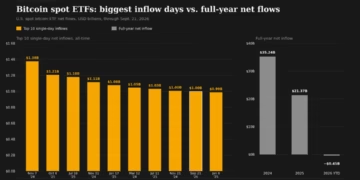
- Investor sentiment remains fragile, with spot Bitcoin ETF flows turning negative and market sentiment stuck in extreme fear territory.
What Happened?
Bitcoin dropped to its lowest level since March 9 in early Monday trading, falling as low as $67,371 before rebounding slightly to trade around $68,000. The move came as tensions in the Middle East intensified over the weekend, with President Trump threatening to strike Iran’s power plants unless the Strait of Hormuz was reopened, while Tehran warned it could target key regional infrastructure in response. The broader market reaction was risk-off: oil prices rose, Asian equities fell, and global bond yields moved higher.
Even with the selloff, Bitcoin has held up better than some traditional assets this month. It remains up around 4% in March and is now hovering around its 200-week exponential moving average, a closely watched technical level that many traders see as an important support zone.
Why It Matters?
The bigger issue for investors is that Bitcoin is again being tested as a macro asset rather than trading on crypto-specific news alone. In theory, geopolitical stress and inflation fears could support the case for Bitcoin as an alternative store of value. In practice, this episode suggests Bitcoin is still trading more like a risk asset when markets are under pressure. That weakens, at least for now, the argument that it consistently behaves like a safe haven in periods of global stress.
At the same time, Bitcoin’s ability to remain near a major long-term technical support level matters. Holding the $68,000 area could reinforce the view that the asset is absorbing macro shocks better than in prior cycles. But weak ETF flows and persistent extreme fear show that institutional and retail conviction remains fragile. That leaves Bitcoin caught between improving long-term structural adoption and short-term macro headwinds.
What’s Next?
The immediate focus is whether Bitcoin can hold the $68,000 area and avoid a deeper breakdown if geopolitical tensions worsen. Investors should also watch oil prices, broader equity risk sentiment, and bond yields, since those macro variables are clearly driving crypto price action right now. Continued weakness in spot Bitcoin ETF flows would be another warning sign that institutional demand is softening.
On the other hand, if tensions stabilize and Bitcoin holds this technical level, traders may start viewing the recent drop as a stress test that the asset passed rather than a sign of broader breakdown. The next phase likely depends less on crypto regulation or sector news and more on whether the global macro backdrop becomes even more hostile to risk assets.