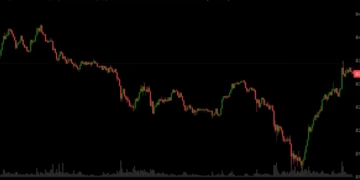
- US-listed spot Bitcoin ETFs attracted $3.5 billion in net inflows in August 2026 — the largest monthly haul since July 2025 — with the catalyst being Treasury Secretary Bessent’s August 19 announcement of expanded long-dated bond buybacks, which revived the debasement trade thesis and simultaneously triggered the forced liquidation of a record amount of leveraged short positions; Bitcoin rose 25% in August, its best month since November 2024, as those two forces combined into a powerful upside move.
- The $80,000 level is now the critical test: Citigroup strategists Alex Saunders and Vinh Vo note that the flow-weighted average purchase price (cost basis) for spot Bitcoin ETF investors sits between $80,000 and $83,000, meaning that range represents the break-even level for a large portion of the ETF investor base; Bitcoin slumped 3% to $76,393 on Tuesday, putting it back below that cost-basis zone and threatening to trigger selling from underwater ETF holders who bought during the 2025-2026 rally.
- BlackRock’s iShares Bitcoin Trust ETF (IBIT) captured approximately 88% of total net Bitcoin ETF inflows in August, cementing its position as the dominant institutional vehicle for Bitcoin exposure; separately, Strategy (formerly MicroStrategy) restarted its direct Bitcoin buying program, spending $370 million — a signal from the company that has been the most visible corporate Bitcoin bull that it remains committed to accumulation even at current prices.
- The macro narrative driving crypto is the same debasement trade that drove gold’s 10% August gain: Bitwise CIO Matt Hougan — “For the past few months, investors have been waiting for an excuse to buy crypto. Prices were down, but the underlying fundamentals were strong. Bessent gave them that excuse earlier in August and they jumped in with both feet” — while Pantera Capital’s Dan Morehead framed it structurally: “Bitcoin and crypto are a macro trade and as governments are going to keep printing money and debasing paper money, hard assets like Bitcoin and other cryptocurrencies are going to do very well.”
What Happened?
Bloomberg data shows $3.5 billion in net inflows to US-listed spot Bitcoin ETFs in August 2026 — the most since July 2025. Bitcoin rose 25% in August, its best monthly performance since November 2024. The primary catalyst was Bessent’s August 19 bond buyback announcement, which revived fiscal debasement concerns and triggered record liquidation of leveraged short positions. As of Tuesday, Bitcoin had slumped 3% to $76,393 — below the $80,000-$83,000 ETF cost-basis zone that Citigroup identifies as a key price driver. The hawkish bond market repricing (30-year yields at 5.27%, 70% September rate-hike probability) is now working against Bitcoin by strengthening the dollar and reducing risk appetite.
Why It Matters?
The August ETF inflow figure confirms that institutional demand for Bitcoin as a debasement hedge is real and responsive to fiscal policy signals. The BlackRock IBIT dominance (88% of inflows) also confirms that the ETF approval story has successfully funneled institutional money into a single, highly liquid vehicle — which has both positive (liquidity) and negative (correlation to broader risk-off moves) implications. The $80K-$83K cost-basis zone is the make-or-break level for the current cycle: a sustained move above it would heal the ETF investor base and likely accelerate momentum buying; failure to reclaim it as support suggests a retest of lower levels before the debasement trade can sustainably resume.
What’s Next?
Bitcoin’s near-term path is largely determined by the same macro factors driving gold and bonds: September 4 payrolls, September 16 FOMC. A Fed rate hike strengthens the dollar, reduces risk appetite, and makes the $80K level harder to reclaim; a hold reverses that dynamic and likely restarts the debasement trade. Watch for Strategy’s next Bitcoin purchase announcement — if the company continues accumulating below $80K, it provides a credible demand floor. Also watch Q3 ETF flow data due in October: if August’s $3.5B pace holds through September, it would be the strongest back-to-back inflow month for Bitcoin ETFs since the product launched in January 2024.
Source: Bloomberg