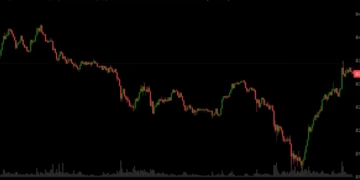
- US spot-Bitcoin ETFs have recorded outflows for nine straight days through May 28, the longest consecutive losing streak since the products launched in January 2024
- Total redemptions over the May 15–28 window reached $2.8 billion, with daily outflows accelerating in the final days of the streak
- Bitcoin traded around $73,650 during the outflow period — more than 40% below its October all-time high — even as US equity indices hit fresh records
- The divergence between Bitcoin and equities suggests the crypto selloff is driven by ETF-specific dynamics and war-risk aversion rather than broad risk-off sentiment
What Happened?
US spot-Bitcoin exchange-traded funds — the products that reshaped crypto markets when they launched in January 2024 — have just posted their worst sustained outflow streak on record. Nine consecutive days of net redemptions from May 15 through May 28 drained $2.8 billion from funds managed by BlackRock, Fidelity, and others. Bitcoin itself tracked the outflows lower, hovering around $73,650 — a level that represents a more-than-40% drawdown from the October 2024 record high near $126,000. The bleeding accelerated late in the streak, with several days exceeding $400 million in single-day redemptions.
Why It Matters?
Bitcoin ETFs were supposed to be the “institutional on-ramp” that smoothed crypto’s notorious volatility by bringing in long-duration capital. The nine-day exodus challenges that thesis. It suggests that even institutional holders are treating Bitcoin as a risk asset to shed — not a safe haven — amid elevated geopolitical tension from the Iran conflict and sustained uncertainty over Federal Reserve policy. The fact that equities hit all-time highs during the same window is striking: money is rotating into stocks, not fleeing risk altogether. That dynamic points to crypto-specific headwinds, potentially including profit-taking from the January–October 2024 bull run, unwinding of leveraged positions, and waning retail enthusiasm after the ETF novelty wore off.
What’s Next?
Bitcoin bulls will argue that nine-day streaks eventually end and that the asset has survived far deeper drawdowns. The key catalyst for a reversal would be a de-escalation in the Iran conflict — the very development that the ceasefire deal announced Thursday could provide — or a Fed pivot signal that weakens the dollar and reignites inflation-hedge narratives. On the bearish side, if outflows persist through $70,000 support, technical selling could accelerate a leg lower. Longer term, the ETF structure means redemptions translate directly into Bitcoin sales as market makers unwind hedges, creating a mechanical feedback loop that didn’t exist in prior cycles. Investors will be watching daily ETF flow data closely for any sign the streak has broken.
Source: Bloomberg