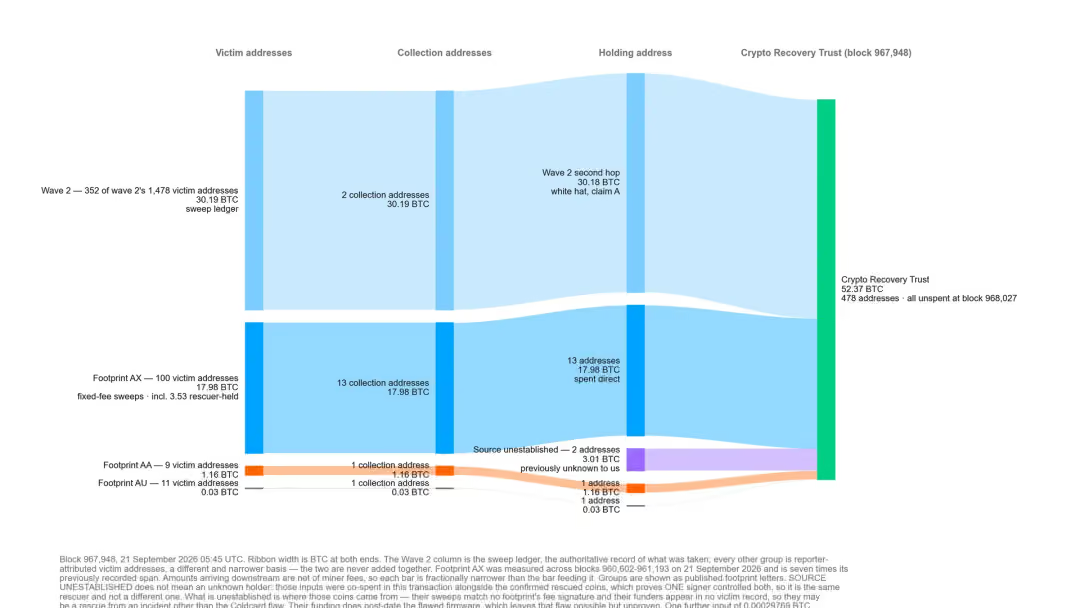
- White-hat hackers moved 52.37 Bitcoin linked to July Coldcard hardware wallet exploit to address associated with newly formed recovery trust (cryptorecoverytrust.com), according to Galaxy Digital Head of Research Alex Thorn. Coldcard hack began July 30, 2026; multiple attack waves (1, 2, 3) resulted in estimated losses exceeding $100 million in Bitcoin. Attackers exploited vulnerability causing wallets to generate seeds using weaker software-based random number source instead of dedicated hardware random number generator—made seeds vulnerable to reconstruction. Coinkite (Coldcard maker) patched firmware, but funds exposed under old seeds remain at risk regardless of patch.
- Whitehat operators (ethical cybersecurity professionals) swept 52.37 BTC from victim wallets specifically to keep funds safe until return. Thorn noted amount represents 2.8% of total tracked exploit funds and that ~40% of Wave 2 identified as whitehat activity. Transaction consolidated funds from Wave 2 along with footprints labeled AA, AU, AX, and sent to address carrying OP_RETURN message “claim:cryptorecoverytrust dot com.” Transaction confirmed in block 967,948. Additional 3.0134 BTC with no prior tracking history also flowed into CRT address in same transaction—presumably whitehat-recovered Coldcard funds (unconfirmed). Victims can check cryptorecoverytrust.com to search their addresses and claim recovered funds.
- Whitehat recovery demonstrates Bitcoin’s on-chain transparency and security culture. Unlike traditional financial hacks where stolen funds disappear into dark markets, Bitcoin stolen funds remain traceable on blockchain. Whitehats can identify, track, and recover exploit-related Bitcoin. Galaxy Digital’s Thorn publicly tracking exploit waves and whitehat activity validates community vigilance and recovery efforts. This narrative contrasts with traditional financial hacks (bank fraud, identity theft) where recovery rates are substantially lower.
- Recovery trust mechanism validates Bitcoin’s capacity for victim restitution. cryptorecoverytrust.com portal allows victims to claim recovered Bitcoin by searching addresses. This represents novel approach to cryptocurrency hack recovery—combining whitehat activity with dedicated recovery trust. Precedent could establish standard for future major crypto hacks. Coldcard’s ~$100M loss was one of largest cryptocurrency exploits; whitehat recovery of portion validates community commitment to protecting users and returning stolen funds.
What Happened?
White-hat cybersecurity professionals recovered 52.37 Bitcoin from July Coldcard hardware wallet exploit and moved funds to cryptorecoverytrust.com recovery trust address. According to Galaxy Digital’s Alex Thorn, whitehat operators swept vulnerable funds to protect them until they could be returned to victims. Amount represents 2.8% of total tracked exploit funds; approximately 40% of Wave 2 attack identified as whitehat activity. Coldcard hack began July 30, 2026; attackers exploited vulnerability in wallet’s random number generation, allowing reconstruction of seeds. Multiple attack waves resulted in estimated losses exceeding $100 million. Coinkite patched firmware, but funds already exposed remain at risk. Recovered Bitcoin moved to address containing OP_RETURN message directing victims to claim via cryptorecoverytrust.com portal.
Why It Matters?
For Bitcoin holders, Coldcard recovery story demonstrates community’s commitment to protecting users and recovering stolen funds—unlike traditional financial hacks with low recovery rates. For Coldcard users (affected victims), whitehat recovery of 52.37 BTC represents restitution opportunity via cryptorecoverytrust.com. For hardware wallet manufacturers (Coldcard, others), exploit validates importance of rigorous firmware security and rapid patching. For custodial/institutional Bitcoin holders (MSTR, RIOT, MARA), exploit/recovery narrative informs custody strategy and security considerations. For crypto exchanges (COIN, ICE), hack story demonstrates advantages of institutional custody over self-custody hardware wallets. For Bitcoin ecosystem broadly, whitehat recovery validates blockchain’s transparency and community’s security culture.
What’s Next?
Monitor cryptorecoverytrust.com claim process; if successful claims begin processing, it validates recovery mechanism and sets precedent for future major crypto hacks. Watch Galaxy Digital’s ongoing tracking of exploit funds; if whitehats recover additional tranches, it could increase total recovery percentage. Track Coinkite’s Coldcard firmware updates; if vulnerabilities remain or new patches required, it could affect user confidence. Monitor for any remaining malicious actor movement of exploit funds; if attacker attempts liquidation, it could trigger market movements. Watch for industry response to recovery trust model; if other crypto projects adopt similar whitehat coordination mechanisms, it would validate effectiveness. Also monitor custody/hardware wallet adoption trends post-exploit; if users migrate to institutional custody (Coinbase, Kraken), it could affect standalone hardware wallet market.
Affected Tickers & Coins: BTC, COIN, ICE, MSTR, RIOT, MARA
Source: CoinDesk